Why Did This Vintage Chair Have So Many Holes?

July 12, 2026
source: Reddit
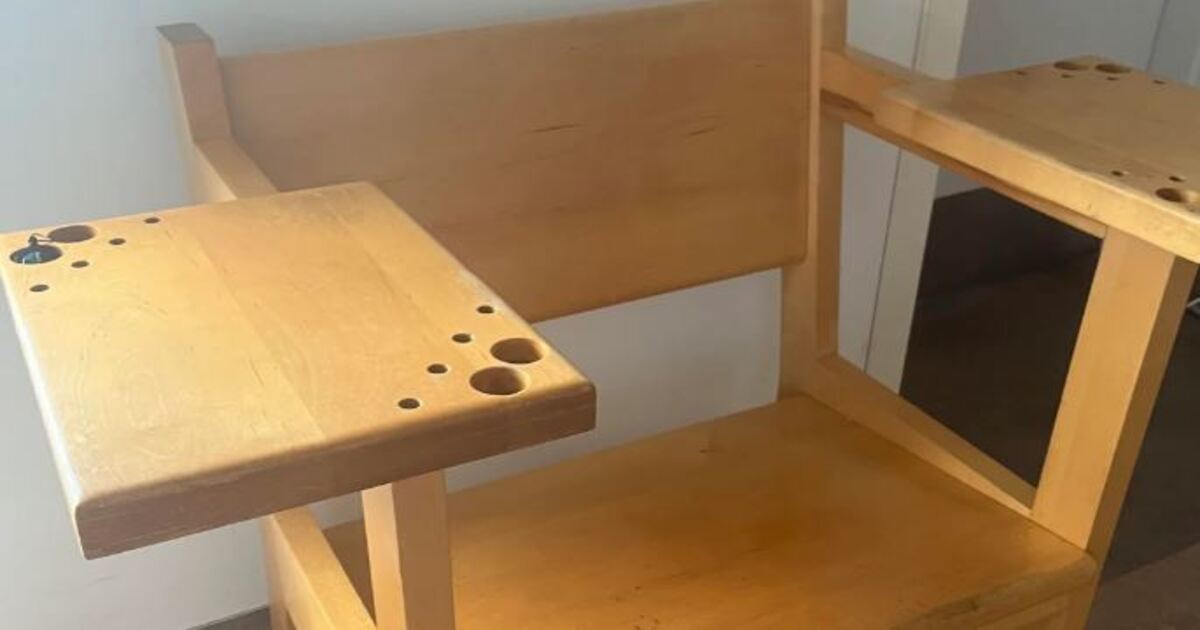
Beginning at the top, this unusual antique chair resembles an old writing station or school desk. However, the wide arm platforms quickly reveal that it served another purpose. Numerous holes have been drilled into the wood. Some are small enough to hold narrow tools. Others could fit a bottle, cup, or specimen container.
These details identify it as a vintage phlebotomy chair with tube holder holes. Suddenly, the design begins to make sense. Medical professionals could arrange blood-drawing equipment within easy reach. At the same time, the sturdy chair helped keep the patient stable.
How the Arms Are So Large
These large wooden platforms provided patients a stable area upon which to rest their elbow(s), forearm(s) and/or hand(s). By providing that support, it allowed for the patient’s arm to remain stationary during a blood draw. While modern phlebotomy chairs accomplish the same function with added padding and adjustable components, this older chair accomplished that by using thick wood, minimal components and a high back for the patient.
In addition to supporting the patient, the wide arms also became functional working areas. In order to maintain organization and minimize reaching over to a separate table for additional supplies, nurses, technicians and doctors were able to keep their supplies immediately accessible from the arm rests of the chair. Regardless of how comfortable the chair may have appeared, it is apparent that comfort was not its primary focus. Instead, it was designed for repeated daily use, organizational purposes and providing a stabilized environment for patients.
What Were the Holes Used for?
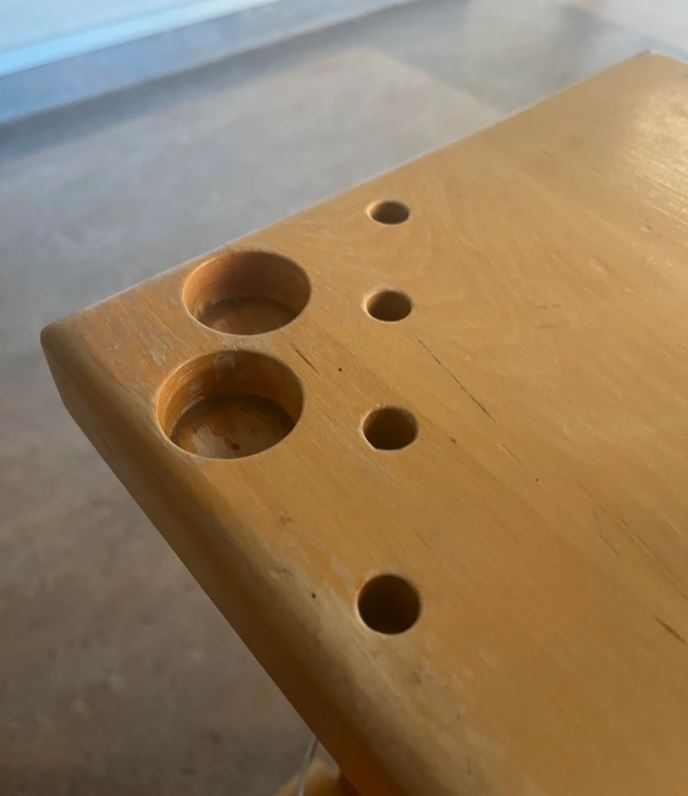
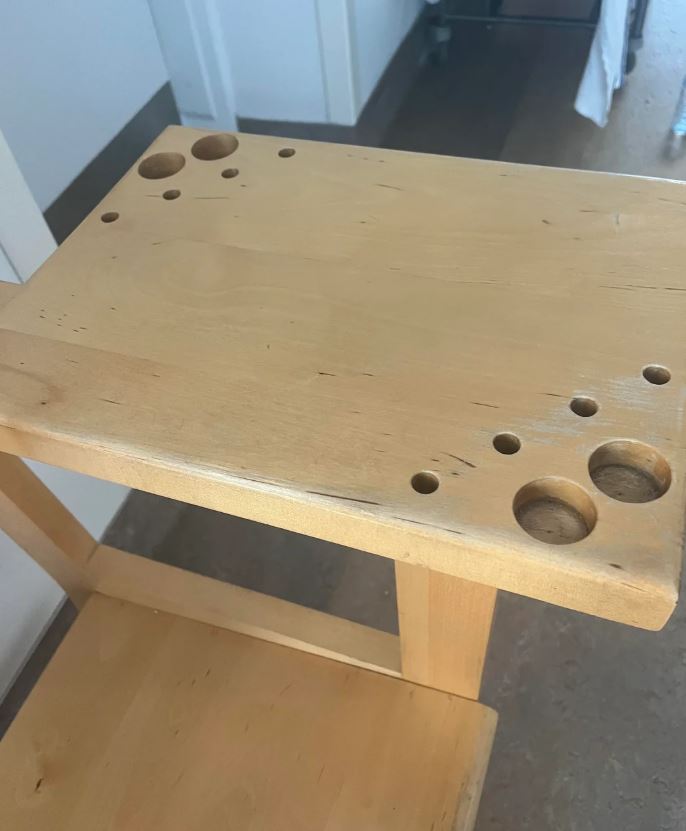
Although there is no original catalog or manufacturer’s label present on the chair, it can be reasonably assumed based on their size and positioning that these holes were utilized to store blood collection tubes, bottles, specimen containers or various small medical instruments.
Due to the widespread utilization of glass tubes prior to the introduction of more modern systems for storing blood samples, having a tube fittingly secured in an opening eliminated concerns regarding a loose tube rolling off a flat surface. The larger holes may have accommodated jars, cups, etc. as well as removable inserts. Collectively, these openings enabled the chair to become a compact workstation as well as a designated patient seat.
An Example of Early Medical Furniture
Clinic furniture today typically includes steel, plastic, vinyl and adjustable elements. As such, this chair exemplifies an early time frame in medical furniture history when much of the furniture used in medical settings resembled that of schools or offices. The pale wood coloration combined with its square form and robust construction clearly indicate that it was designed to endure for many years.
While this solid build likely instilled confidence among medical professionals utilizing the chair despite being somewhat unyielding in terms of comfort for patients, it clearly fulfilled its intended functions. The chair maintained a secure position for patients while providing immediate access to essential supplies.
Visualizing the Surrounding Environment
It is relatively easy to envision this chair positioned in a small hospital lab or community clinic. A nearby metal cabinet may have stored cotton, bandages, glass tubes and other items. The atmosphere inside the room may have included scents associated with disinfectants and furniture wax. Meanwhile, glass containers softly rattled together as a nurse readied for her next patient.
As a frightened patient sat in anticipation of receiving his/her blood sample drawn, she/he placed her/his arm upon the wooden platform resting atop her/his leg, awaiting the familiar instruction to “make a fist.” Needles rarely evoke feelings of nostalgia; however, this scene provides a brief glimpse into a bygone era. The chair had previously played an integral role in an everyday medical procedure that thousands of patients experienced.
A Simple Yet Important Piece of Medical History
The vintage phlebotomy chair with tube holder holes represents far more than simply an unusual piece of wood-based furniture. The wide arm platforms supported the patient while maintaining organized locations for tubing and medical equipment. Though it cannot be definitively stated which hole contained each type of item, it is reasonable to conclude that the overall intent of the chair was multifaceted.
The chair served as both a means of stabilization and a rudimentary medical workstation. Technicians/nurses may have employed this chair for many years while anxious patients rested their weary arms upon its weathered wooden surfaces. Today, this piece serves as an intriguing reminder of a time when medical furniture was substantial, functional and specifically constructed for one particular objective.