This Mysterious Find Has a Secret

November 3, 2026
Source: Reddit
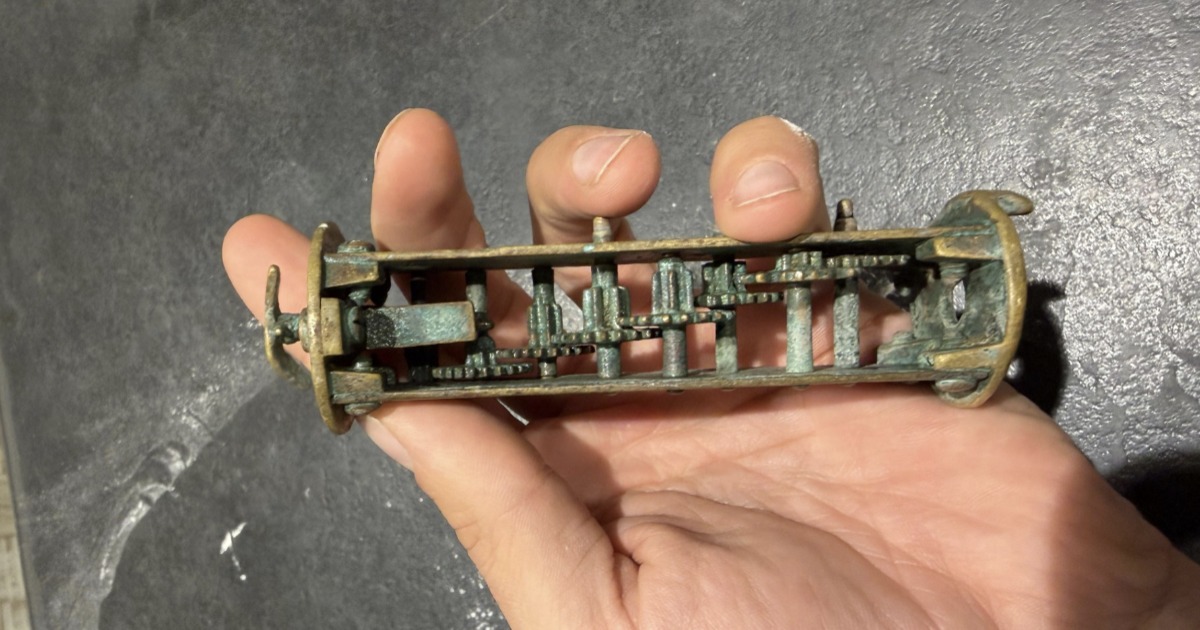
A strange brass object discovered on the North Devon coast has sparked an interesting mystery. At first glance, it looks like the remains of an old clock, with tiny gears, metal spindles, and a greenish layer of corrosion.
But a closer look suggests something far more interesting. It could be an antique ship’s log mechanism, a clever device sailors once used to measure how far their ships had travelled.
If that’s correct, this small piece of machinery may have spent years working aboard a sailing vessel before eventually ending up on the coast.
A Small Brass Object With a Complicated Mechanism
The object is small enough to fit in someone’s hand, yet its internal machinery is surprisingly intricate.
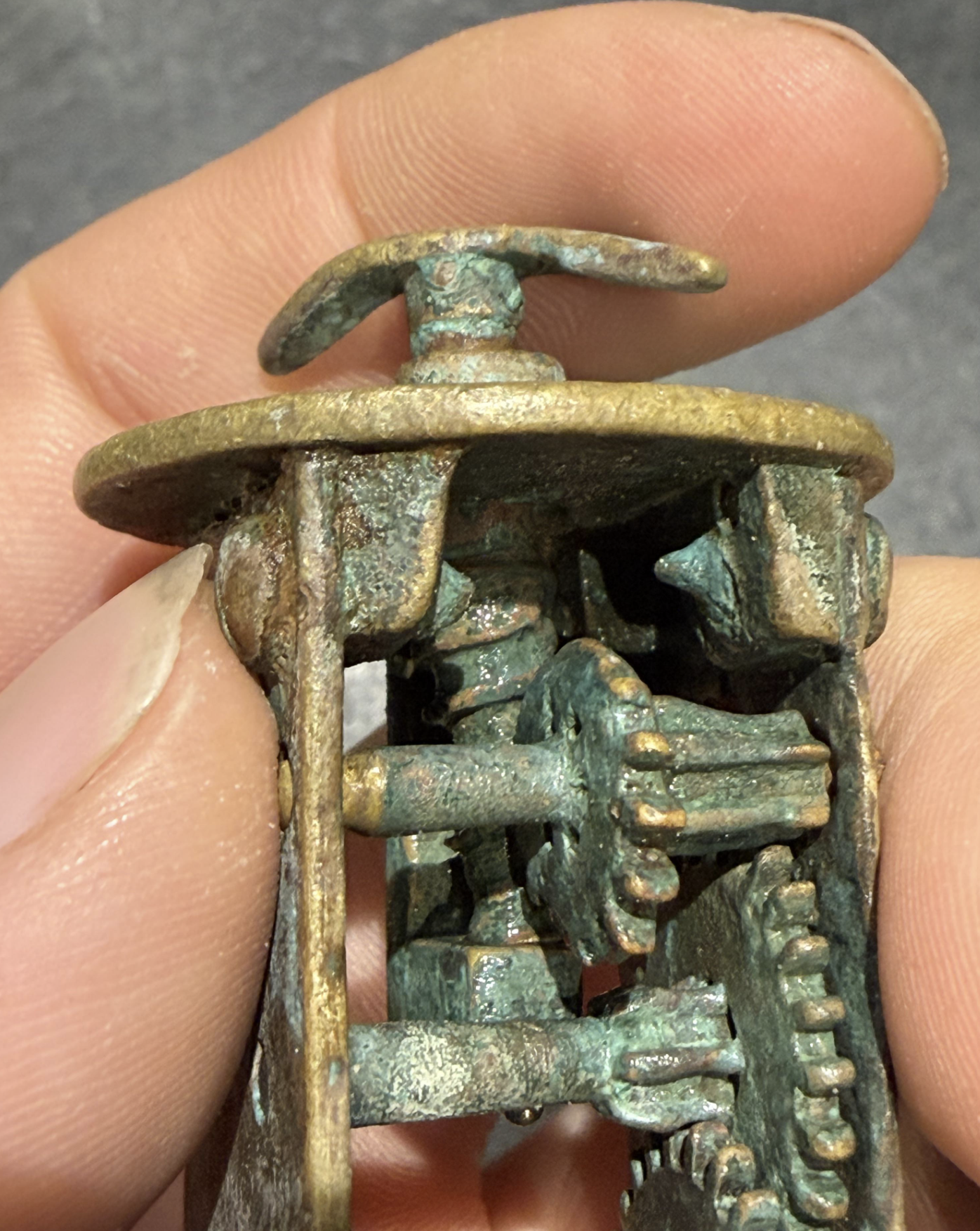
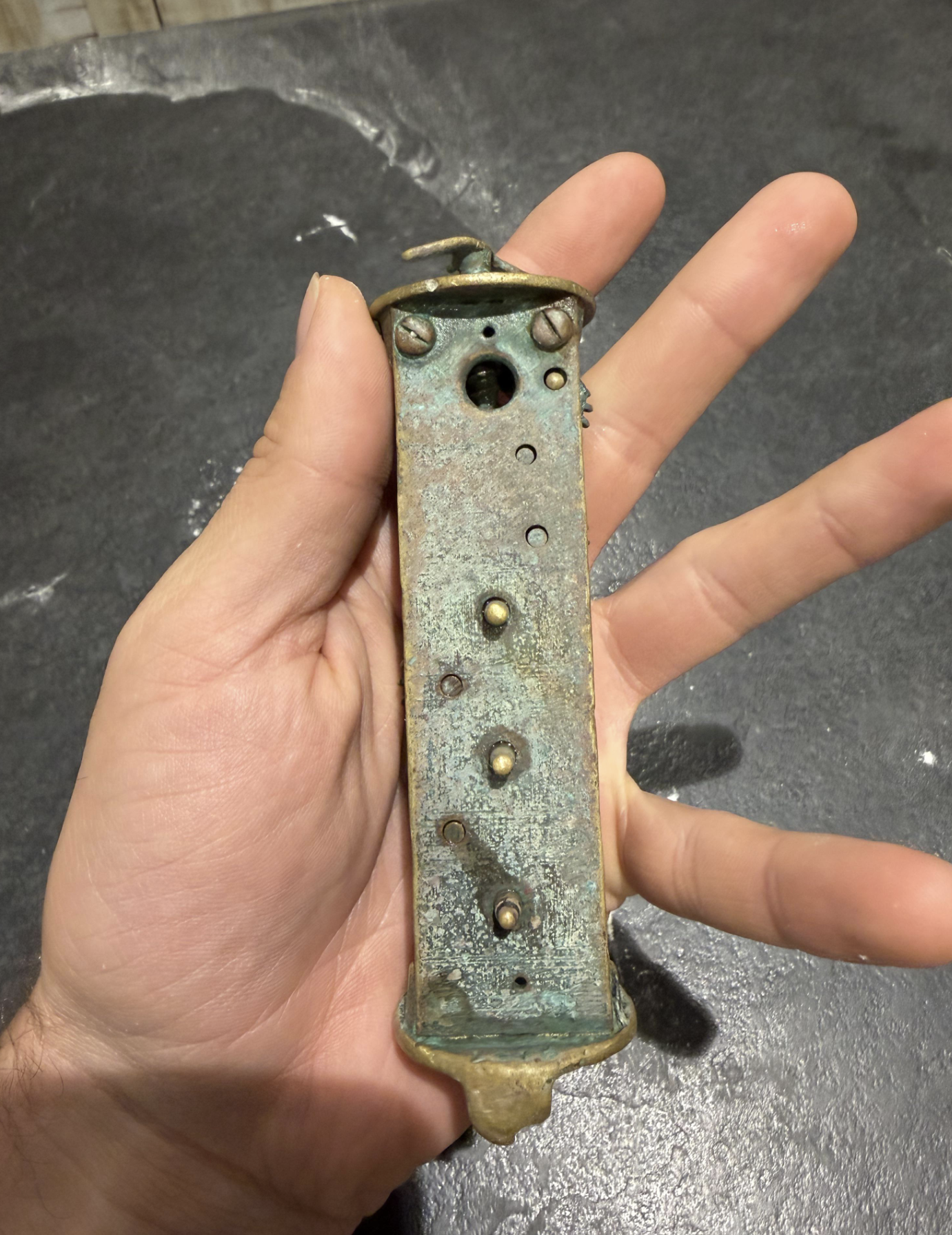
Several gears sit inside a narrow brass frame, with a worm gear near one end. Three metal spindles project through the side, suggesting they may once have supported pointers on a set of measuring dials.
Those spindles are a particularly interesting clue.
Early mechanical ship’s logs often featured three dials that recorded different distances. One might measure fractions of a nautical mile, another individual miles, and the third tens of miles.
The original dial face appears to be missing from this object, leaving the gears exposed.
Although its identity remains unconfirmed, the arrangement resembles mechanisms used in historical nautical instruments.
How Did an Antique Ship’s Log Mechanism Work?
Before electronic navigation, sailors relied on mechanical instruments and traditional methods to measure their vessel’s speed and distance travelled.
One early method involved throwing a wooden float overboard, attached to a rope with knots tied at regular intervals. Sailors counted the knots passing through their hands during a timed period.
That’s where the nautical term “knots” comes from.
During the early 19th century, mechanical ship’s logs offered an alternative.
These instruments used a rotating device towed behind the ship. As the vessel moved forward, water caused the rotor to spin, driving a series of gears that recorded distance.
It worked much like an old-fashioned car odometer.
Some early designs carried the counting mechanism in the towed instrument itself. Later taffrail logs often kept the counter aboard, with a line connecting it to the rotor trailing behind the ship.
The three projecting spindles on the North Devon discovery suggest it may have belonged to one of these mechanical counting systems.
Could It Be a Massey or Walker Ship’s Log?
Two names stand out when researching antique mechanical ship’s logs: Edward Massey and Thomas Walker.
Massey introduced a successful mechanical ship’s log in 1802. His invention helped sailors measure distance through the water without relying entirely on manual observations.
Later, Thomas Walker’s firm became a well-known manufacturer of nautical instruments, producing several mechanical logs, including the Harpoon, Cherub, and Rocket models.
Surviving examples feature multiple recording dials and intricate brass gearing.
The North Devon object shares some of these characteristics, although identifying the exact manufacturer would require further research.
Comparing its gears and spindle arrangement with surviving museum examples could help establish its age and original purpose.
How Did It End Up on the North Devon Coast?
North Devon has a long maritime history, and ships have navigated the Bristol Channel for centuries.
The area has seen countless merchant vessels, fishing boats, and coastal traders, along with numerous shipwrecks.
It’s possible the mechanism was lost when a towing line broke or that it came from a damaged vessel.
I rather like imagining a sailor having to explain to his captain how an expensive navigational instrument had disappeared into the sea.
That probably wasn’t a pleasant conversation!
Of course, there’s no evidence connecting this particular object to a specific ship or wreck. It might also have been discarded long after its working life ended.
A Forgotten Piece of Maritime Engineering
What fascinates me most about this discovery is the craftsmanship.
Engineers managed to build accurate measuring instruments using little more than brass gears, rotating shafts, and mechanical ingenuity.
These devices operated without electricity and helped sailors navigate long before GPS existed.
Despite the corrosion and missing parts, the North Devon object still shows the careful engineering behind its construction.
If it really is an antique ship’s log mechanism, it could date from the 19th or early 20th century.
For now, its exact origin remains a mystery.
But it’s remarkable to think that something small enough to fit in a hand may once have helped a ship navigate the open sea.
And perhaps, more than a century later, the tides have finally brought it back to shore.