The Old Clock’s Hidden Switch

March 10, 2026
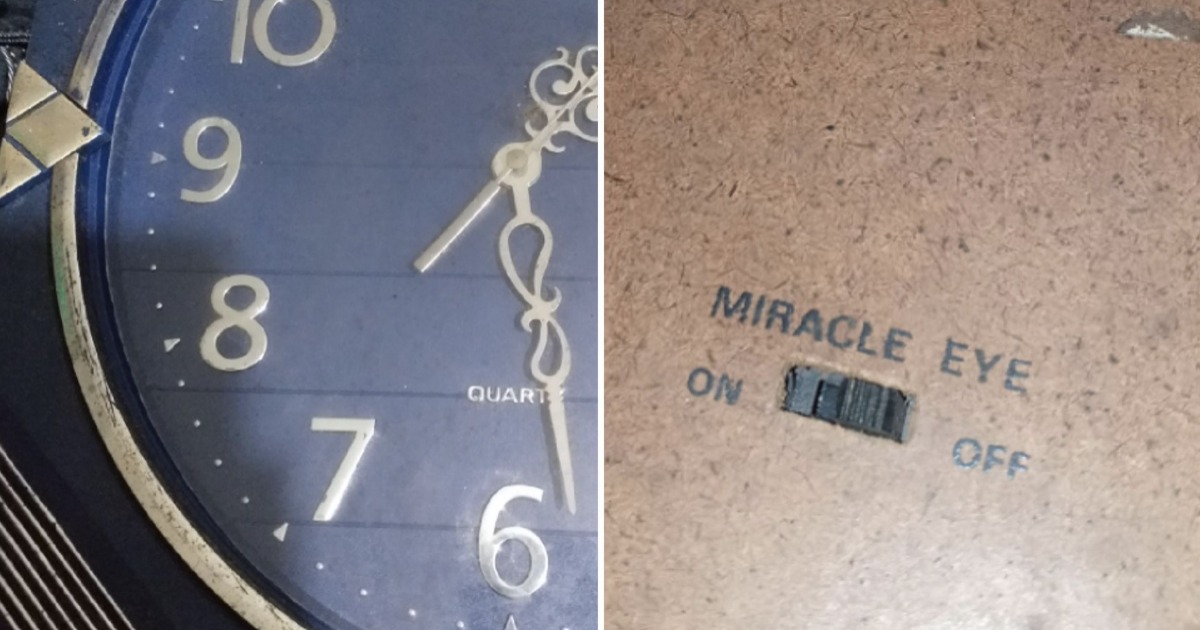
Source: Reddit
When I first saw “Miracle Eye” printed on the back of an old wall clock, I thought the name sounded much more exciting than it had any business being. I mean, “Miracle Eye” on a clock? That sounds like it belongs to a comic book, not a wall clock in your living room.
That’s why I remember it.
The “Miracle Eye” clock feature is a light sensor that detects when the room is dark and stops playing the clock’s music or chimes.
A Fancy Name for a Practical Feature
Someone could have simply called it “night sensor” and that would have been that. Instead, they called it “Miracle Eye,” which gives the clock a sense that it is watching the room. It’s a bit dramatic, yes, but it is memorable.
And the feature has lived up to the billing. In the daytime, the clock can play its music or chime on the correct time. When the room gets dark, the clock will stop making a ruckus. So there won’t be some loud song blaring through the night waking someone up and startling them. This is a good example of smart design.
Why It Is Still Remembers Years Later
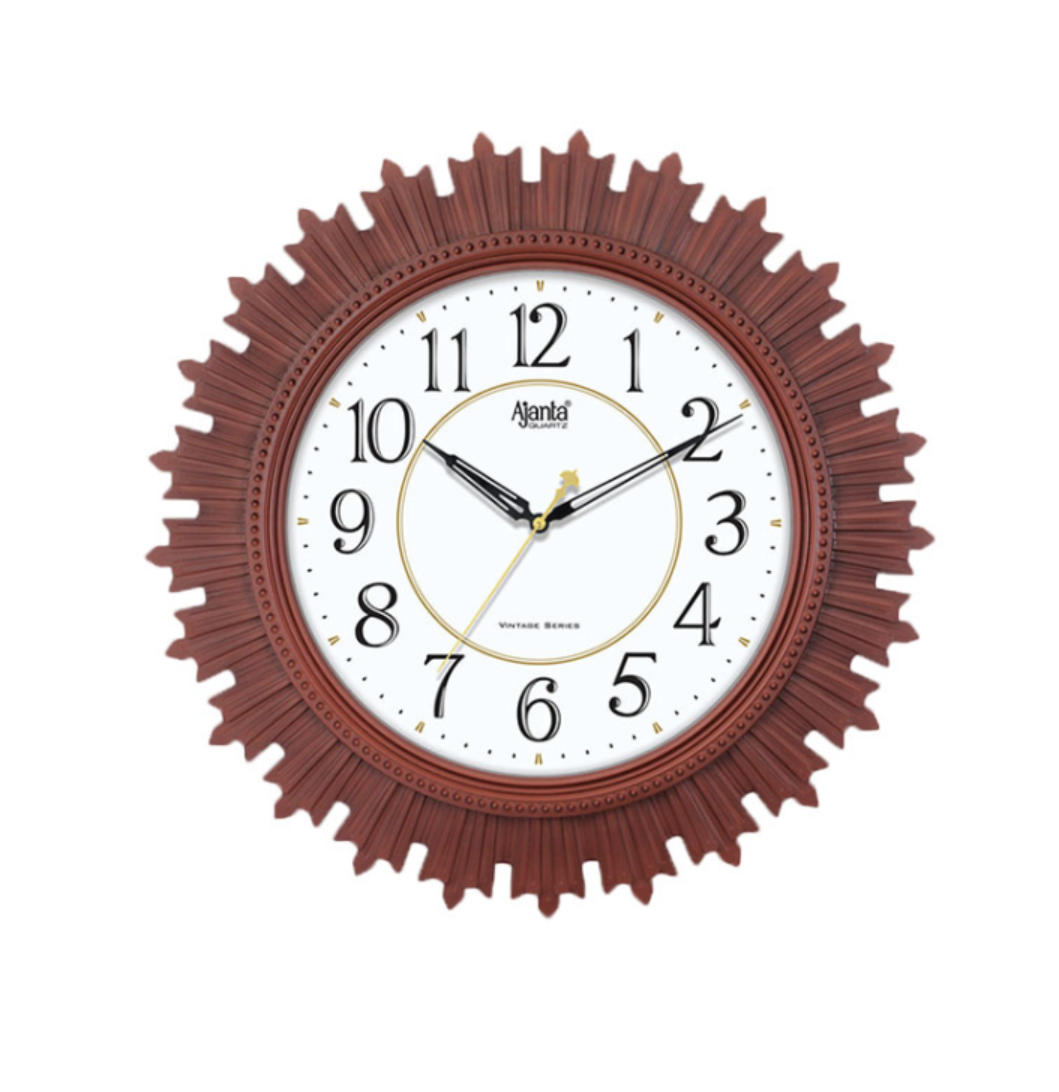
Wall clocks were never background items. You could hear them, and see them. They were part of the room.
I still think of homes where every sound was important. The fan hummed. Dishes clanged in the kitchen. Someone called out the time from another room. Then the wall clock chimed and it was like the clock was policing the household. If you’ve grown up around one of these clocks, you understand what I’m talking about.
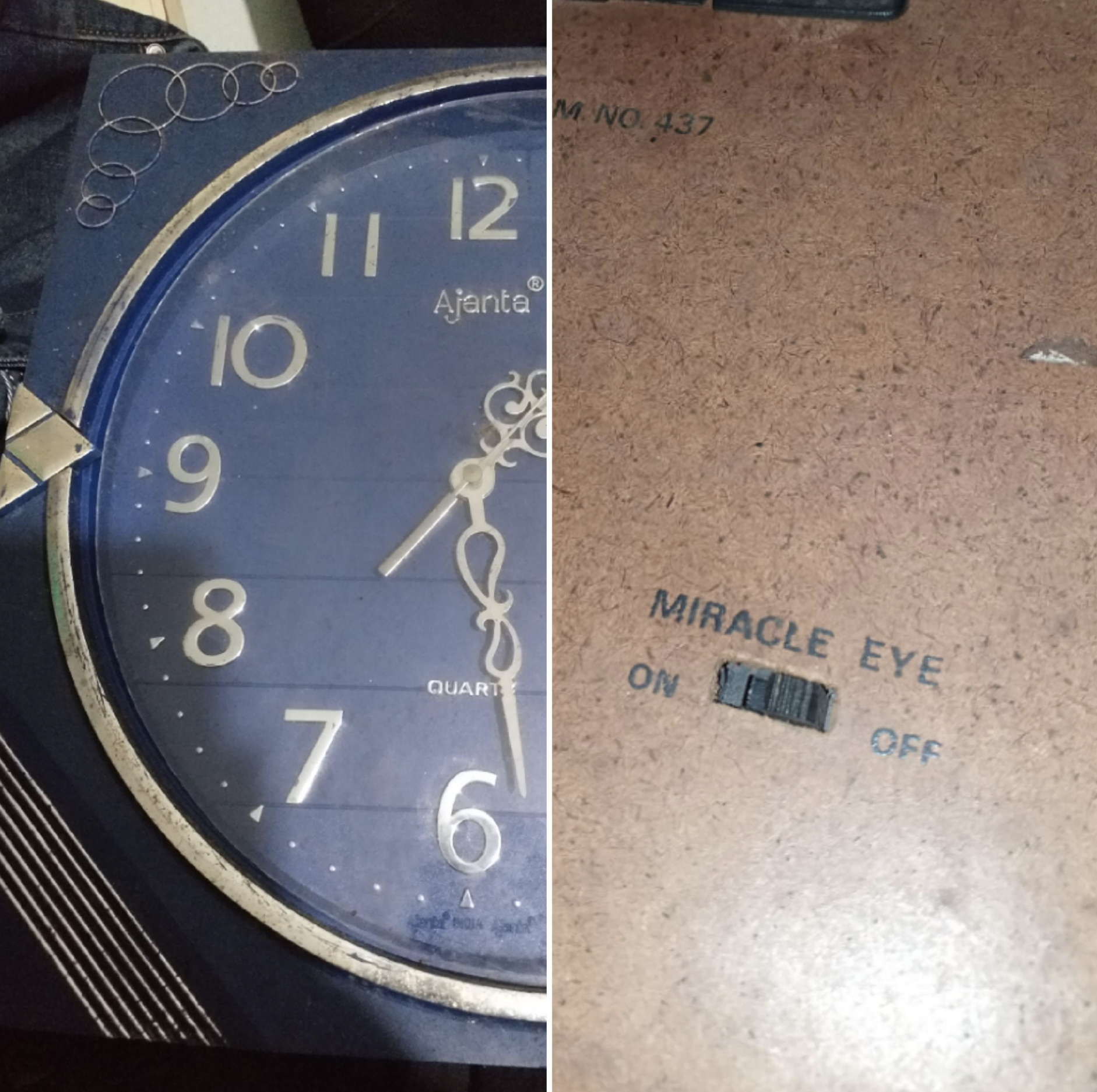
So when you flipped one of these clocks over and discovered the “Miracle Eye” clock feature switch, it felt like finding a secret.
That is why the “Miracle Eye” clock feature is so memorable.
What the “Miracle Eye” Clock Feature Did
To put it plainly, the “Miracle Eye” clock feature uses a light sensor. When the room becomes dark, the sensor disables the sound portion of the clock. Most of the time that means the hourly chime or melody stops. When the room is bright again, the sound returns.
It didn’t affect how the clock kept track of time; it affected the sound.
That is all. There was no magic, no mystery. There was just a practical solution to keep houses quiet at night.
There is also something nice about this feature seeming to be somewhat ahead of its time. Many devices today have automatic adjustments based upon time of day, ambient light levels, etc. The clocks mentioned here were doing this type of thing many years before. They were reacting to their environment. This is one reason they remain so memorable.
Old Clocks Had Character
Modern electronic devices are efficient. Old clocks had personalities.
They had large numerals, shiny finishes, decorative hands, and design elements that obviously wanted to get noticed. Some of them played songs. Some of them had a pendulum style. Some of them were grand even though they hung near a TV with poor reception and a lace cover nearby.
This is why the “Miracle Eye” clock feature seems to be larger than it actually is. It is technically nothing more than a sensor and a switch. But when you look at it on an old clock, it instantly reminds you of everything else surrounding it.
You’ll remember the room. The furniture. The afternoon sunlight. The chime of the clock at each hour. Possibly even that family tradition of having all the clocks set several minutes fast and claiming it was some form of self-discipline.
We definitely had that.
Why The Name Was Such A Good Fit
The name is half of the appeal.
Businesses used to name common features with bold, futuristic, or magical sounding names to make the products seem better. “Miracle Eye” does the same thing. You may forget the specifics of a product’s technical specifications, but you’re unlikely to forget a phrase such as “Miracle Eye”.
And that matters. Nostalgia frequently resides in small details. A button label. A dial color. A song that played once per hour. Things such as these tend to stick in your mind longer than the company literature about the product ever could.
A Little Detail That Stays With You For Years
The “Miracle Eye” clock feature wasn’t the primary reason people purchased these clocks. However, it is a type of detail people notice years after they purchase a clock that has been stored away or discover one still hanging in a home built decades earlier.
You flip the clock over. You see the tiny switch. You read the description. Instantly you are transported back into that room.
That is what old objects are so great at. They are able to hang onto ordinary life. The major events aren’t what they usually hang onto. Rather, the minor events. The background moments that seemed insignificant at the time and for whatever reason they become the memories we have the longest.
Closing Thoughts on The “Miracle Eye” Clock Feature
So what is the “Miracle Eye” clock feature?
It is a light-sensitive sensor that turns off the music or chimes of the clock when it becomes dark. Useful. Clever. Easy to miss if you happen to flip the clock over and notice the tiny switch.
However, that is also why people continue to discuss it. The feature solves a real problem, and the name gives it a personality. Older clocks were very good at that. They told time. Filled rooms. Occasionally left behind a single detail that people continued to recall for years.
In this instance, that detail is the “Miracle Eye”.