The Mystery Behind These Iconic Three Gold Orbs

August 19, 2024
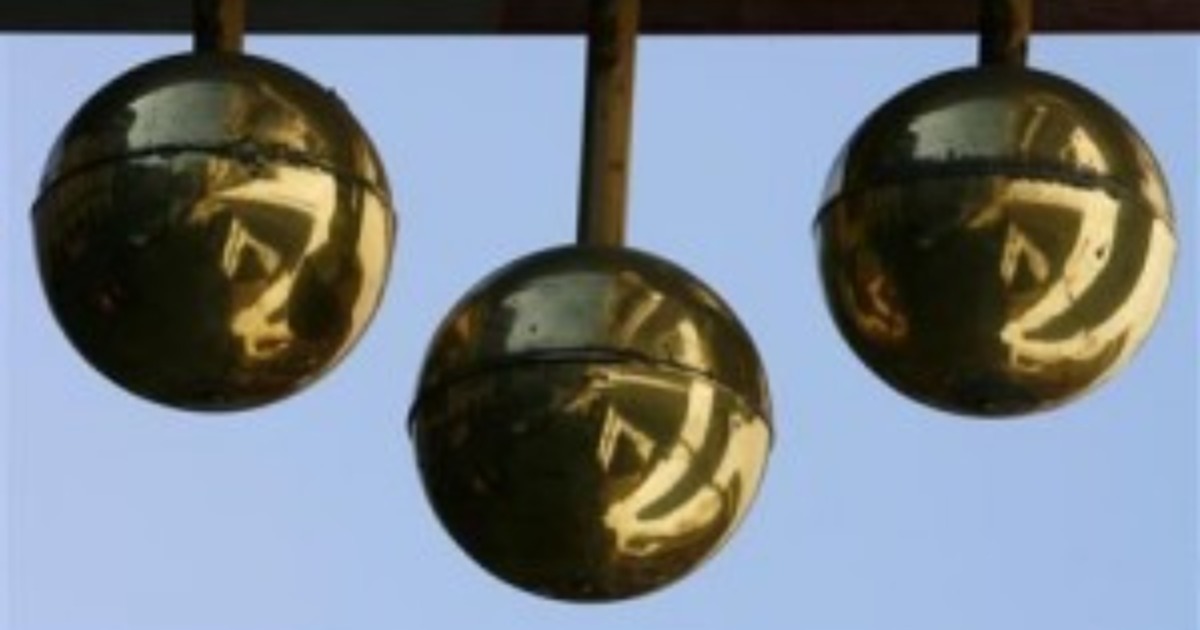
Source: Hat City Pawn
Did you ever wander down a twentieth-century street of a medieval European or colonial American town, with shops and buildings built right up to the sidewalks? It could have been during one of those walks that you happened to look up and see a sign – three gilded balls, or spheres, swinging from a beam above a doorway like three basketballs. They didn’t have to be explained to you in detail; even if their significance was not clear to you, they made you wonder. For many, that symbol meant one thing: A pawn shop was close, ready with artifacts from the past years.
The pawnbroker’s sign of three globes is a commercial symbol of the pre-industrial age that is still in evidence today. It was not just a sign for those who wanted to purchase or sell – it had with it the history of centuries, an acknowledgment of the Lombardy merchants who introduced the concept of pawnbroking to England in the sixteenth century. The frequency with which the sign can be seen on main streets and in small towns tells a story of how pawnbroking became a part of the community that provided assistance to those who needed cash fast and valuable items to collectors.

In a way, pawn shops were like the original thrift stores, before the term ‘thrift store’ even came into existence. When you were a child, do you recall your parents visiting the local pawn shop? This would have been to either pawn something, for example a pocket watch, or to buy something that caught their eye, such as another pocket watch or a guitar? The sound of the door opening and closing, the smell of old leather, and the glass cases with all kinds of interesting objects – these are the things that imprint themselves on the memory. And suspended over them was the three golden balls, indicators of opportunities.
Still, how did these three golden balls appear and why, of all images, the symbol of a particular trade was chosen? The narrative is set in the Middle Ages and the wealthy merchants of Lombardy, Italy. These traders were mainly involved in finance and lending services and their activities extended to the whole of Europe. When they entered the business of pawnbroking they selected the three balls which symbolize the coins or the pledges to repay as their logo. The image followed their business practices as they spread across England and the rest of the world and thus became the international symbol of the trade.

The same can also be said of the United States where pawnshops became apparent in most towns especially in the course of a fiscal crisis. It was not just a place to negotiate; it was a way out. Families that required some more money to sustain them for the rest of the week would then bring in an asset that they would pawn in the hope of getting it back later on. In a way, the pawnbroker was as much a fixture of the neighborhood as the butcher or the baker, a familiar face with whom people conducted business and who served a function in their lives.
At the same time, pawnbrokers also played an intermediary role in the local economy in another way. The things that came in and out of their business – jewelry, musical instruments, tools – often became new possessions of people who valued them. The guitar your Dad picked up at the pawn shop for a few bucks? It may have been bought at a pawnshop, but in your family, it became the thing around which many sing-alongs in the backyard and caroling on Christmas were held.

Today, there are not so many pawn shops and they serve a different purpose due to the development of internet shopping and large shopping centers. But the three-ball sign is still a strong symbol of the earlier period of the game. It is a story of a time when every object told a tale, when trading was not merely a commercial transaction but a trade of stories, and when the small enterprises were the life blood of societies. They painted a picture of a society where people’s relations were as important as business and where every object could be a valuable possession of the other person.
The next time you see this symbol of three balls – whether in some antique shop or, for example, on a wall hook in a café filled with all sorts of trinkets, do not forget what this symbol means. It is still a symbol of trade but at the same time – a symbol of existence, solidarity and of those hidden gems that one can come across.
And perhaps, it will bring back memories of stroll through some old European city, looking at the windows and dreaming of the lives of the people who own those things. Because, indeed, every object has a history and every history is interesting.
