The Charming Old House Detail

June 23, 2026
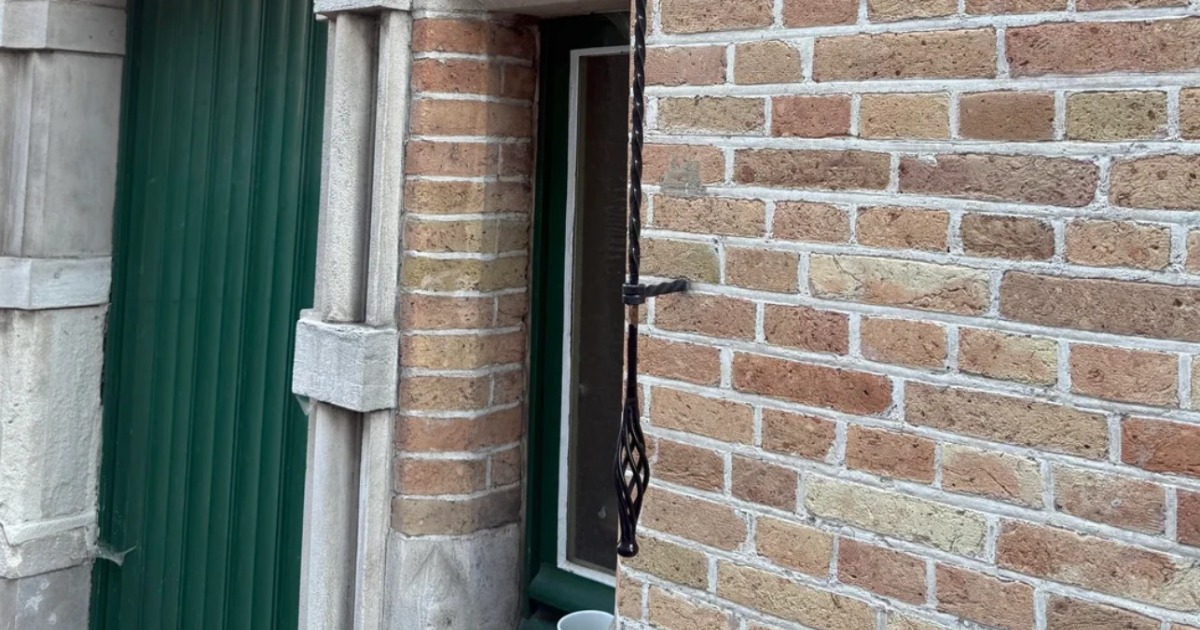
Source: Reddit
Some old house details do not shout for attention. They simply hang there, quietly waiting for someone curious enough to notice them. A bell pull doorbell is one of those details. At first glance, it might look like a decorative iron rod fixed to the wall. Maybe it seems like an old support bracket, a strange handle, or a forgotten piece of hardware that no one bothered to remove.
But once you know what it is, the whole façade changes.
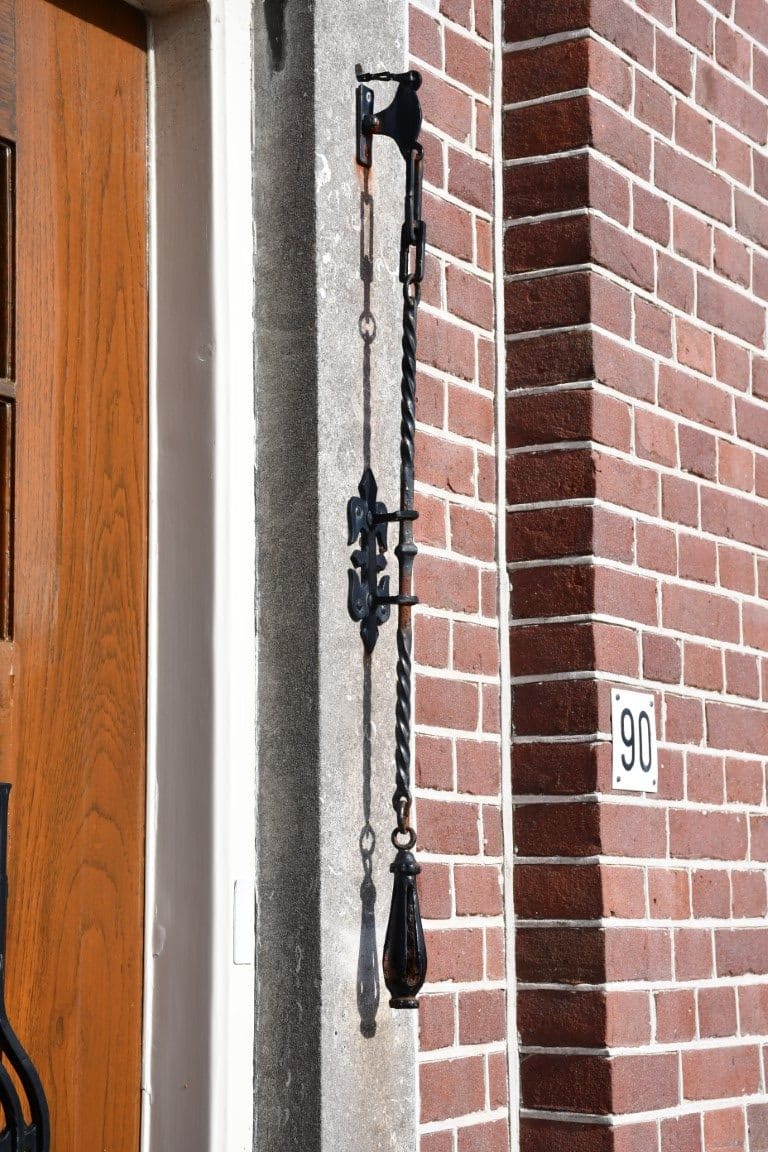
That long wrought-iron pull beside the door was once the way visitors announced themselves. Before electric doorbells, before plastic buttons, and long before video intercoms, someone arriving at the house would reach for the lower handle and pull it down. That motion moved the top linkage outward from the wall and triggered a bell inside. Simple, clever, and wonderfully physical.
In places like Bruges, Belgium, where old brick houses and historic doorways line the streets, these bell pulls still feel right at home. They belong to a slower world, where even ringing the doorbell took a little effort.
What Is a Bell Pull Doorbell?
A bell pull doorbell is a manual doorbell system. Instead of pressing a button, a visitor pulled a handle, chain, or rod outside the house. That pull activated a mechanical connection that rang a bell indoors.
The examples often seen on old European houses usually have a long iron rod mounted vertically beside the doorway. The bottom end has a grip or handle. The upper end connects to a hinged or pivoting bracket. When someone pulls down on the handle, the top part shifts outward. That movement tugs the internal mechanism and rings the bell inside the home.
It sounds almost too simple. Yet that is the beauty of it.
There are no batteries. No wires in the modern sense, no glowing button and no app. Just a piece of iron, a bit of movement, and a clear sound somewhere inside the house.
A Doorbell You Could Feel
Modern doorbells ask very little of us. We press a small button and wait. Sometimes we do not even hear the bell ourselves. We just trust that something happened behind the door.
A bell pull was different. It made the act of calling at a house feel more deliberate. You had to grasp the handle, you had to pull and you could feel the resistance of the mechanism. Somewhere inside, a bell answered your effort.
That physical connection matters. It turns a tiny daily action into something memorable.
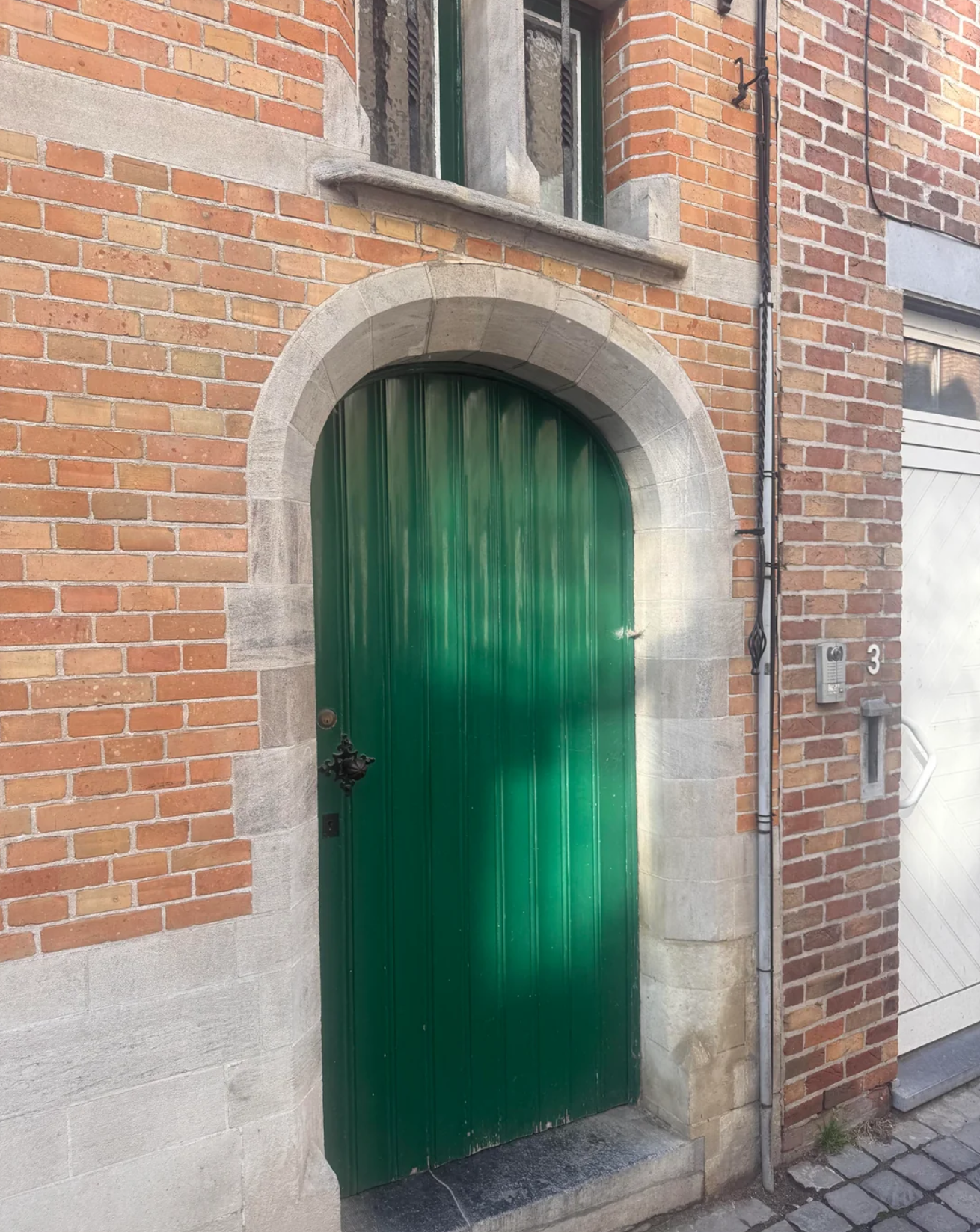
Imagine standing on a cobbled street in Bruges a hundred years ago. The brick wall still holds the day’s warmth. The green-painted door rises under a stone arch. You pull the iron handle, polished slightly by decades of hands. Inside, the bell rings. Maybe footsteps follow. Maybe a maid, shopkeeper, aunt, priest, or neighbor opens the door.
It is easy to romanticize the past, of course. Rain still fell. Errands still dragged on. People still arrived at inconvenient times. But small details like this remind us that daily life once had more moving parts. Even a knock at the door came with a bit of craftsmanship.
Why So Many Survive in Bruges
Bruges is famous for its historic streets, stepped gables, canals, and brick façades. The city has a way of preserving small architectural details that might disappear elsewhere. Old doorways, stone surrounds, carved ornaments, iron hooks, shutters, and bell pulls often remain part of the streetscape.
That does not mean every bell pull still works. Many survive as decorative remnants. Some may connect to nothing now. Others may have lost their internal bells during renovations. Electric doorbells, intercoms, and modern security systems took over long ago.
Still, owners often leave these old pulls in place. Why remove something so full of character?
A bell pull doorbell adds texture to a façade. It tells visitors that the house has seen many generations come and go. It also balances beautifully with old brickwork, stone arches, and painted wooden doors. On a historic house, a plastic button can look a little shy. A wrought-iron pull looks like it was born there.
The Craftsmanship in the Ironwork
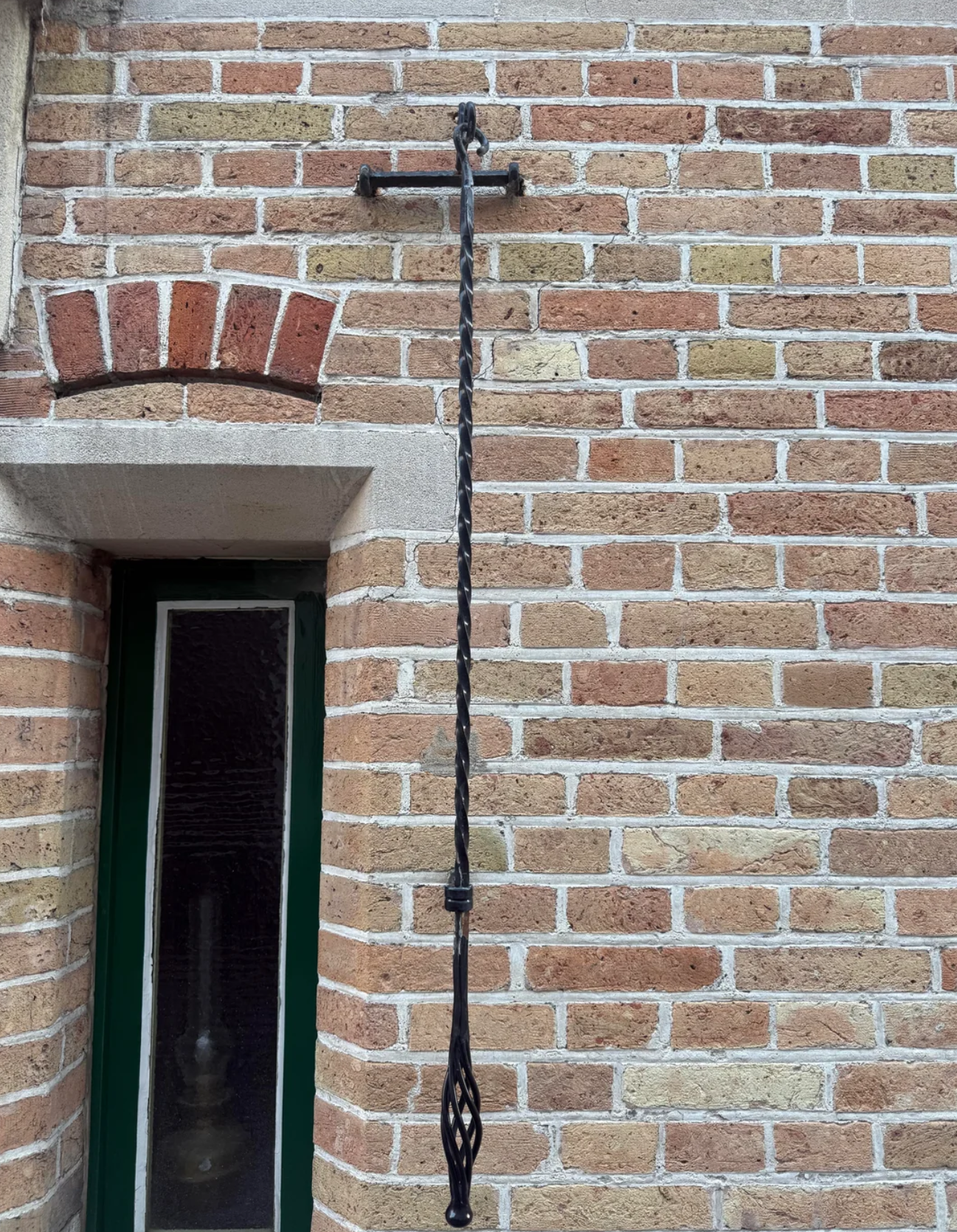
Many bell pulls show off the skill of the blacksmith. Some have twisted shafts. Others have cage-like details near the grip. Some end in a round knob or teardrop shape. The iron may curve slightly or include small decorative scrolls at the bracket.
These details were not only for beauty. They made the handle easier to grip and gave the object strength. Wrought iron suited outdoor use because it could handle weather and repeated movement. It also allowed makers to combine function with ornament.
That combination feels very old-world now. Today, we often hide mechanisms. We make things smooth, flat, and quiet. The bell pull does the opposite. It puts the mechanism on display. It says, “Here is how I work.” There is something honest about that.
From Public Street to Private Home
The placement of a bell pull doorbell tells its own story. It sits right at the border between public and private life. One side belongs to the street. The other belongs to the household. The bell pull connects them.
That little piece of hardware controlled the moment of arrival. Friends, tradespeople, messengers, relatives, and strangers all used the same pull. Each tug sent the same signal inside: someone is here.
Before phones became common, and long before text messages, this was the beginning of many social moments. A visit started with a bell. So did deliveries, invitations, apologies, gossip, business, and probably more than a few awkward conversations.
It is funny to think that such a slim iron rod could introduce so much human drama. But doors have always been stages. The bell pull simply rang the curtain up.
The Sound of the Good Old Days
For many people, nostalgia lives in sounds. The click of a rotary phone. The creak of a wooden stair. The clatter of a letterbox. The chime of a shop bell. A bell pull doorbell belongs in that same family.
Even if we cannot hear the original bell today, we can imagine it. Not a digital tone. Not a cheerful electronic melody. More likely a real metal bell with a clear, ringing note that traveled through the hall.
That sound would have been part of the house’s personality. Some bells rang sharply. Others had a deeper tone. In larger homes, the bell system might have connected to different rooms or service areas. In modest houses, it may have been much simpler. Either way, the sound meant someone outside wanted attention.
There is a certain charm in that directness. No screen, no camera and no notification. Just a bell.
A Small Detail Worth Noticing
The next time you walk through an old town, look beside the doors. You may spot a bell pull doorbell hiding in plain sight. It might sit next to a grand entrance or a narrow side door. It might be painted black, worn with age, or blended into the brickwork. Once you know what to look for, you start seeing them everywhere.
That is one of the pleasures of old architecture. The big things impress us first: towers, canals, churches, squares, and façades. But the small things stay with us. A worn threshold. A hand-forged hinge. A tiny window above a door. A bell pull waiting beside the entrance.
These details make the past feel close. Not as a museum display, but as daily life. Someone once grabbed that handle with cold fingers, someone once waited for the bell to ring inside and someone once opened the door.
Why the Bell Pull Still Charms Us
A bell pull doorbell charms us because it feels human. It requires touch and shows its purpose. It was made to last and it also carries the marks of a time when even practical objects could be beautiful.
In Bruges, these iron pulls fit naturally among the brick walls and arched doorways. They remind us that houses are not only buildings and they are witnesses. They collect gestures, routines, repairs, fashions, and little inventions. Some disappear. Others remain, fixed to the wall, still ready for a hand that may never come.
And maybe that is why this old doorbell detail feels so special. It turns a simple question — “What is that metal pole?” — into a doorway of its own. Pull it, at least in your imagination, and the good old days ring back.