Mystery Finally Solved

July 21, 2026
Source: Reddit
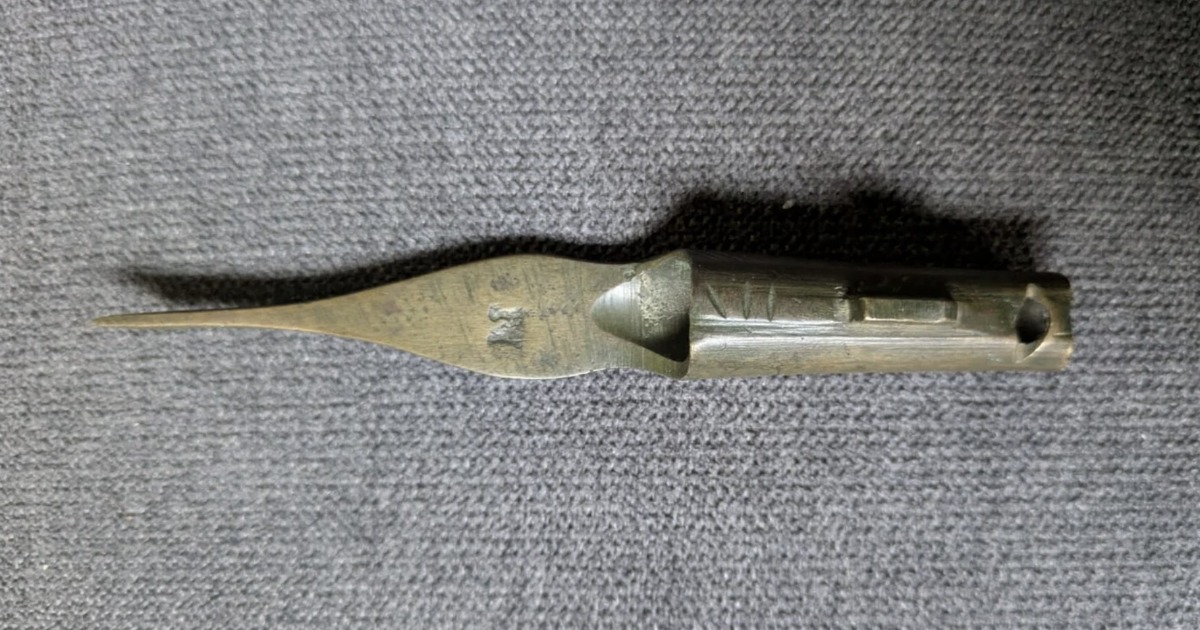
When I first saw this metal object, I thought it might be a tiny bayonet or an old hand tool.
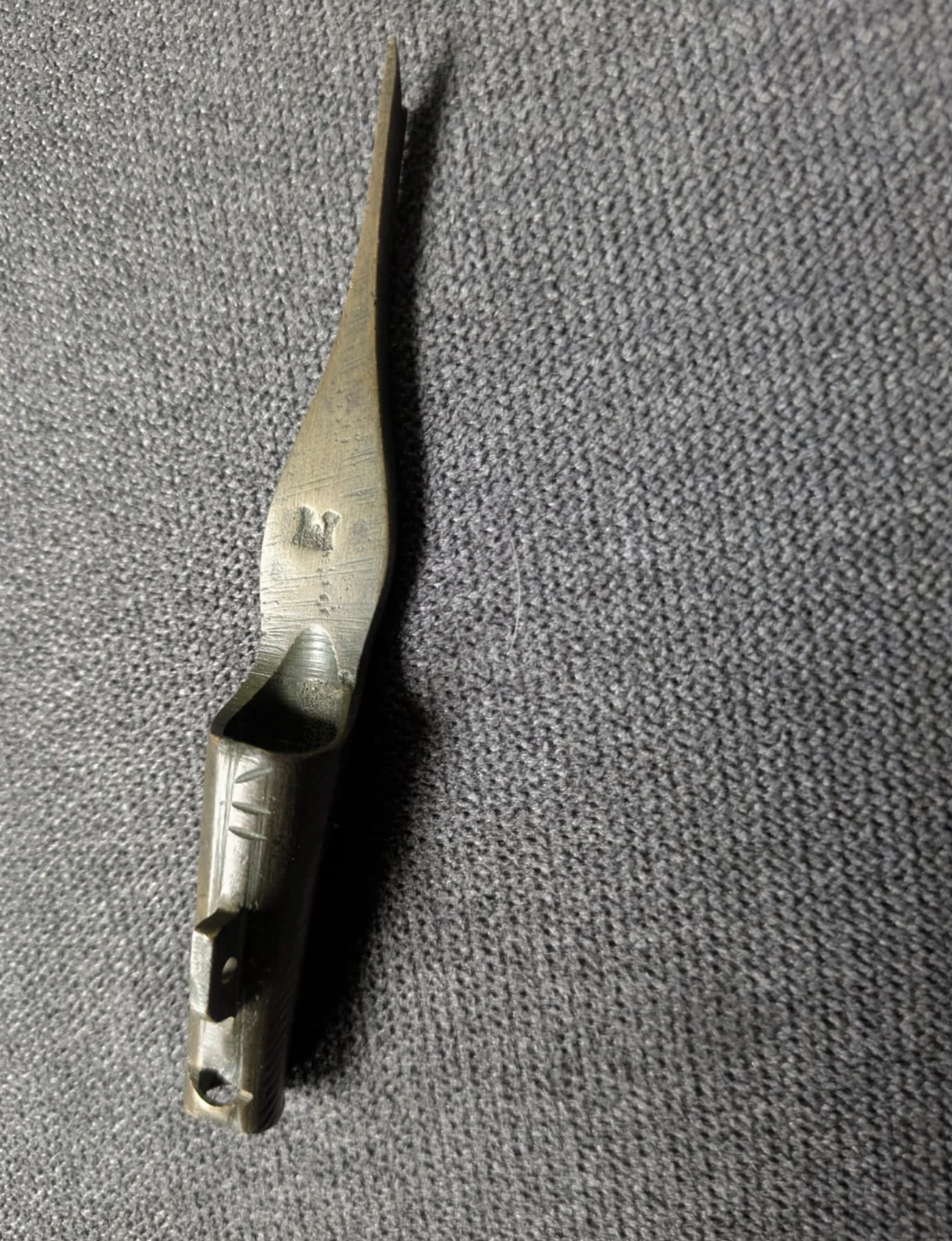
One end formed a hollow tube. The other narrowed into a long, pointed tail. An engraved “M” and three notches made it look even more mysterious.
Then I saw it fitted beneath the barrel of a Brown Bess reproduction.
That solved it.
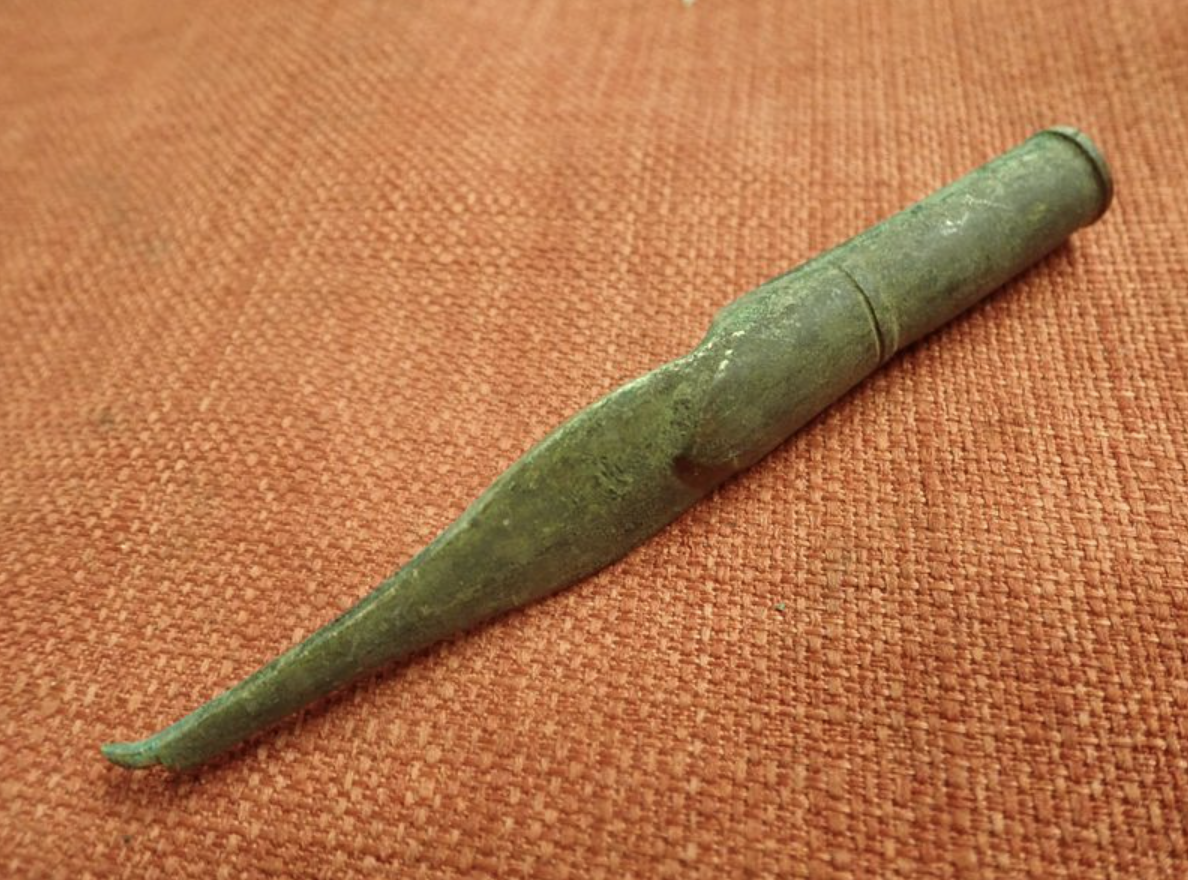
The object appears to be a Brown Bess ramrod guide, also called a ramrod pipe.
What a Brown Bess Ramrod Guide Does
The hollow section carries the ramrod beneath the musket barrel.
The pointed tail fits into a recess cut into the wooden stock. A gunsmith secured it in place, leaving the tube exposed while the long tail disappeared into the wood.
That hidden tail explains why the loose part looks so strange. On its own, it resembles a small spearhead. Installed in the stock, its purpose becomes obvious.
The ramrod passed through the tube and rested beneath the barrel, ready for use.
Why the Ramrod Mattered
The Brown Bess was a muzzle-loading musket.
A soldier loaded powder and ball through the front of the barrel, then used the ramrod to push the charge down toward the breech.
Without the ramrod, loading became difficult. The guides kept the rod aligned, secure, and easy to reach.
It was a simple system, but it mattered. Small fittings like this helped soldiers load, carry, and maintain the musket.
That’s why I find these parts interesting. They rarely get the attention given to locks, barrels, or bayonets, yet the weapon depended on them.
Brass Furniture on the Brown Bess
Collectors often use the word “furniture” for a musket’s metal fittings.
That includes the trigger guard, butt plate, side plate, sling fittings, and ramrod pipes.
Many Brown Bess muskets used brass furniture. Brass resisted rust, shaped easily, and developed a warm patina over time.
The loose guide in the photos shows scratches, wear, and darkened areas. Those marks suggest use, but they don’t prove the part’s age.
Reproduction fittings can also become worn through handling, reenactment use, or deliberate aging.
The M Mark and Three Notches
The engraved “M” may be a maker’s mark, an inspector’s stamp, an assembly mark, or an owner’s initial.
The three notches may have helped a worker match the fitting to a particular stock during assembly.
Gunmakers often fitted parts by hand. Simple cuts or marks helped them keep matched components together.
That explanation makes sense, but the marks could also have been added later. Without documentation, their exact meaning remains uncertain.
Original Part or Reproduction?
The shape closely matches the guide on the Brown Bess reproduction shown in the comparison photo.
Still, that doesn’t prove the loose piece came from an original military musket.
Modern manufacturers make accurate Brown Bess reproductions and replacement parts. Age would need to be judged through construction details, measurements, metal composition, and comparison with documented examples.
The overall length appears to be about 12 centimeters, which suits a ramrod guide with a long mounting tail.
A Small Part With a Clear Purpose
This Brown Bess ramrod guide once had a straightforward job.
It held the ramrod beneath the barrel and kept it ready for loading.
The pointed tail anchored the guide inside the stock. The tube carried the rod. The “M” and notches may record something about the maker, assembler, or owner.
By itself, the object looks like a small blade.
On the musket, it becomes exactly what it was meant to be: a practical brass fitting that helped keep one of history’s most familiar firearms ready for use.