Identifying a Tiny Piece of a Classic

March 16, 2026
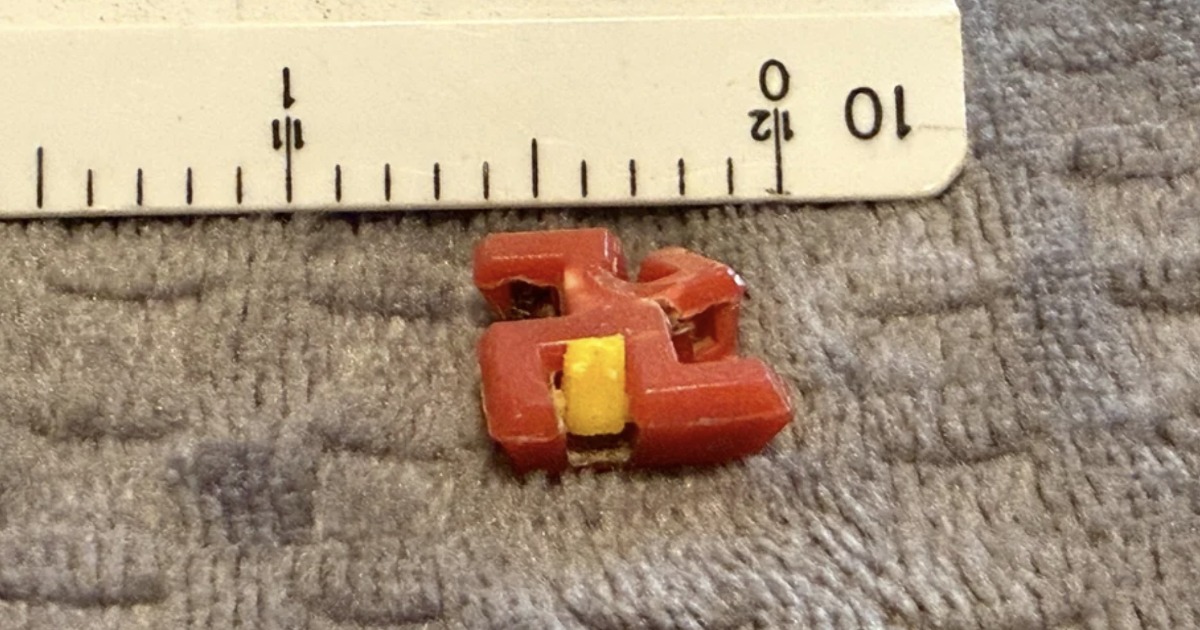
Source: Reddit
As I was walking through the yard, I came across a small, red, plastic item that fit my normal pattern of what to do with small, unusual items (i.e., turn them over, stare at them, and guess wrong). It turned out to be a Hoberman Sphere toy find.
My first thought was that it may have been a clip from an electric connector; it was small, light weight, and obviously designed for a specific purpose. However, the shape of this item continued to bother me. It had a square center, “hook” arms, and a small yellow tab. It looked too unusual to be regular hardware.
After awhile, the connection became apparent; the small red plastic item I had found was a connector piece from a Hoberman Sphere toy.
Once I realized that the small red plastic item was a connector piece from a Hoberman Sphere toy, everything made sense.
A Small Component of a Clever Toy
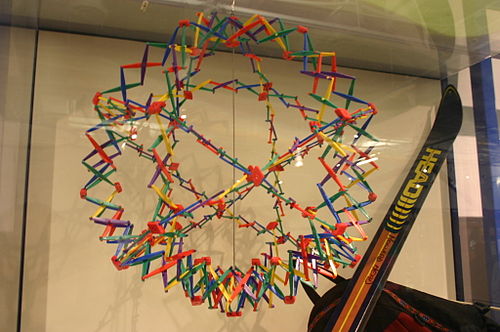
The small red plastic item by itself appears completely random. Once next to a Hoberman Sphere toy, however, the design becomes apparent immediately. The central square area matches the connection areas of the jointed arms of the toy where they pivot. The hook and tabs are part of the structure which allows the sphere to both expand and collapse.
What makes the Hoberman Sphere toy find so interesting is that the small red plastic item is not merely a broken toy piece. It is a component of the actual mechanism which allowed the entire toy to function properly.
The Hoberman Sphere toy was indeed a very clever toy.
Why the Hoberman Sphere Remained in People’s Memories
If you had one of these toys, you likely remember the motion of the toy rather than anything else. The toy began as a compact ball and expanded into a large geometric sphere in a single smooth motion. The motion of the toy was its appeal. You could throw it, expand it open, shut it down again, and continue to repeat this process longer than you intended to.
I remember that this was the fun of the toy. No batteries or screens. Only a creative design and a satisfying motion.
It is probably for this reason that the toy remains in people’s memories. Although it appeared dramatic, the concept of the toy was simple. A series of connected plastic arms working together to produce one shape which expanded. Children enjoyed the motion of the toy. Adult also typically picked it up, and pretended to simply examine it.
They were not deceiving anyone.
This Hoberman Sphere Toy Find Shows Why the Design Worked
Toys such as the Hoberman Sphere depend upon their connections. Each small connector has a role. In fact, even this small red piece has an exact shape because it needed to provide support to connect other pieces together and permit motion at the same time.
What I enjoy most about this Hoberman Sphere toy find is that it demonstrates the engineering that exists within something playful. The toy felt simple when you operated it, but there was no simplicity in the structure which existed behind the toy.
Many good toys work in this manner. Good toys can take a creative concept and make it appear to be easy to use.
One Small Component, One Large Memory
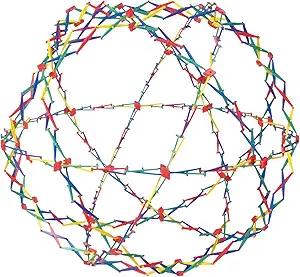
When I located the piece in the yard, I felt a small satisfaction in turning a mystery into a memory. It began as an unusual little object. Then, it became a representation of a toy designed around motion, color, and surprise.
I still do not know how it ended up in the yard. Possibly a Hoberman Sphere broke outside years ago. Possibly this one piece remained intact while the rest of the toy vanished. Regardless, I am glad I took a moment to stop and observe.
The Hoberman Sphere toy find was a small discovery, but it represented a toy that many people still remember. Not a bad result for 0.5 inches of red plastic.