Hidden for Years Behind the Trim…

June 24, 2025
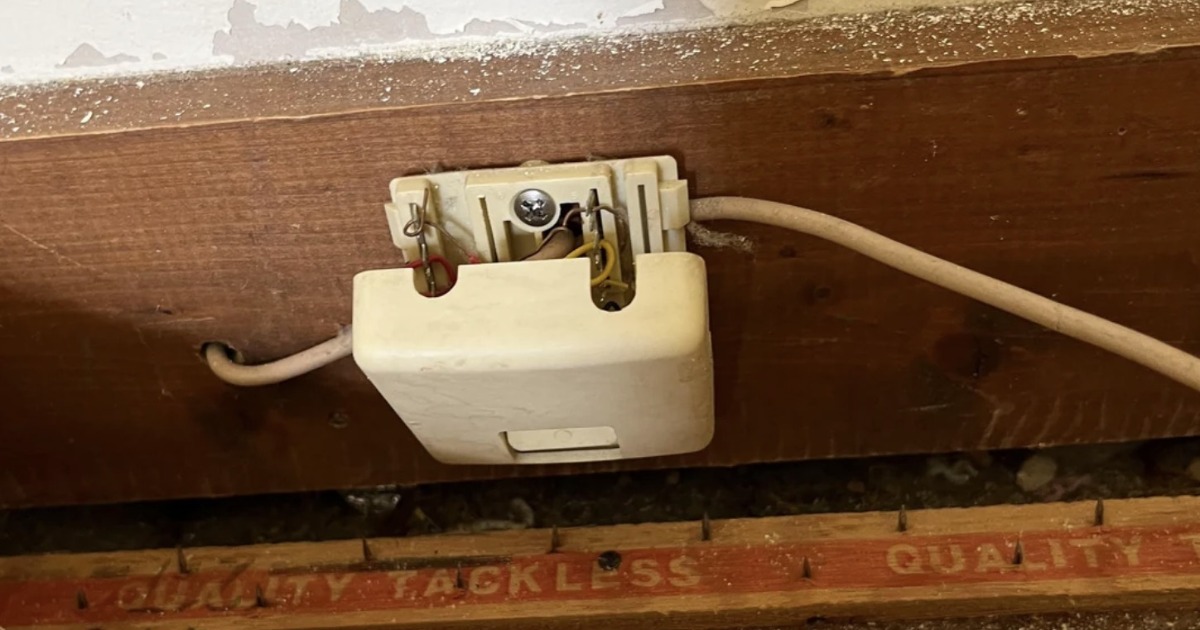
Source: Reddit
Tearing up the carpet in the master bedroom of our ancient house, I discovered a skinny pink wire behind the wall trim. It seemed out of place, as if it hadn’t been touched for decades.
That pinkish wire? They are the good old-fashioned old-skool telephone line in the wall with a wall jack and everything else. Beige plastic case, copper wire inside; installed in the golden age of needing a phone in every room.
What Is This Pink Wire?
It’s a home phone landline wire, most probably 3 or older. Those were prevalent from the ’60s until the early 2000s. You’d find them stapled along baseboards, buried beneath the padding of a carpet, or threaded through trim. The jack typically is RJ11 — a standard for decades.
It’s low voltage, handles voice signals and is not considered dangerous in these circumstances. It’s just… there.
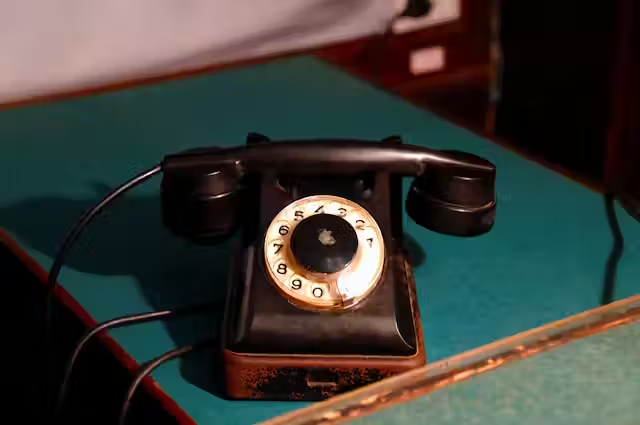
Why It’s in the Trim
It was faster to run wires through trim than to drill into solid plaster walls. Especially in retrofits, people went with the path of least resistance. And if the carpet covered it? Even better. Function over form.
And the Black Cable?
Beside the phone line was a black coaxial cable — the kind used for cable TV or the internet. That’s probably RG6 or RG59. Still used by some providers, the thick, shielded body of coax makes it easy to spot, since it delivers video or data signals.
Can You Remove Them?
- Old phone line: If you’re not still using a landline, that can go, too. You just cut, cap or pull it from its source.
- Coaxial cable: If your internet or TV provider still uses coax, hold onto it. Otherwise, it’s optional.
I took out the phone line, but left the coax. Could be useful later.
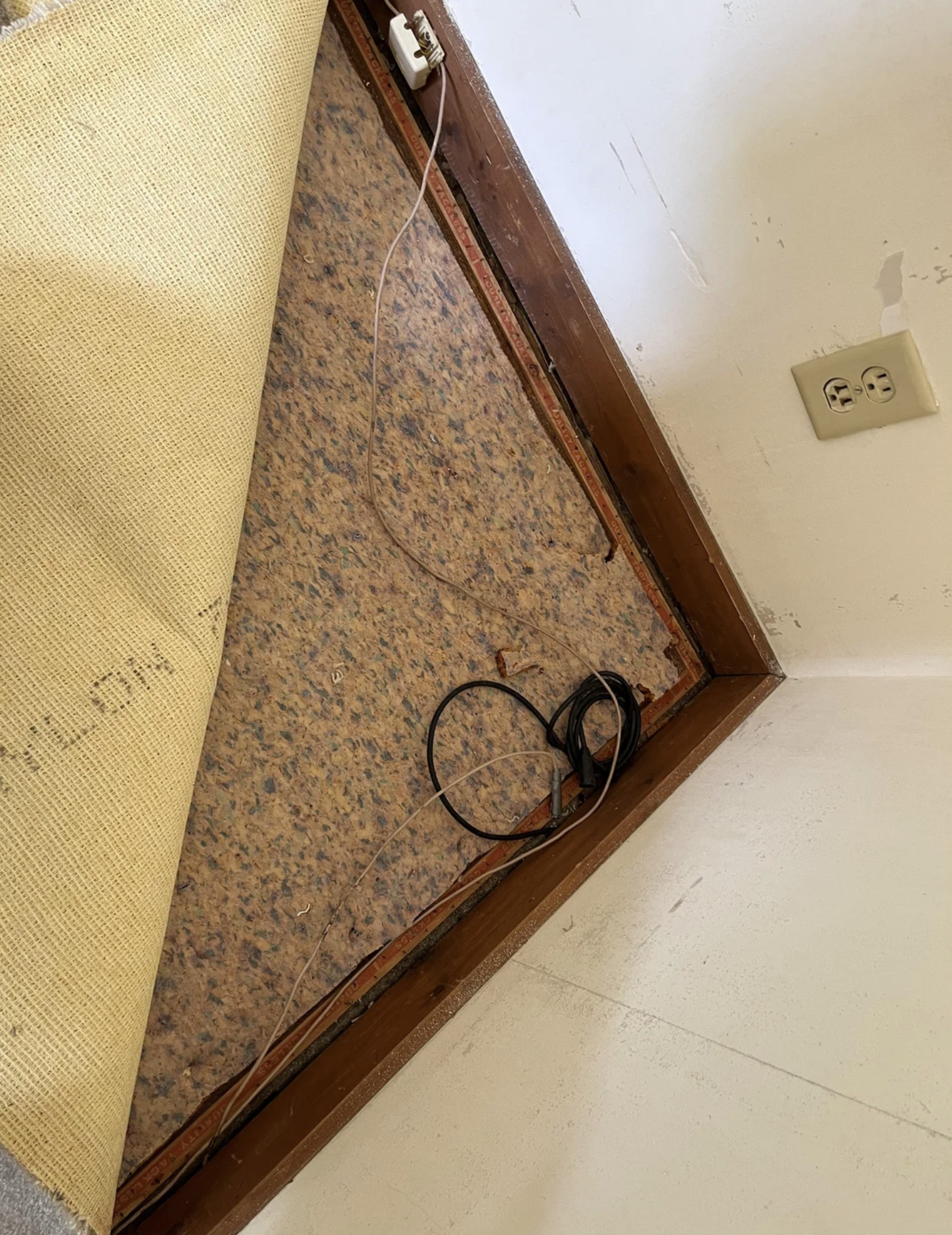
A Little History Just Beneath the Carpet
It’s more than a tech leftover to figure out how to tear open the wall to find an old telephone line; it’s a reflection of how homes adapted. For years before Wi-Fi, these wires transmitted calls, connected modems and brought the outside in.
Homes evolve. But every now and then, along comes a bit of a reminder that, oh yeah, this place has a past.