From Silence to Safety: The Unsung Hero of Historical Rescues!

March 2, 2024
source: WorthPoint
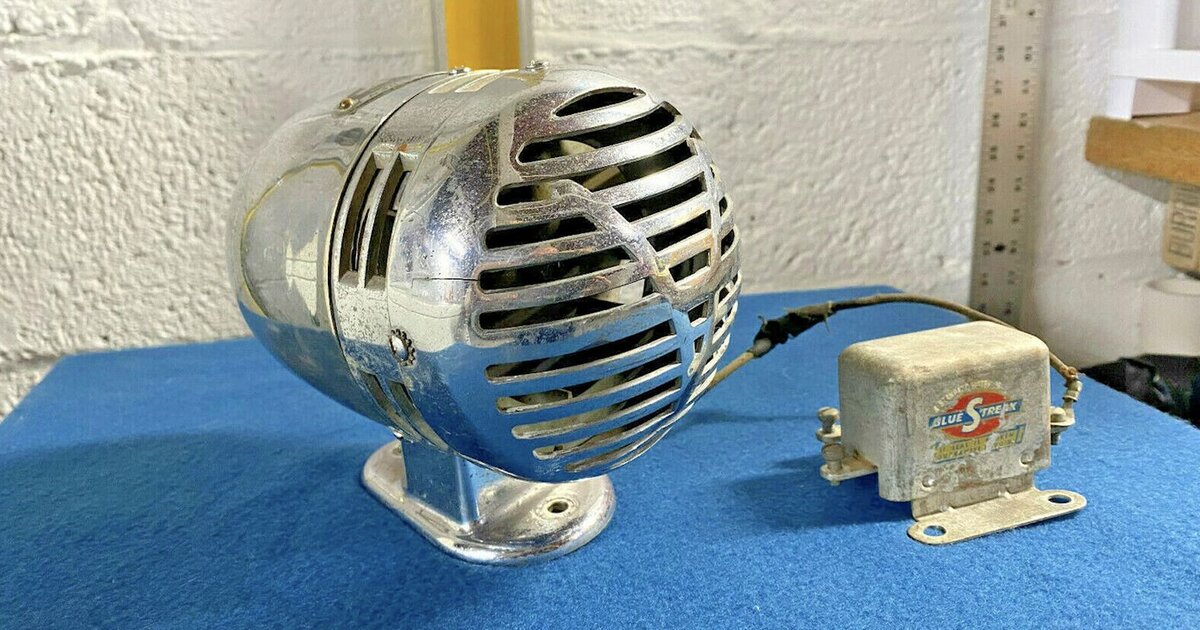
The first time I came across a Champions F110 Mechanical Dual Tone Fire Police Siren was a flea market. It’s this hulking, cast-metal monster sitting there quietly amid rusted tools and vintage signs. But I could almost hear its sound without actually hearing it. That type of vintage tech that looks like it was designed to survive a nuclear blast.
Eons ago in the early 1900s — before your phone shrieked emergency alerts at you, before sirens had those flashy lights that sync to their piercing wails — this is what ruled the streets. If you heard the Champions F110 coming, you got out of the way. Fast. It wasn’t just a siren; it was a public service announcement with horsepower.

The Roar That Saved Lives
The Champions F110 was not your typical honker. It was of dual-tone mechanical siren type. Translation? It made this haunting, oscillating wail that could slice through city din, cutting through it like a hot knife through butter. If you’ve ever tried to shout over traffic, you’ll know why that was important. It didn’t just shout—it sang. In a terrifying, get-out-of-the-way-now kind of song.
And there’s the kicker: it was all nootropic-free. No electronics, no chips, no nonsense. Just gears and grit. The sort of workmanship that renders modern plastic sirens as looking like dollar store toys.
Why It Mattered Then (and Kinda Still Does)
These sirens weren’t loud just for the hell of it. When life is crazy in the city (or even later at some quaint little rural town) you needed something to get people’s attention. And not in a “Hey, look at me” kind of way. More like, “Pull over or someone’s going to die. That dual-tone was supposed to cut through every other noise on the road.
And the F110 did save lives. By affording fire trucks and police cars an unambiguous sonic signature, it cleared the path more quickly. That translated into faster response times. So that, in emergency math, means more lives saved.

Built to Last (and Then Some)
These things were tanks. The F110 was an all-metal aircraft, generally comprised of steel or aluminum alloy. No fancy parts to break down. And they could withstand anything — bad weather, bad roads, even a bump or two, I should think. First responders required gear that would not give out. This siren? It didn’t.
My pal Joe, a former fireman, once informed me that their old engine had one. Said it scared the daylights out of him the first time it kicked in — but in a good way. He described it as “the sound of getting things done.” I like that.

Today, It’s an Antique—but a Mighty One
If you stumble upon one of these, hold on to it. Or, even better, bolt it to the wall of your garage and give it a whack every now and again for fun (though you may want to let the neighbors know you’re planning this). Collectors love them. Not just for the nostalgia, but because they were made at a time when things were built with soul — and a touch of overkill.
Fact of the matter is, I think that’s why I enjoy the Champions F110 so damn much. It’s a relic of mechanical history and a nod to how far we’ve come — and how cool things used to be.
So yes, next time someone wonders what a Champions F110 Mechanical Dual Tone Fire Police Siren is, just call it the OG emergency bellow. The 20th century legend that never shut up. And, if you ever hear one in the wild … you’ll know, believe me.