These Wooden Pegs Might Seem Boring, Until You Learn What They Did

June 21, 2025
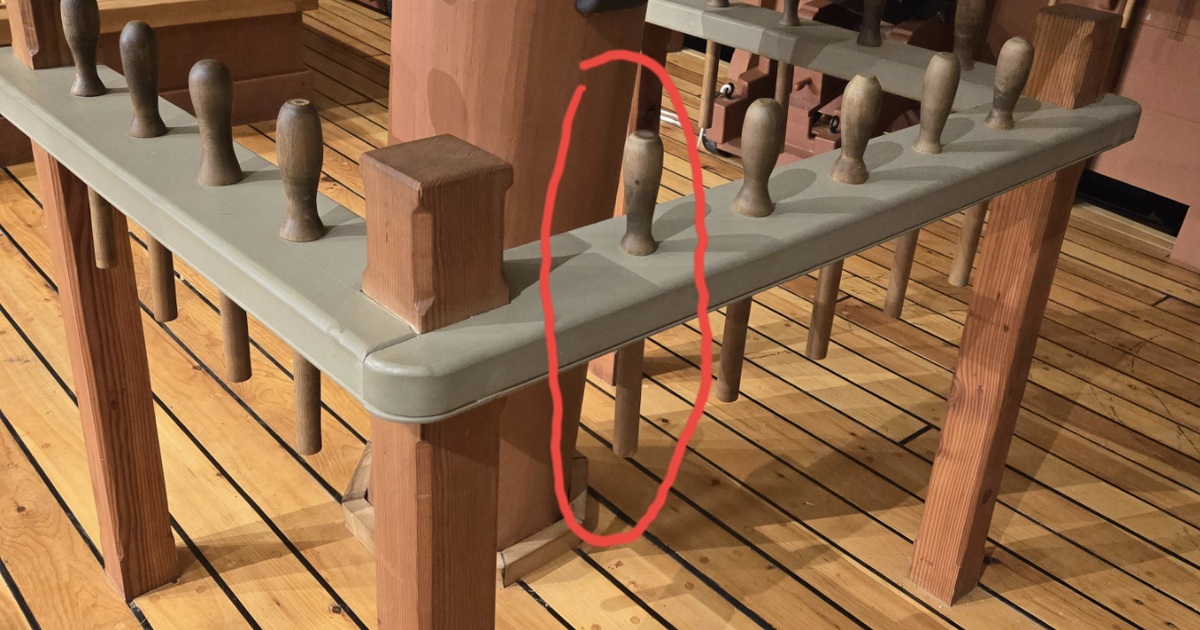
Source: Reddit
If you’ve ever been on a historic ship like the USS Independence or attended a maritime museum, say, the Independence Seaport Museum in Philadelphia, you might have seen rows of wooden pegs set in racks, typically situated near the masts of a ship. At first, they may appear as mere decoration or strange remnants. But these unobtrusive devices, known as belaying pins, were at one time indispensable to the functioning of sailing ships.
What Are Belaying Pins?
Belaying pins are wooden pegs, detachable from the rail. They are used to secure and control the ship’s running rigging, the ropes and lines that manipulate the sail. Unlike the cleats and winches on contemporary boats that sailors could use to make fast and let go of lines. The pins had given sailors a simple but amazingly flexible way to keep sails tight or to let them loose. Doing so while coping with the unpredictable forces of the sea.
Usually made from hardwood — typically oak or ash — belaying pins were fitted into pinrails, which were wooden beams. Or racks mounted on or around the base of masts or at the railing of ships. The design is utilitarian: the round shank fits into the hole of a pinrail, the rounded knob or handle provides a grip for sailors.
How Were Belaying Pins Used?
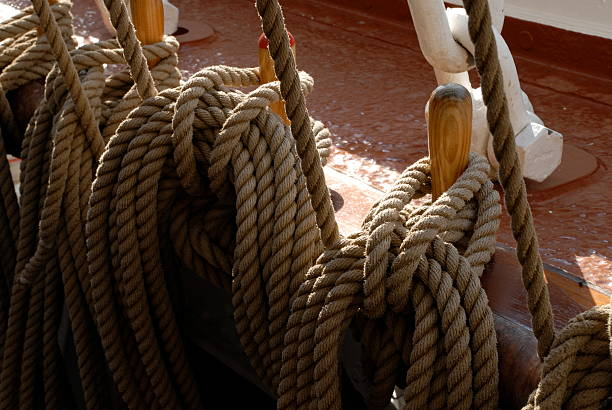
Each sail on a ship was attended by a nest of lines — often several per sail — and each of those lines had to be instantly at hand. Sailors would then secure the line to a dedicated belaying pin in a figure-of-eight fashion. It could hold the line tight and lock in, but release quickly when necessary.
Here’s how it worked:
Locking the line: The line coiled several times around the pin would not slip when tensioned.
Tuning sails: In the old days if a sail needed trimming (or reefing) in heavy weather, a traditional sailor could quickly detach the line of the pin, adjust, and then reattach.
Ordering the rigging: Given that each belaying pin corresponded to a specific line, the pins served to help sailors find and utilize the proper lines quickly, even in the chaos of a storm.
In brief, belaying pins functioned like labeled switches on a control panel today. They were needed for organization, on the one hand, and for speed, on the other.
Why Were Rick Belaying Pins So Deadly?
Part of the appeal of belaying pins was modularity. These pins could be inserted, or replaced, rewired as required. If a pin snapped, a sailor could readily substitute a new one, no tools required. Added to that, because the system was standardized everyone who was a trained sailor knew them, whatever kind of ship.
Another benefit was mobility. Lines were wrapped around pins rather than fastened, so sailors could move rigging around easily during repairs or emergencies.
A Glimpse into Nautical Life
Visiting a ship like the USS Independence and coming up close to them belaying pins brings you close to the sailors who served in the past. Imagine a storm blowing across the Atlantic. Then tens of sailors rush to their stations, hands flying over belaying pins, tuning sails as wind howls and rain lashes the deck. These primitive wooden implements were more than just hardware—they were lifelines.
From the Deck to the Museum
Today’s belaying pins can be found primarily on replica, museum and traditional sailing vessels. Some have even gained a following as decorative objects or souvenirs among nautical aficionados. But to those who appreciate what they are doing, they are more than just pegs — a marvel of the wit of sailing-age seamanship.
So the next time you see a line of wooden pegs along the side of an antique ship, you’ll know just what they are — and how significant they once were.