A Tiny Mystery Find

May 13, 2026
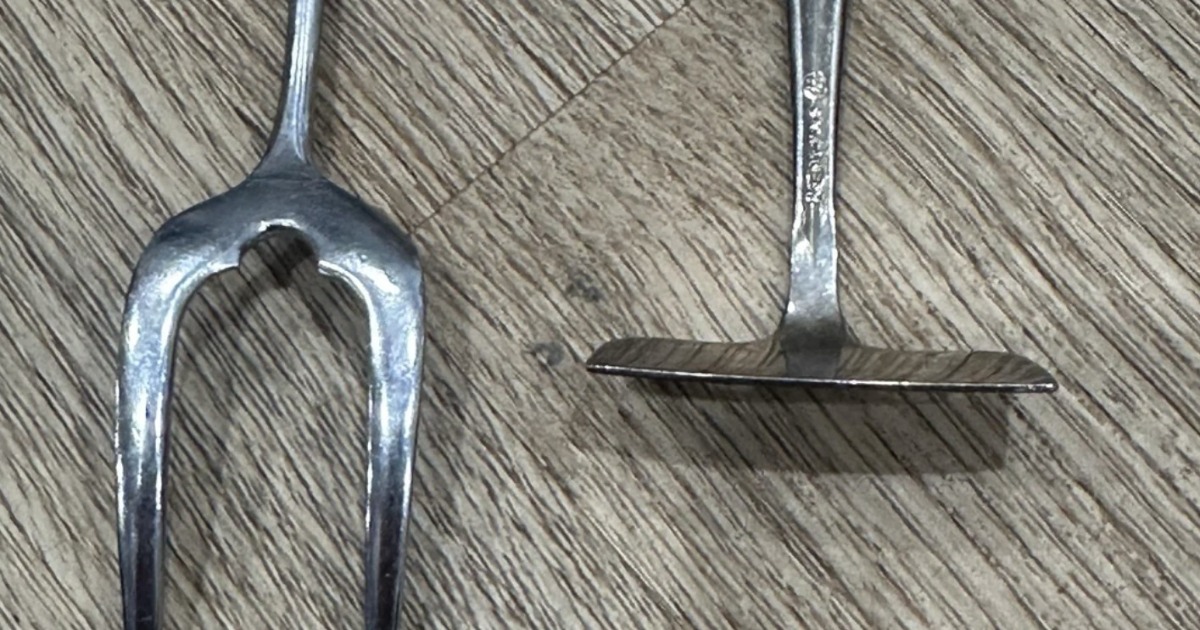
Source: Reddit
I love old household objects that make me stop and mutter, “What on earth is this?” That’s exactly the reaction an old-fashioned food pusher gets. At first glance, it looks like a tiny scraper. Maybe a miniature serving tool. Maybe something for cheese. The handle looks like a teaspoon handle, but the end has a flat metal blade instead of a spoon bowl.
In the Netherlands, it’s called an eetschuif or schuivertje. That roughly means “food shover” or “little shover,” which is honestly a much better name. In English, the usual term is food pusher.
And that was its job. Children used it to push food onto a fork or spoon.
Simple. Practical. A little odd. I like it.
What Is an Old-Fashioned Food Pusher?
An old-fashioned food pusher is a small piece of children’s cutlery. It has a short handle and a flat bar or blade at the end. The blade sits sideways, almost like a tiny scraper, but it isn’t sharp.
Children used it instead of a knife. They held a fork or spoon in one hand and used the pusher with the other. It helped them gather peas, carrots, potatoes, beans, and other runaway bits of dinner.
Peas alone explain why this thing existed.
Anyone who has watched a child chase peas around a plate knows the struggle. One rolls left. One rolls right. One disappears forever. The food pusher gave children a fighting chance.
A Proper Tool for Small Hands
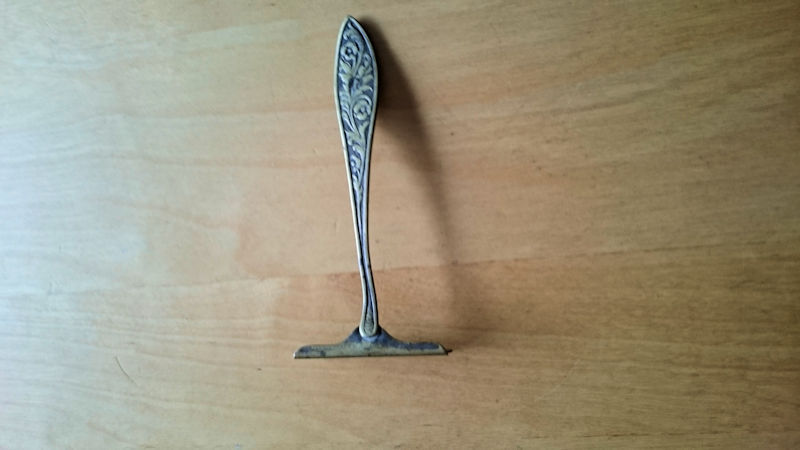
What I like most about the old-fashioned food pusher is how grown-up it looks.
Many were made from stainless steel or silver plate. Some had floral handles or matching patterns. Others came as part of a child’s cutlery set with a small fork and spoon.
That says a lot about older table habits. Children learned manners with real little tools, not just plastic forks and cartoon plates. A pusher helped them eat neatly while keeping knives out of the picture.
I can almost hear someone’s grandmother saying, “Sit up straight and don’t scrape the plate.”
Every family had one.
Why Children Used a Food Pusher
A knife takes coordination. Small children need to hold the fork, control the knife, cut or guide the food, and not fling anything across the table.
That’s a lot for little hands.
A food pusher made the job easier and safer. It didn’t cut. It just moved food. The child could nudge food onto a fork or spoon without using a sharp edge.
In a way, it worked like training wheels for table manners.
Tiny metal training wheels. For dinner.
The Matching Fork
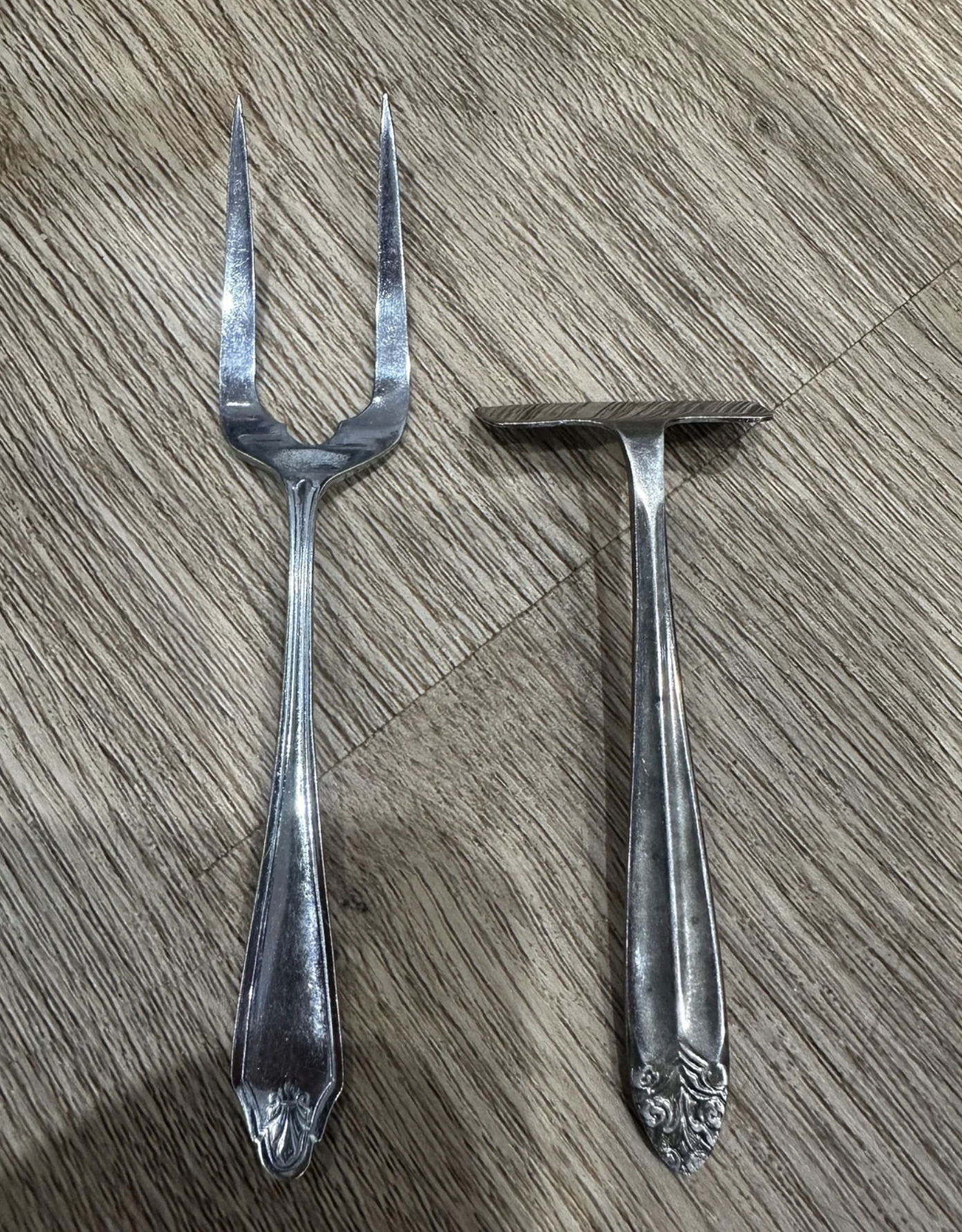
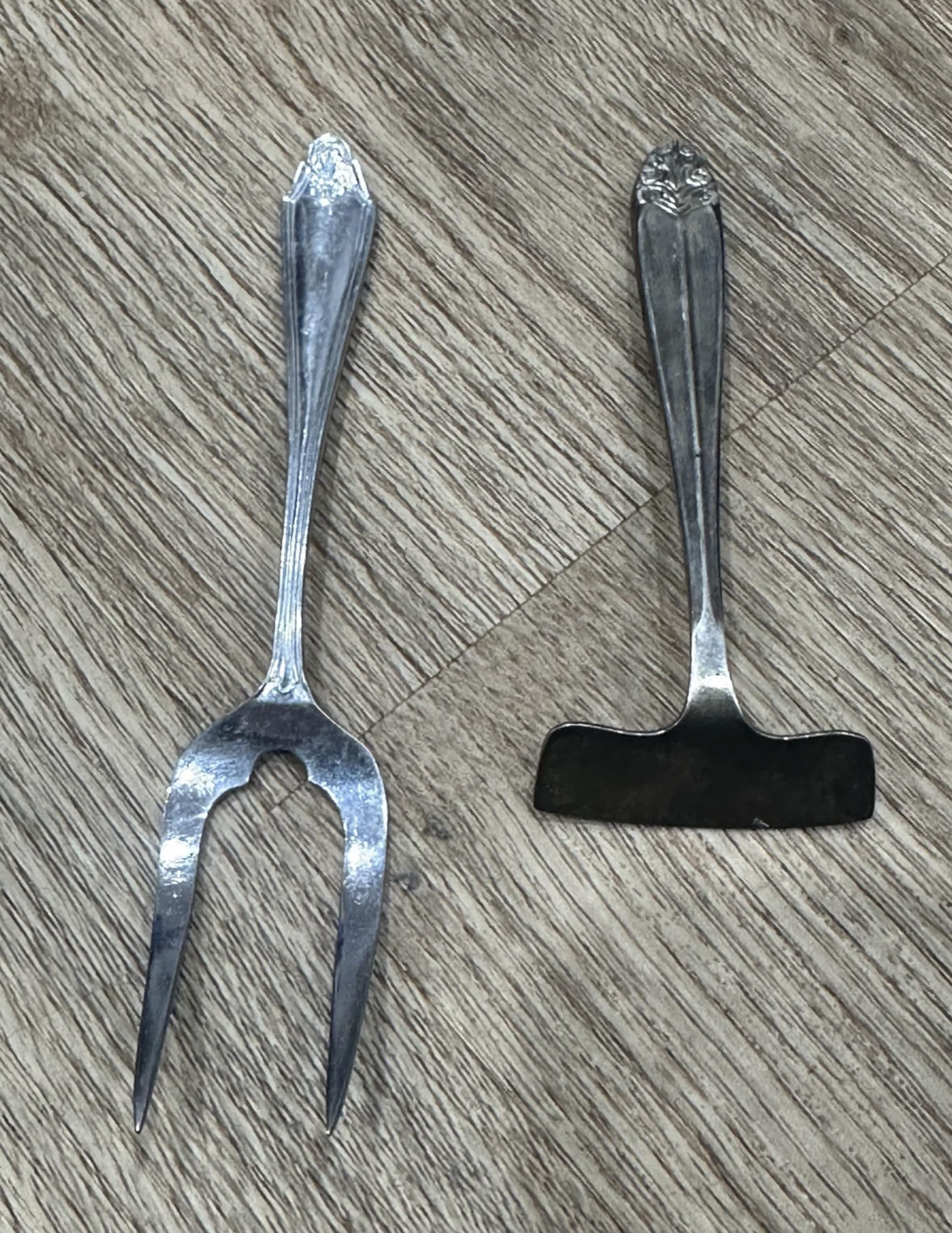
Food pushers often turn up with a small fork. Sometimes the fork has two prongs, which can make it look like a pickle fork or olive fork.
That can be confusing. Old cutlery drawers are full of mystery tools.
But when the fork and pusher share the same handle pattern, size, and finish, they likely came from the same child’s set. The fork speared the food. The pusher helped load it.
A tiny dining team.
Stainless Steel or Silver Plate?
Many later food pushers were stainless steel. Older or fancier ones may be silver-plated.
Turn the handle over and look for marks. “Stainless” usually means stainless steel. “EPNS” means electroplated nickel silver, or silver plate. Maker names and small symbols can also help identify the piece.
Silver plate may tarnish or show wear on raised details. Stainless steel usually stays brighter and needs less care.
I like the worn ones best. Scratches mean someone used them. Maybe for Sunday lunch, maybe for a bowl of peas. Maybe by a child who hated carrots. Fair enough.
Why the Food Pusher Disappeared
The old-fashioned food pusher faded as family meals became more casual.
Children’s plastic cutlery became common. Blunt child-safe knives took over. Many families stopped using formal children’s cutlery sets. The pusher lost its place in the drawer.
Still, they survive in flea markets, charity shops, antique stalls, and old family cutlery boxes.
That’s where the fun begins. Someone picks one up and guesses.
A scraper?
A cheese tool?
A tiny wallpaper smoother?
Nope. A food pusher.
A Small Reminder of Old Family Meals
The old-fashioned food pusher isn’t grand or flashy. It probably won’t make anyone rich.
But it tells a lovely little story.
It reminds us of a time when children had their own small tools at the dinner table. Someone designed this little thing to help them eat neatly. Someone washed it, dried it, and put it away after meals.
That feels sweet to me.
So if you find one in a drawer, don’t mistake it for a strange scraper. It may have helped a child chase peas around a plate decades ago.
Not a bad legacy for a tiny piece of metal.