A Tiny Mechanical Mystery

July 27, 2026
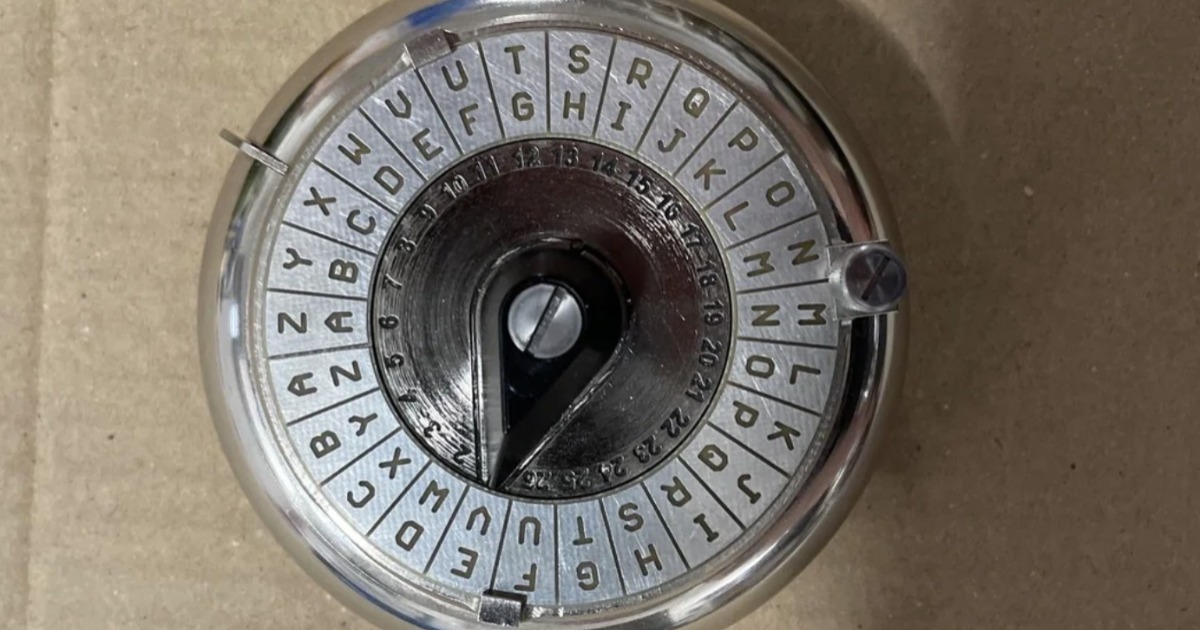
Source: Reddit
The first time I saw this object, I thought it was an old calculator. Then I noticed the alphabet rings, the numbered dial, and the controls around the case. It looked like a pocket watch designed by someone who had no interest in telling time. This is a Beyer Krypto pocket cipher device, a rare mechanical machine used to turn ordinary text into coded messages.
It has no batteries, wires, or screen. Everything works through rotating discs, gears, levers, and carefully aligned letters.
What Is the Beyer Krypto Pocket Cipher Device?
Peter Georg Grove Beyer developed the system in Copenhagen during the early 1930s.
Beyer worked for the Danish State Railways and served as an army lieutenant. He also experimented with mechanical encryption systems, including larger machines linked to typewriters.
Around 1933, his ideas appeared in a smaller form known as the Beyer Krypto, Krypto System Beyer, or simply Krypto.
The polished metal case made it portable. Someone could carry it in a coat pocket or briefcase without hauling around a full-sized cipher machine.
It was compact, discreet, and surprisingly complex.
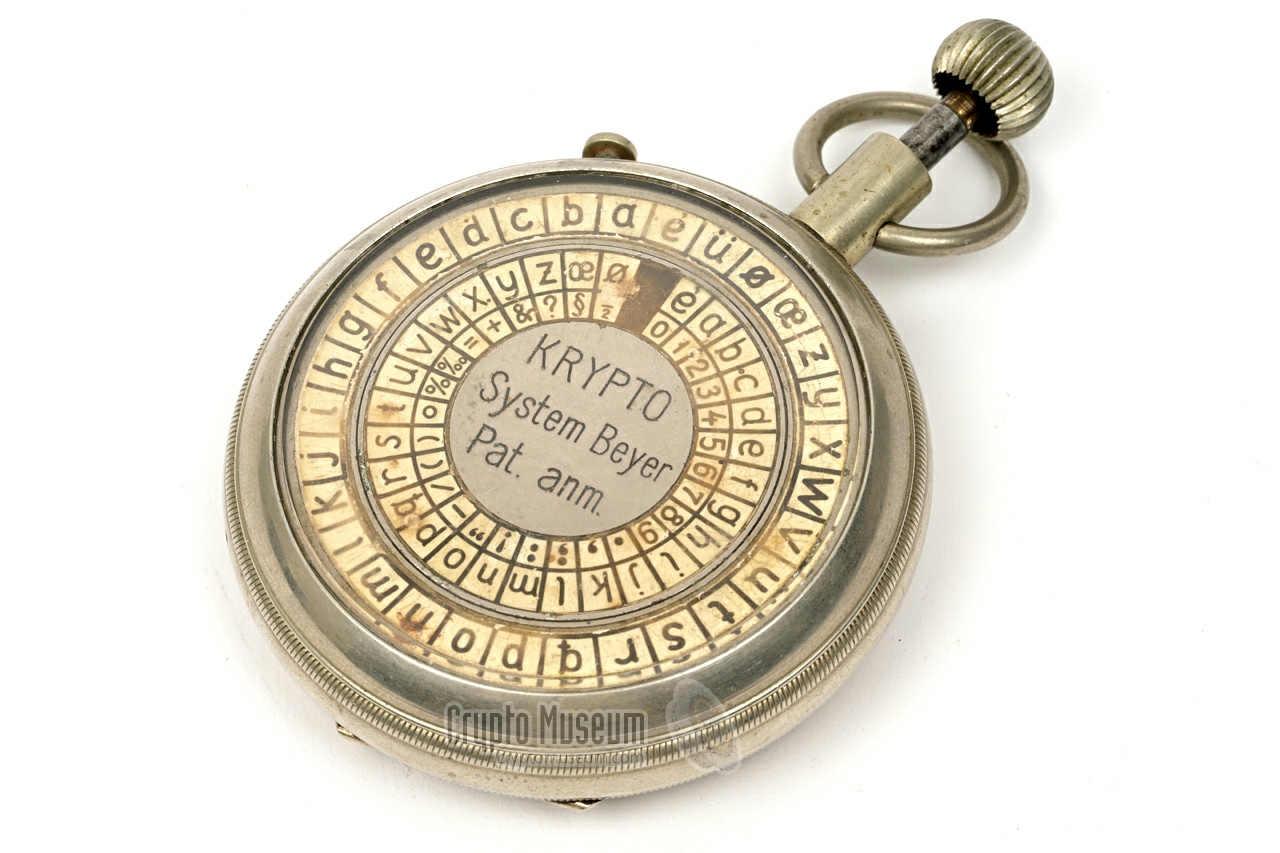
How the Beyer Krypto Worked
The face contains two rotating alphabet rings.
One ring represented the original message, or plaintext. The other showed the coded letter, known as ciphertext.
The sender and receiver first set their machines to the same key. Then the sender found a plaintext letter, read the matching ciphertext letter, and wrote it down.
After each character, the operator pressed a control on the case.
Click.
The mechanism shifted the alphabet rings into a new position.
That movement mattered because the same letter could encrypt differently each time. An A near the start of a message might become M, while another A later could become R.
This made the cipher harder to break than a simple substitution system.
It also demanded concentration. One missed press could throw off the rest of the message. I can imagine reaching the end of a long sentence and suddenly wondering whether I had advanced the machine after the fifth letter.
Not ideal.
Inside the Mechanical Cipher
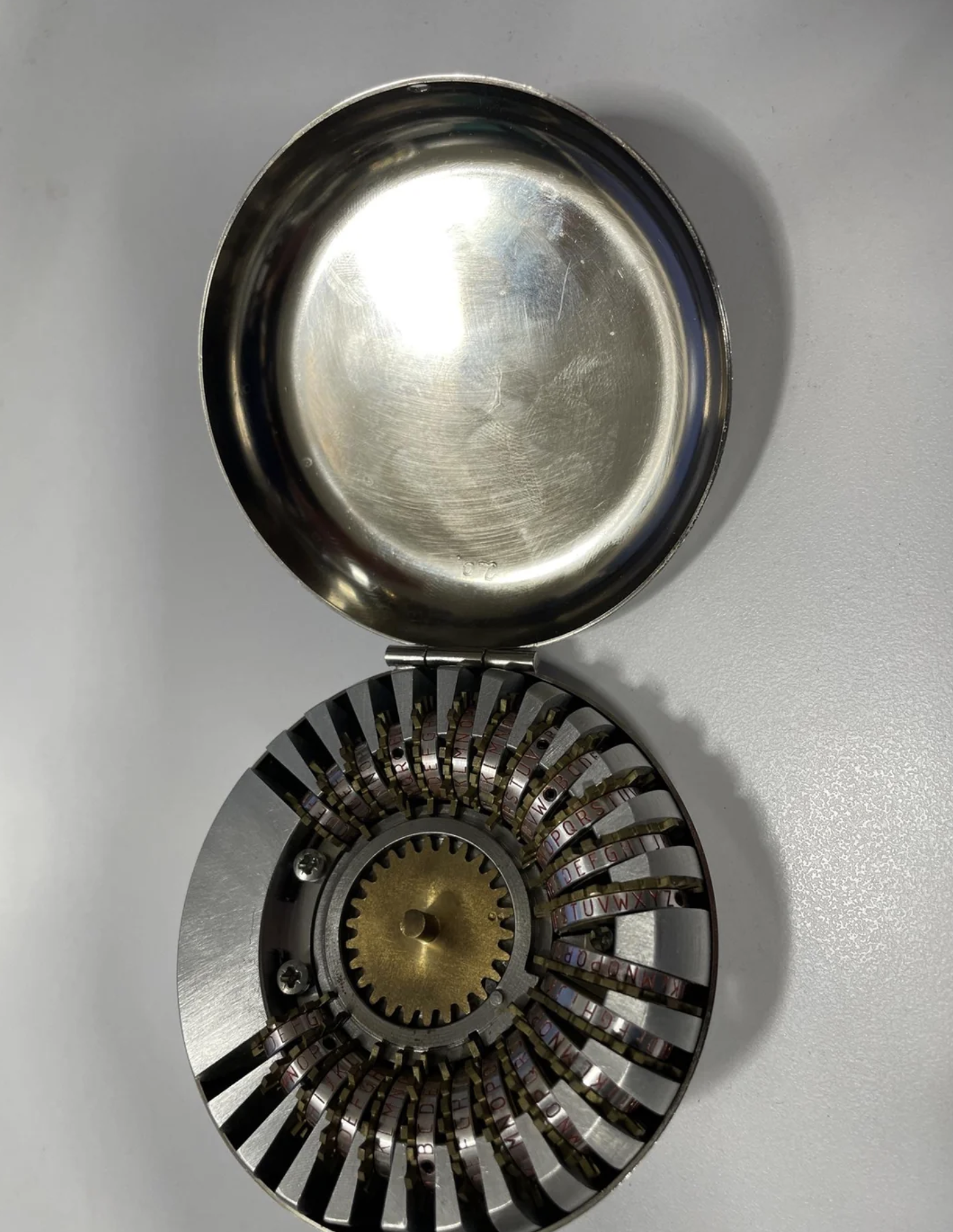
The open back reveals rows of curved alphabet strips arranged around a central brass gear.
Metal arms sit between the strips and connect the internal parts. Together, they control how the visible alphabet rings move after each press.
The mechanism creates a changing sequence rather than one fixed rotation. That prevents the cipher from repeating too quickly.
Everything happens mechanically.
The gear turns. The strips shift. The dials advance.
It looks like a miniature industrial flower, although one built by someone who preferred secret messages to gardening.
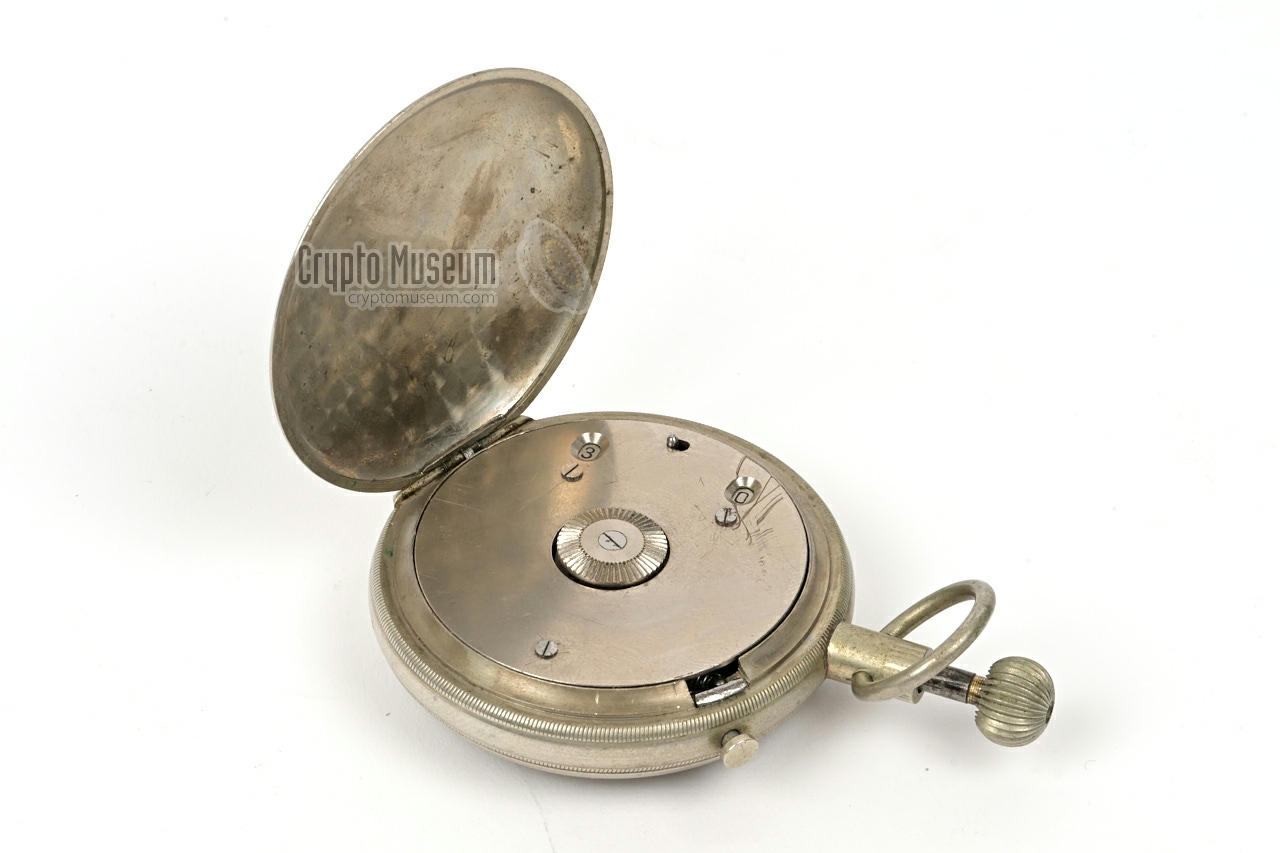
Part of a Larger System
The pocket device belonged to a broader encryption system.
The company also promoted a larger machine called the Krypto Magnum. It worked with specially adapted typewriters and automated more of the process.
The pocket model offered portability. The Magnum offered speed.
Promotional material claimed that messages encrypted on the larger machine could be decrypted with the pocket version, and vice versa.
That allowed one person to work from an office machine while another used the portable device elsewhere.
Why This Example Is So Interesting
Only a small number of Beyer Krypto devices are known to survive.
The example shown here measures about 8.5 centimeters across and weighs roughly 430 grams. It also lacks an obvious brand name, maker’s mark, or serial number.
Its size and weight differ from some documented examples, so it may represent a less common variation or a different case design.
Without original paperwork, the exact production history remains uncertain.
Still, the alphabet rings, numbered dial, controls, and radial internal mechanism strongly match the Beyer Krypto system.
Why the Beyer Krypto Still Stands Out
The Beyer Krypto pocket cipher device made encryption physical.
The user could feel its weight, hear the mechanism click, and watch each letter turn into code.
That makes it more than a technical object. It is also a pocket-sized reminder of how people protected information before electronics.
I love objects like this because they make the past feel practical rather than distant.
People still wanted privacy. They still worried about intercepted messages. They still searched for smaller, faster, and more portable tools.
The technology changed.
The need for secrecy did not.