A Nostalgic Kitchen Treasure

January 25, 2025
Source: Etsy
It’s funny how certain objects can take you back in time, isn’t it? You pick something up—a tool, a dish, even a piece of fabric—and suddenly, you’re standing in a kitchen that smells like fresh bread and coffee. For me, one of those objects is a vintage cheese cutter.
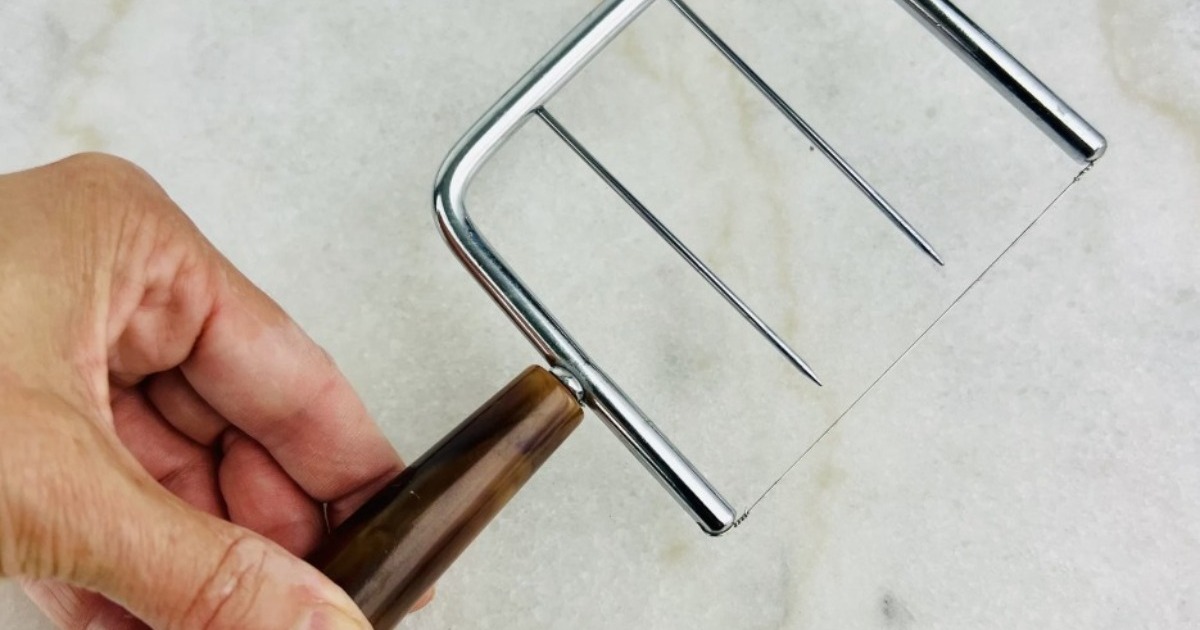
I can’t even think about them without picturing my grandmother. She had one of those sturdy old cutters with a smooth, glossy handle—Bakelite, I think—and a wire stretched so tight you could almost hear it hum. It lived in the same drawer as the cloth napkins and her good silverware, and somehow, it always seemed to come out at the best moments.
She’d pull out a block of cheddar and start slicing, the wire gliding through the cheese like it was nothing. I’d sit there watching, waiting for her to hand me a slice straight off the block. There was something so satisfying about the whole thing—how neat the slices were, how easy she made it look.
It’s strange, but even now, when I see one of those old cheese cutters, it feels like I’m back in her kitchen. The sunlight streaming through the curtains, the sound of her humming along to the radio—it’s all right there in that simple little tool.
A Simple Tool with a Lot of Heart
Back in the day, a cheese cutter wasn’t just some fancy gadget. It was a workhorse, a staple in every kitchen. The design was simple: a sturdy handle, usually made of Bakelite or wood, attached to a metal frame with a taut wire that could slice cheese cleanly and evenly. No bells and whistles, no unnecessary extras—just a tool that did exactly what it was supposed to do.
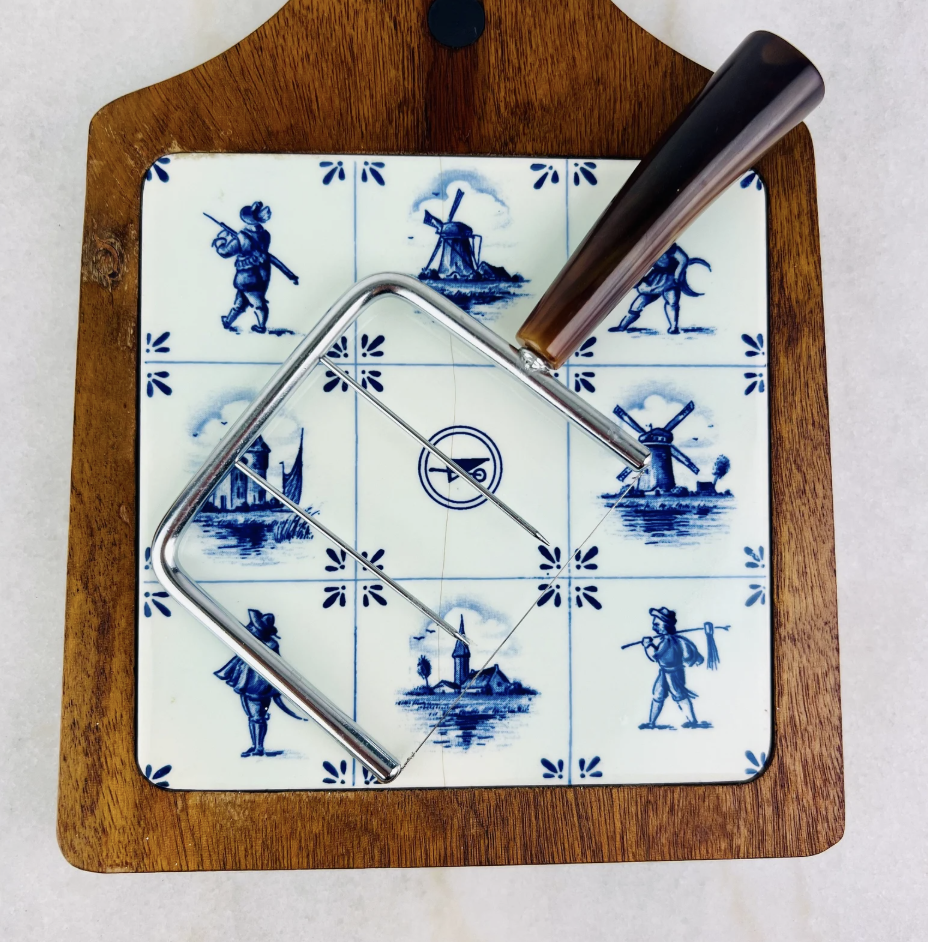
But what made it special wasn’t the design—it was how often it was used. That cheese cutter was there for the everyday moments: making sandwiches for lunch, cutting cheese for crackers on a lazy Saturday, or setting out snacks for unexpected company. It was part of the rhythm of life.
And the thing is, it wasn’t just about the cheese. It was about the care that went into those moments. Taking the time to slice everything just so, making sure it looked nice on the plate, sharing it with the people you loved. It was about slowing down and being present—something we could all use a little more of these days.
Why Vintage Cheese Cutters Are Still So Special
There’s just something about vintage tools that modern ones can’t replicate. Their durability stands out, though that’s part of it—craftsmen built those old cheese cutters to last. But it’s more than that.
It’s the way they feel in your hand. A vintage cheese cutter has a weight to it, a sturdiness that makes you feel connected to the task you’re doing. Polished wood or smooth Bakelite handles offer a warm and familiar feel. And the design—it’s not flashy, but there’s a kind of beauty in its simplicity.
And then there’s the nostalgia. Using a vintage cheese cutter feels like stepping back in time, like you’re borrowing a little piece of someone else’s memories. It makes you think about the people who used it before you—the meals they made, the stories they told, the laughter they shared in kitchens filled with the smell of coffee and fresh-baked bread.
How to Spot a Real Vintage Cheese Cutter
If you’ve ever come across one of these beauties and wondered if it’s truly vintage, here’s what to look for:
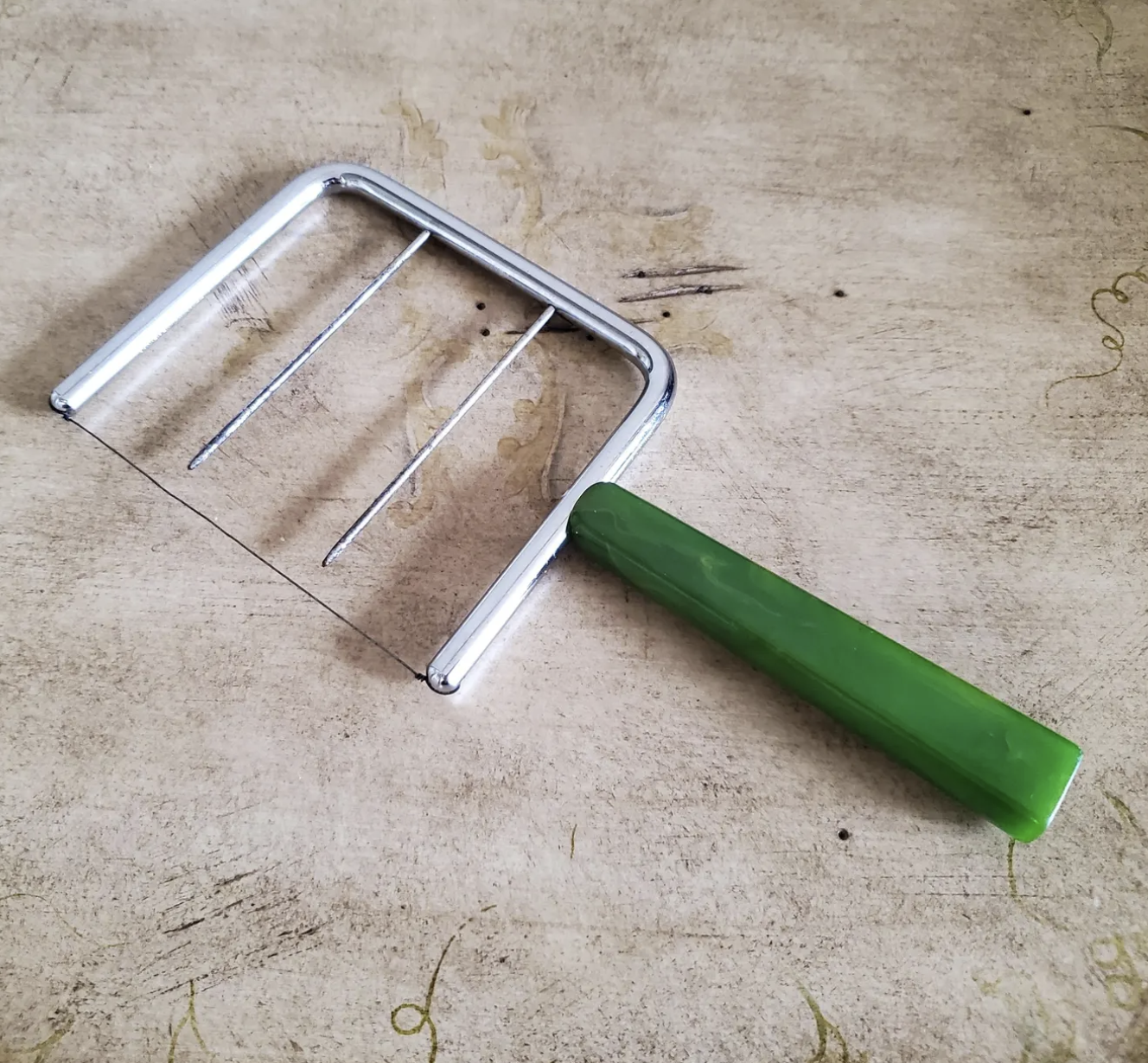
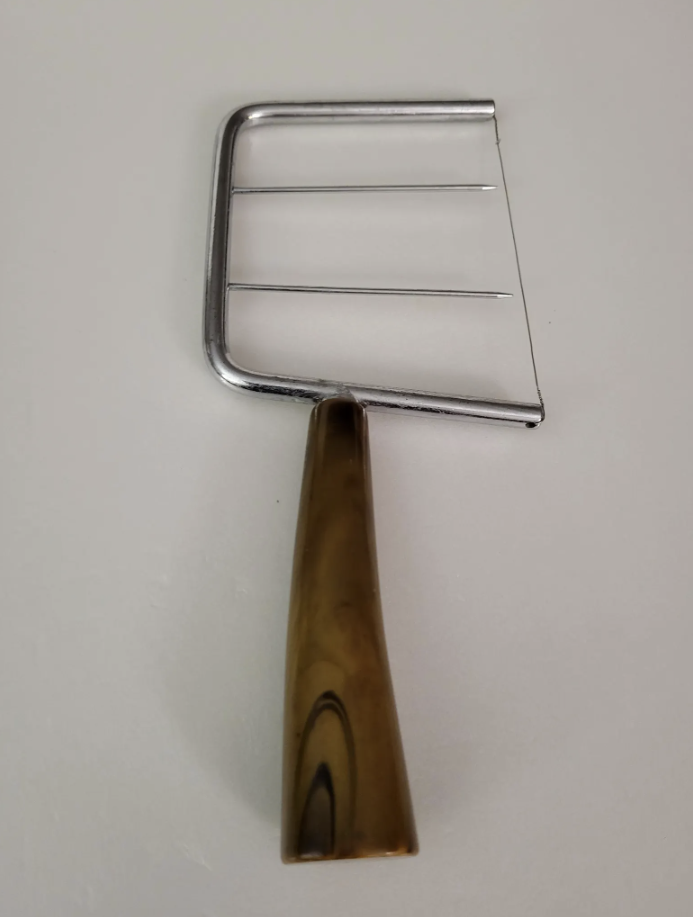
- The Handle: Bakelite handles are a big clue. They’re smooth, solid, and often have a marbled or polished finish. Wooden handles are another sign—they’re sturdy, warm to the touch, and usually show signs of being hand-crafted.
- The Frame: Vintage cheese cutters are built like little tanks. Look for a metal frame that feels solid and has a wire that’s still tight or fixable.
- The Details: Many older models have thoughtful touches, like small stabilizing spikes or minimalist designs that are both functional and beautiful.
If you find one, don’t let it go. These aren’t just tools—they’re little pieces of history.
Caring for Your Vintage Cheese Cutter
Taking care of a vintage cheese cutter is pretty simple. For Bakelite handles, avoid soaking them in water—it can cause cracking or fading. Instead, just wipe them clean with a damp cloth. Dry the metal frame and wire thoroughly after washing to keep rust at bay.
With a bit of love, these cutters will keep working for decades—maybe even longer.
More Than a Tool
The older I get, the more I realize it’s not the big, flashy things that stick with you—it’s the little stuff. The things that seem ordinary in the moment but somehow carry all the love and care that went into them. A vintage cheese cutter is one of those things.
It’s not just about slicing cheese. It’s about what that act represents: slowing down, being present, making something with your hands, and sharing it with the people who matter most.
Maybe that’s why I always stop when I see one at an antique shop or a flea market. I can’t help but wonder about its story. Who used it? What kind of meals was it part of? How many birthday parties, summer picnics, or quiet evenings did it witness?
And even if I never know the answers, I like to think that by giving it a new home—by using it, displaying it, and keeping it in my kitchen—I’m adding my own chapter to its story.
So, the next time you come across one of these little treasures, don’t brush it off as just an old tool. Pick it up. Hold it. Think about the hands it’s passed through, the meals it’s helped create, and the memories it holds. Because sometimes, the simplest things are the ones that mean the most.