A Forgotten Treasure with a Loud Little Voice

March 30, 2025
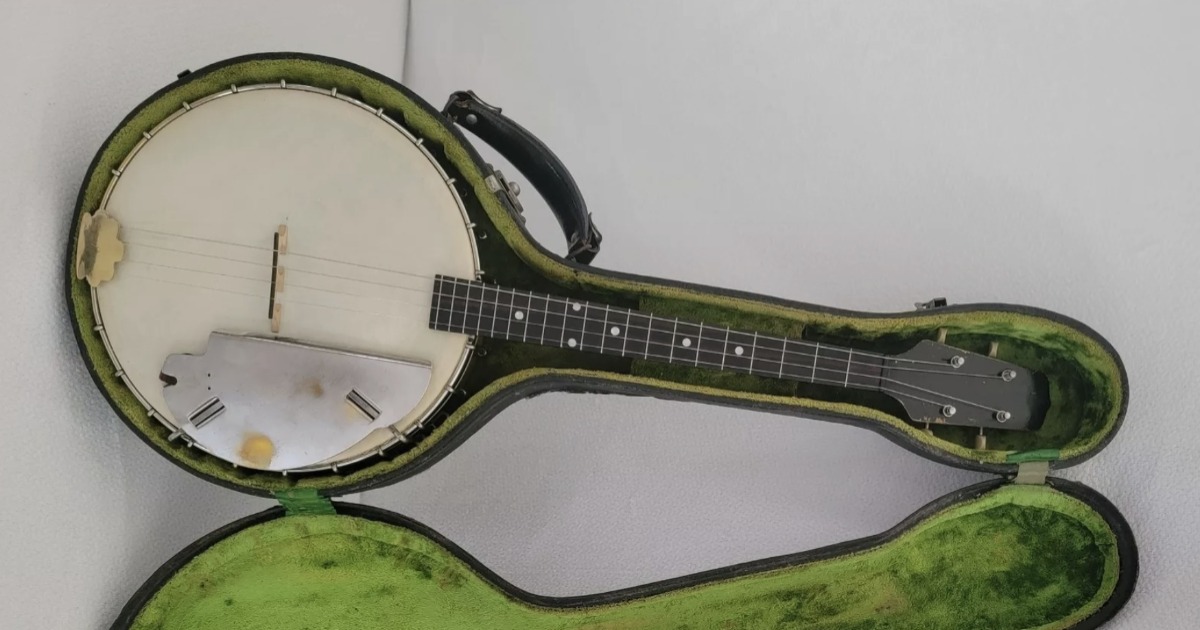
Source: eBay
So I was digging around in my attic a few weeks ago—half looking for my old high school yearbooks, half procrastinating doing anything productive—when I stumbled across this dusty, beat-up case. You know the kind: green velvet inside, musty smell, probably hadn’t been opened since the Carter administration.
I popped it open, and there it was. This quirky little instrument staring back at me like it knew I had no clue what it was. I’ll admit it—I thought it was a broken banjo at first. Or maybe a weird ukulele? Turns out, I wasn’t completely wrong. It’s a Gibson banjolele, and apparently, it belonged to my great-grandfather.
Which means… yeah. It’s old. Really old.
What Even Is a Gibson Banjolele?
If you’re like me and you’ve never heard the word “banjolele” before, don’t worry. I had to Google it too.
Basically, it’s a hybrid instrument—part banjo, part ukulele. Think: small like a uke, but with that loud, twangy sound of a banjo. It became a thing back in the early 1900s when vaudeville performers needed something portable but still loud enough to be heard in a theater without mics. Smart move.

The one I found has “The Gibson” written in that fancy old-school script on the headstock, which immediately sent me down a rabbit hole of research. Turns out, Gibson made these little guys sometime between 1917 and the early 1930s. That’s legit antique status. We’re talking pre-World War II. Pre-anything digital. Pre-sliced bread, even. (Okay, maybe not that far. But close.)
This Thing’s a Time Machine
The moment I held it, I couldn’t stop wondering who else had. My great-grandpa, obviously. Maybe he played it at family gatherings, sitting on a creaky porch with a mason jar full of something strong nearby. Maybe he learned a couple chords and drove everyone nuts playing the same tune over and over. I mean… that runs in the family.
The neck’s got wear in all the right places. The drum head is stained, but it’s solid. The case is frayed at the edges, the handle barely hanging on—but it’s still got that plush green lining, like something out of a 1930s jazz club.
Honestly, it doesn’t just look old. It feels old in the best way. Like it’s got stories in it.
Why This Isn’t Just Some Quirky Old Instrument
Here’s the wild part: Gibson banjoleles from this era? They’re rare. And not just rare in a “you won’t find one at Guitar Center” way—more like “collectors will raise an eyebrow and start calculating” rare.

If it still has all its original parts—like the tuners, the tailpiece, even the case—that adds up fast in vintage instrument value. Especially if it’s from Gibson’s early years, which, based on the script logo and build, mine very well could be.
But here’s the kicker: don’t mess with it. I talked to a guy who restores vintage instruments and he said—and I quote—“Do not try to clean it yourself.” Apparently, even wiping the head or oiling the wood can mess with the patina and drop the value.
So yeah. This little banjolele now lives in a climate-controlled spot in my office, far away from kids, cats, and clumsy guests.
It’s Not Just About Money, Though
Look, I’m not planning to sell it. Not anytime soon, anyway. I mean, how often do you get to hold something that your great-grandfather might’ve strummed during the Great Depression? It’s more than an old instrument—it’s a piece of family history.
I may not know how to play it (yet), but I’ll be damned if I don’t try. And who knows? Maybe one day I’ll be the weird grandparent pulling it out at family parties, playing the same three songs until someone politely asks me to stop.
Full circle, right?
So… Got One?
If you ever stumble across a Gibson banjolele in your own attic, basement, or at a yard sale—grab it. Gently. Then get it appraised. And if it’s got that script “The Gibson” logo, don’t sleep on it. You might be holding a piece of early 20th-century musical history.
Even if you don’t, the whole experience made me appreciate how cool these old things really are. They’re not just artifacts—they’re echoes of a time when music was handmade, passed down, and played for the joy of it.
And hey, if nothing else, it’s a great conversation starter. Way cooler than your uncle’s stamp collection.