You Won’t Believe What This Old Wall Fixture Once Meant for Families

August 16, 2024
Source: Reddit
Do you recall the days of the family sitting in the living room with the TV set on top of the wooden cabinet, the family trying to fix the rabbit ears to get a better view of the football game or the Saturday night movie? We would bend the thin metallic stripes to and fro in exactly the right way, and sometimes even put a piece of tinfoil to the ends of the rods as if it would help in some sort of way. It was the time when television was not a passive entertainment tool that could be switched on and watched in isolation; it was an item around which people gathered and interacted.
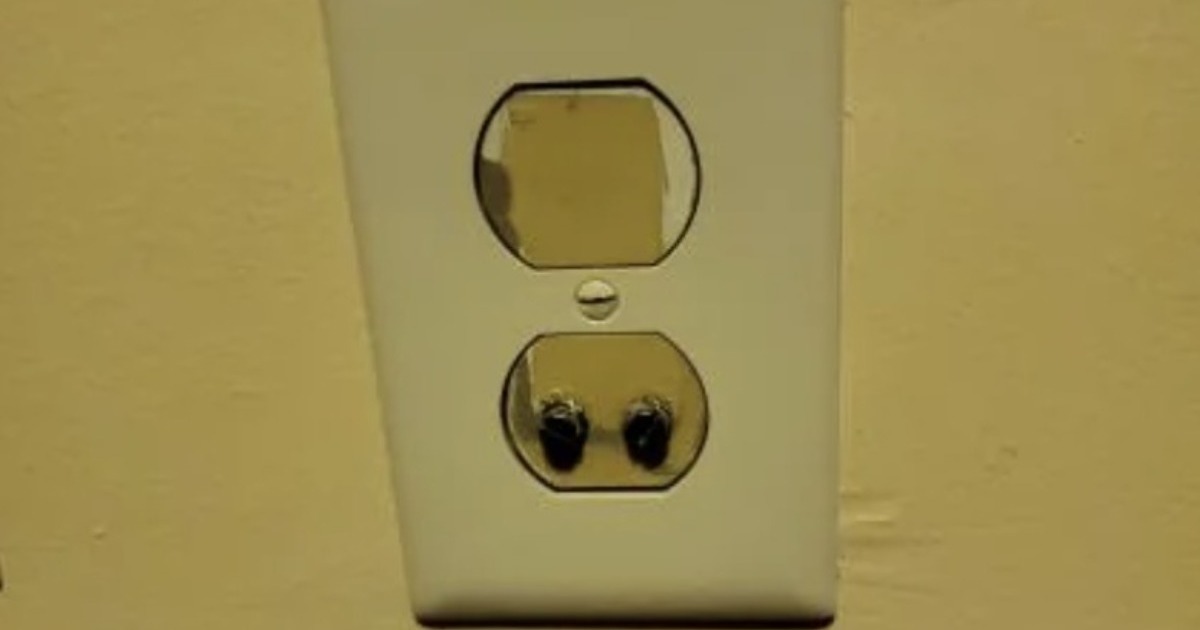
The TV antenna outlet is a little metal box that you might easily miss in many houses nowadays, and yet it was one of the ways to know what was going on in the world beyond the end of the street. Living in a generation without cable or streaming services, TV antennas gave us a taste of local stations, news, and family programmes. And let us not forget the thrill of changing channels between the three or four channels that we had, each channel being a possible ticket to a good evening.

Owing to advances in technology especially in the past, television was a marvel that, however, was not without its share of challenges when it came to getting that picture perfect image we are privileged to enjoy today. In the period between the 1950s and 1980s, the major source of signal was from the broadcast towers through over the air signals. These signals were received by rooftop antennas or in the case of smaller apartments and homes, by indoor antennas often called ‘rabbit ears’.
The use of TV antennas started in the late forties, and due to the fact that TVs became an essential part of homes in America, people demanded better reception. The large and ungainly antennas installed on roofs were as much a part of the suburban scene as mailboxes and swings. But the indoor antennas that we worried about while standing right next to the set — well, they had their own appeal. These contraptions with foldable antennas and leg sections were typical of an age where time and creativity had to be spent to watch the preferred show.
These antennas were not just scientific achievements; they were cultural devices. Many families watched together broadcasts of large-scaled events, including the moon landing in 1969, the Olympic Games, and even the news received from Walter Cronkite. Television made the American culture and shaped it in a way that people experienced similar events that could not only bring people from different parts of the country but even different generations. Whether through ‘The Ed Sullivan Show’, ‘All in the Family’ or the nightly news, antennas meant that everyone had a place in front of the same box.

Color TV sets became available in the 1960s and, even with the advancement of technology, antennas still remained as a crucial part of households in America. While the color signal needed even more delicate tuning, people sat in front of their televisions and enjoyed the rich palette of their favourite shows. The antennas made television not only a leisure activity but a cultural phenomena where everyone watched television at the same time.
Although nowadays we have many possibilities and technologies, many streams, various platforms, and high definition picture, there are certain feelings that we can only get from the old school ways. Having to set the antenna, looking for the right signal, as well as getting to laugh at the crackling sound made the TV watching process seem more deliberate. It was something that everyone had to be a part of and in some ways, it made that moment when the picture is finally clear all the more satisfying.

Not even the coming of cable television was able to completely do away with the use of the old antenna. For many of us, those bunny ears remained perched on top of the set for years, sometimes co-existing with the new digital cable, sometimes used when cable went out. It was somewhat reassuring that even in the contemporary world of constant evolution, the simple and traditional antenna remained to be, to bring the signal from the airwaves directly to the viewer.
Though TVs antennas are no longer seen in homes, they have been replaced by the modern day satellite dishes and the internet streaming services, they have given the world a sense of togetherness. The picture of an old antenna outlet on the wall – the one hanging in your home today – makes one recall that TV used to be a family affair where every program was a big deal. One can recall sitting in front of the TV set, tuning the radio, adjusting the antenna, and waiting for the moment when the noise would disappear, and one could see the world.

The feeling of those days makes us realize that sometimes the pleasure was not in the technology itself, but in the process and the triumph which it offered. But while our screens are now high definition and our content libraries unbounded, there is something inimitable about huddling around an old television set, with aerials on the roof, and hoping for the next big program to come on.