Uncover the Mystery Behind This Vintage Car Tool

July 13, 2024
Source: Reddit
Can you recall the time when you did not have a cell phone with you all the time? Picture this: you are in the late 90s and you have just purchased a brand new ford f-150. Along with the manual and warranty card that are kept in the owner’s bundle, there is another important item – a folding roadside communication sign. One side said ‘NEED HELP’, the other side said ‘OUT OF GAS.’ This small sign was a beacon, a basic yet very useful item for those times when your car breaks down in the middle of the road.
At that time, such signs were very usual to see. It was comforting to see them hiding in the back trunks of cars and under the seats of pick-ups, waiting to be used. Before the age of the cell phones, these wrote-off aids were the only way of communicating for help or certain needs on the roads.
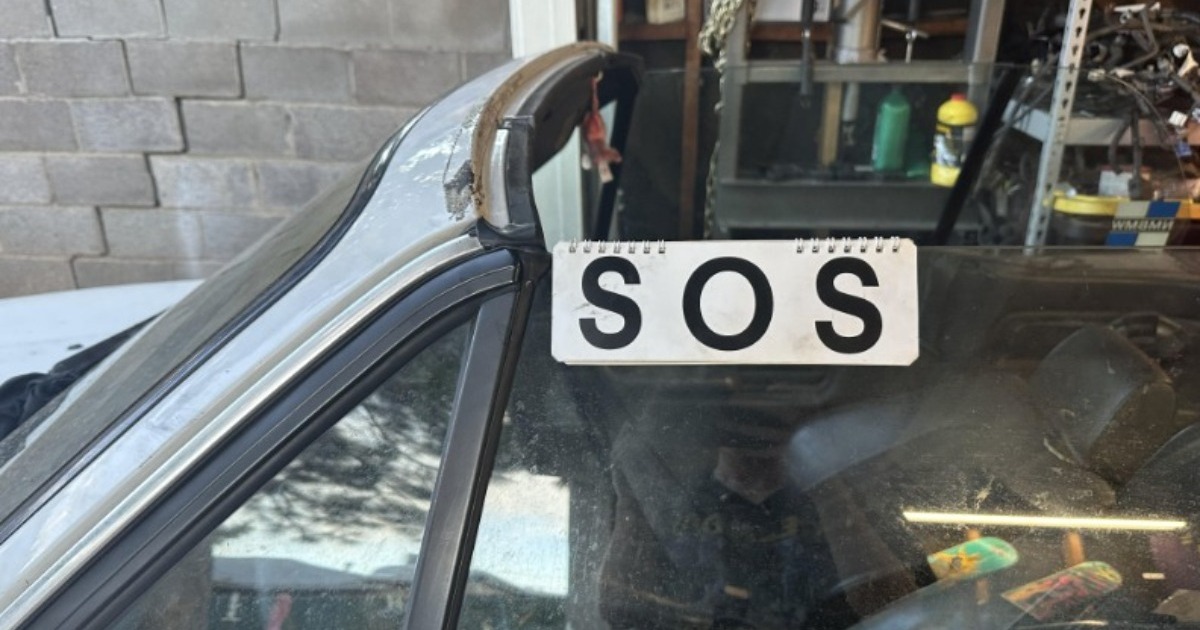
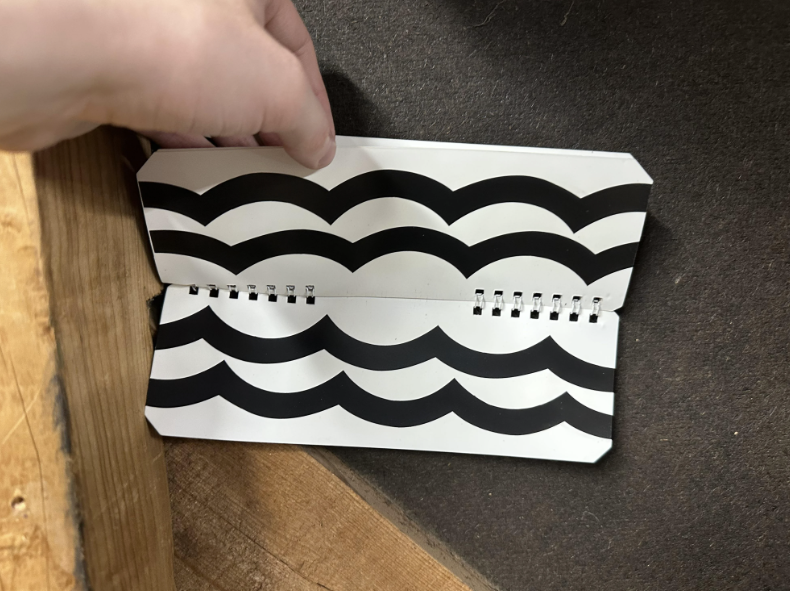
An example of the former is a sticker found in a Volvo in a junkyard that reveals a lot about this period. This is a small, white, plastic folded sheet, about the size of a business card when closed, and when opened it contains large, clear illustrations. Each page communicates a different message: a gasoline pump to show the requirement of fuel, wavy lines to show the engine is overheating, a wrench for mechanical problems, and an SOS signal for any kind of problem.
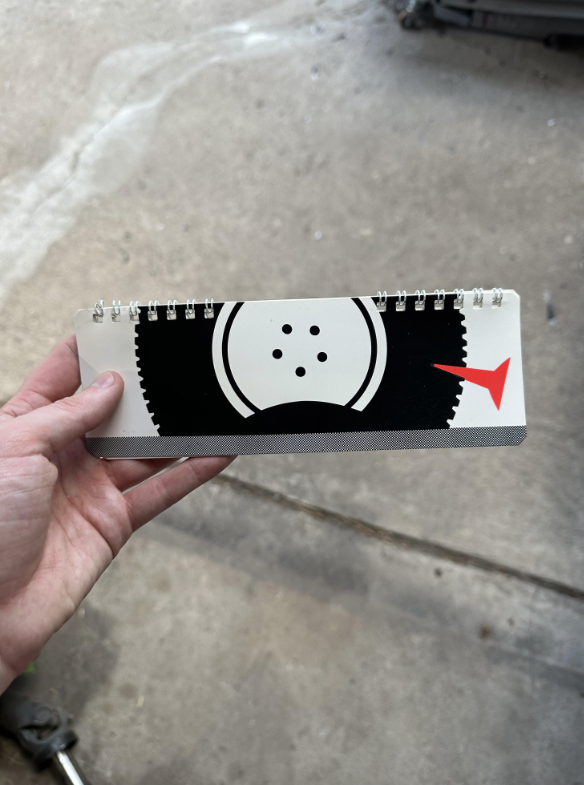
Thus, Volvo, the company, which pays great attention to the safety and utility of its cars, most probably provided this pamphlet as a standard car accessory. The design turns out to be simple, it employs the use of symbols that are easy to comprehend with a view of raising awareness on certain matters. This approach was typical for the period when direct and easy-to-perceive information was crucial for the drivers’ comfort and safety.
These were not just some practical tools for communication on the roads; they became the relics of by-gone decades, the last relics of a time when drivers could and did depend on fellow drivers and on quite simple, yet highly effective means of preventing crashes. In the age of Global positioning system and applications that render assistance in cases of a car breakdown, these signs were quite helpful. They make one recall a time when people touched each other and helped each other in matters of road safety.
Thus, these tools reflect the dynamic processes of the society and the changes that have taken place in the communication and help seeking systems. Moving from physical methods to digital ones is a major change in our day to day lives. It shows how advancements in technology have affected not only the manner of conveying information but also the manner of addressing safety and help.

These are the items that when we think about, we can feel the warmth that surrounds us. This paper reminds me of the old days with pamphlets or folding signs, of family and friends’ road trips, and the assurance that assistance is never far from the roadside. All these were ordinary things, but they were great friends to us, especially during the times of difficulties.
Though we can smile at the rather primitive equipment nowadays, it is essential to consider the protection that these tools provide us with. They bring to the mind an age where we used basics, simple and humane approaches to solve problems.
Envision yourself on a country road, the sun slowly going down in the horizon, and your worn out pickup truck croaks. No cell phone, no quick call to a passerby to come and assist. But in your glove compartment, there is an old folding sign with the words ‘NEED HELP’ written on it. You stick it in the back window and feel slightly more composed knowing that at least with this sign you can hopefully get someone’s attention. This memory and this simple act of communication reassembles us to a time where we where more dependent on each other and less on our devices.
Looking at these items as things of the past, we not only reapprize the creativity of the past decades, but also wake up to the fact that indeed, people are at the center of our experiences.
