They Laughed at This Rustic Farm Device Until It Transformed Their Fields!

April 26, 2024
Source: Reddit
In the days of rolled-up sleeves and sun-baked afternoons, there existed a simple yet significant tool that served as the unsung hero of the agricultural era—a tool that bore witness to the transformation of rugged landscapes into arable farmland. It was the trench crumber shovel, or as some affectionately called it, the crumb shovel, and it holds stories of toil and triumph in the soil it once sculpted.
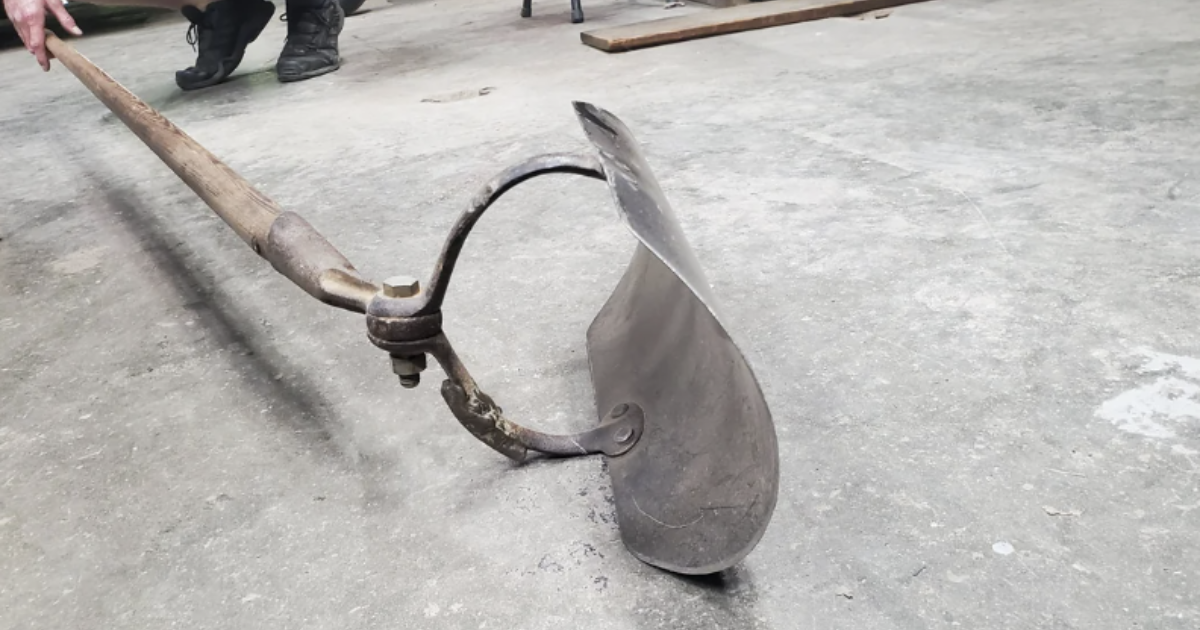
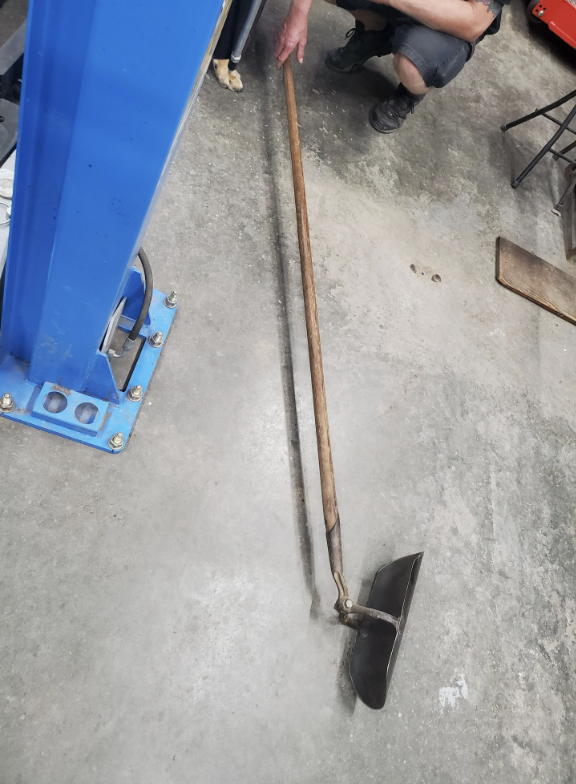
Picture a vast expanse of farmland, the horizon painted with hues of golden amber and the earth rich with promise. In the midst of this pastoral painting, farmers engaged in a ballet of hard work. At the heart of this dance was the crumber shovel, with its elongated wooden handle, a testament to the carpentry of bygone days, and a curved metal scoop, worn and sharp, from the countless encounters with the earth.

The crumber shovel’s design was a reflection of necessity and ingenuity. With a handle that pivoted, adapting to the contours of the land and the stance of the farmer, it allowed for the meticulous removal of excess soil, gravel, and debris from the trenches without the back-breaking need to descend into the depths. It was a tool that brought efficiency and a touch of grace to the arduous task of land tiling.
The farmers, with hands as rough as the life they led, used the crumber to shape the ground with an artist’s precision. The round shape it created at the bottom of each trench ensured that the clay tiles, which were to redirect water and make the land fertile, fit perfectly. It was a craft, passed down through generations, that symbolized the harmony between man and earth.
Imagine the satisfaction that Ron McGraw felt, working alongside his father under the vast Midwestern sky. Each motion of the crumber shovel was a verse in their silent symphony, a harmonious effort to coax the land into yielding its treasures. The shovel did not just move earth; it moved the dreams of the family, ensuring that the farmland would continue to sustain them, season after season.
Life back then was defined by the rhythms of nature and the tools that helped tame it. The crumber shovel was more than a piece of equipment; it was a companion in the fields, a bearer of legacy, and a sculptor of the land. It was part of a time when the days were marked by the sun’s arc and the value of work was measured in the sweat on one’s brow and the yield in one’s barn.
Today, as we look back, the crumber shovel stands as a relic of those nostalgic times. Its wooden handle and curved scoop are now silent, but the lands it helped cultivate are lush and alive, a testament to the great times when the earth and elbow grease were the ingredients for prosperity. It’s in the quiet whispers of the wheat and the gentle undulations of the fields that we remember the crumber shovel—not just for what it did, but for what it represented: a time of simplicity, of connection to the land, and of the enduring spirit of those who worked it.