How a Simple Glass Ball Transformed Our Understanding of Nature!

April 15, 2024
Source: Earth Sciences
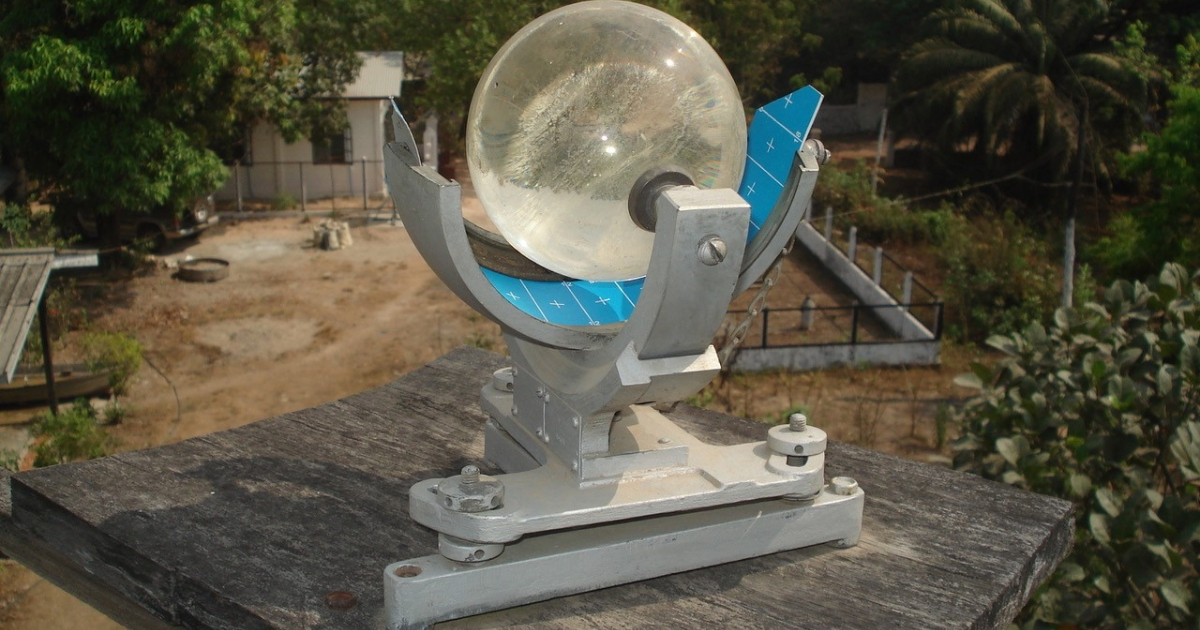
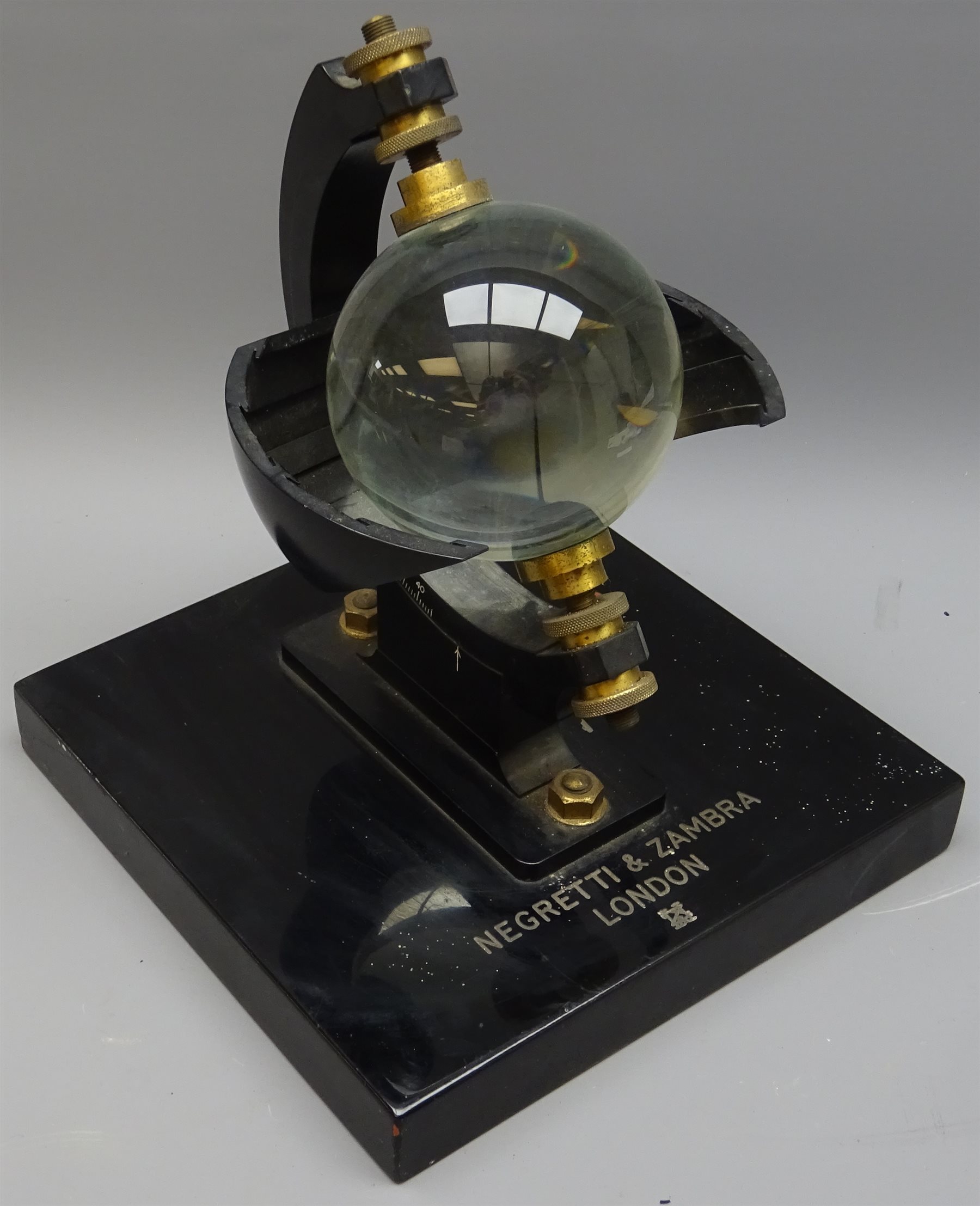
In the quiet corners of our memory, where the nostalgia for simpler times lingers, the Campbell-Stokes sunshine recorder holds a place of honor among the tools of scientific inquiry. This quaint device, resembling an alchemist’s dream with its bronzed framework and crystalline orb, has for over a century kept a vigilant eye on the sun’s journey across the sky.
John Francis Campbell envisioned a device in 1853 that would faithfully chart the sunshine, and Sir George Gabriel Stokes refined it in 1879, creating an instrument of both beauty and practicality. The recorder’s purpose was as poetic as it was pragmatic: to measure the dance of light upon the Earth. It was a time when instruments were not just tools but also artifacts of craftsmanship, designed to endure the elements as steadfast sentinels.
The glass sphere at the heart of the Campbell-Stokes recorder, nestled within its metal embrace, served as a lens to the heavens. It focused the sun’s rays onto a specially prepared card, scorching a trace of its passage. These burn marks, as rudimentary as they may seem, were the scribes of solar tales, telling the duration of sunlight that graced a particular day.
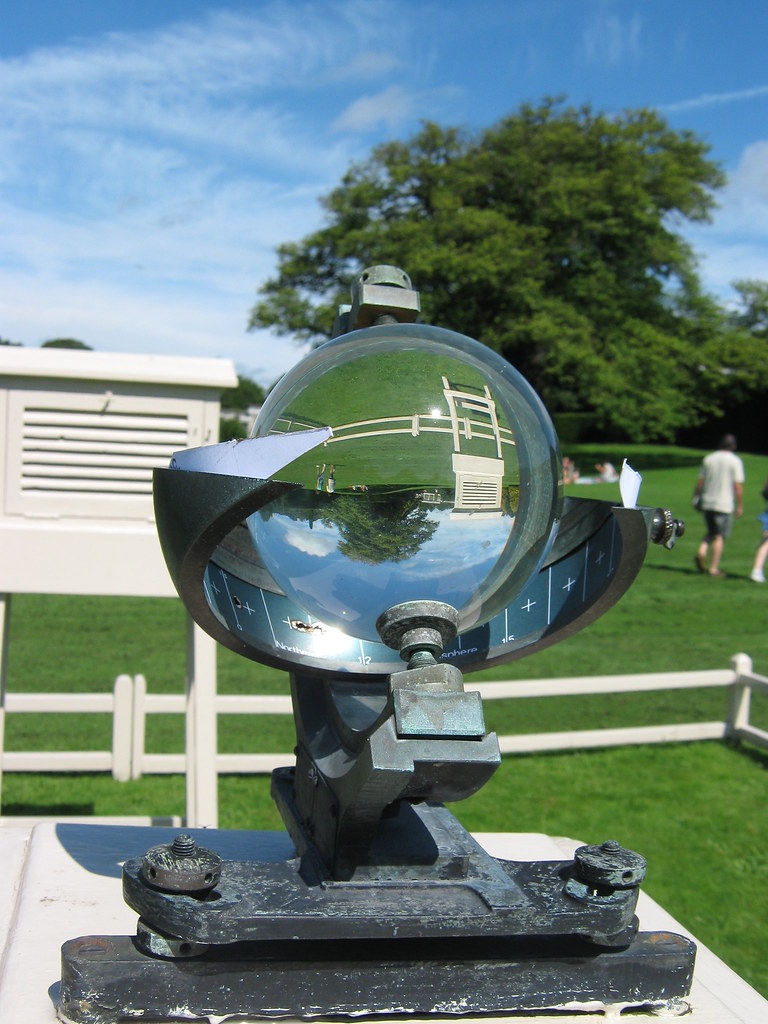
The simplicity of the Campbell-Stokes design belied the importance of its role. Sunshine duration was a crucial measure in understanding weather patterns, climate change, and the cycles of the Earth’s atmosphere. It informed farmers when to sow and harvest, aided in the study of plant photosynthesis, and was invaluable in health science, recognizing the influence of sunlight on well-being.
Meteorological stations across the world positioned these recorders in open spaces, exposed to the day’s embrace, where they would witness the unobstructed truth of the sun’s presence. There was an elegance in the way they functioned, requiring no electricity, no complicated machinery, just the sun’s rays and the Earth’s rotation.
Yet, the recorder was more than a mere scientific instrument. It was a bridge between art and science, a nod to a time when the two were not so distant. Each morning, as the recorder was prepared with a new card, there was a ceremony of sorts, a daily acknowledgement of the skies’ forthcoming narrative. And as the sun dipped below the horizon, the day’s story was etched into the card, ready to be interpreted by the eyes of a keen observer.
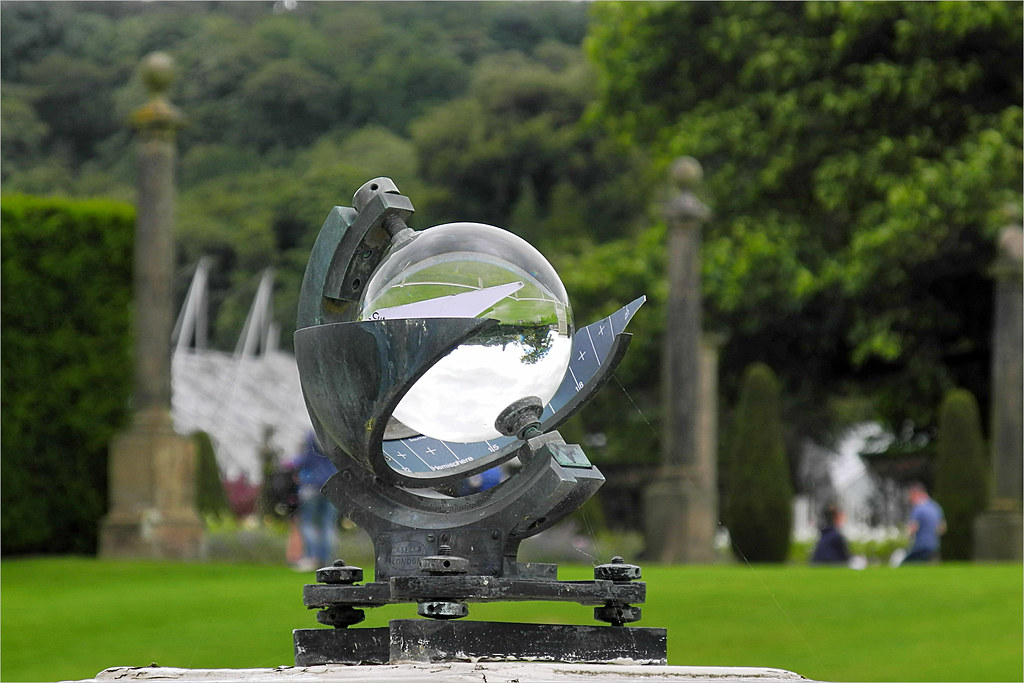
But the world turns, and with it, technology evolves. Satellites now orbit the Earth, capturing in intricate detail what once was entrusted to the Campbell-Stokes. Digital sensors offer continuous and automated recordings, sending data instantly across the globe. And yet, the allure of the Campbell-Stokes persists in some meteorological havens, where tradition is preserved, and the heritage of atmospheric science is venerated.
To behold a Campbell-Stokes recorder is to gaze upon the chronicles of a past era. It is to understand the patience required of those early meteorologists, who waited for the sun to reveal its story. It is to appreciate the slow science, the anticipation of discovery that unfolded with the rhythm of the Earth’s turn.
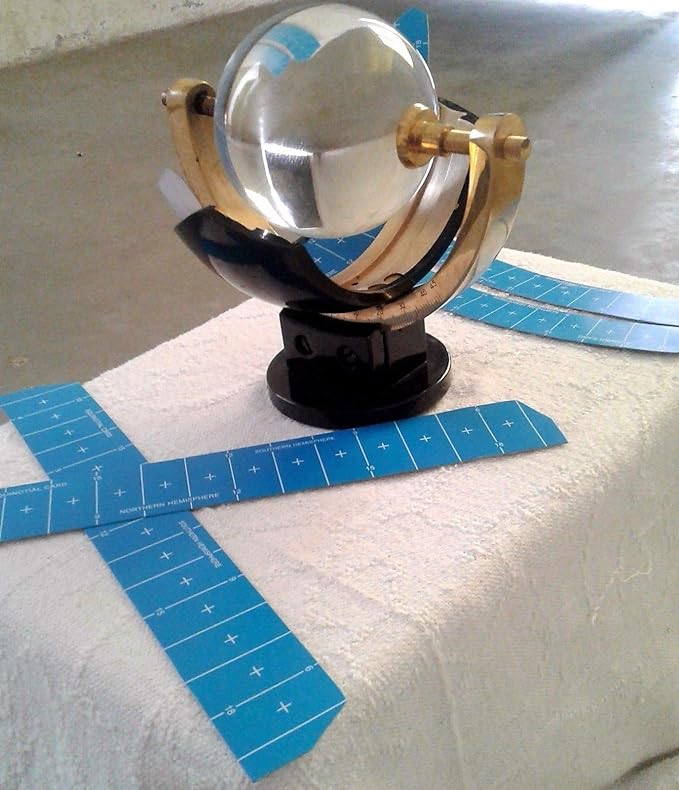
Why does the Campbell-Stokes recorder invite such fondness, such a wistful grip on our scientific soul? Perhaps it is because, in its reflection, we see the merging of human ingenuity and nature’s law. It represents an epoch when instruments were tuned not only to the frequencies of the natural world but also to the craftsmanship and aesthetic values of the society that created them.
In an age where the instantaneous is king, the Campbell-Stokes sunshine recorder is a testament to the measured, deliberate pace of yesteryear’s research. It harkens back to a time when data was collected not in bytes and bits, but in burns and scars upon a card—a physical testament to the sun’s voyage.
So let us remember the Campbell-Stokes sunshine recorder with affection, as a symbol of a bygone era of scientific exploration. It reminds us that in the relentless pursuit of precision and efficiency, there is still room for the tactile, the analog, and the heartfelt. As we forge ahead into the digital age, let the legacy of this humble yet noble device be a beacon of inspiration, a reminder of the harmonious blend of artistry and analysis in our endeavor to comprehend the vastness of nature’s canvas.