Hidden in the Highlands: The Vintage Tool That’s Sparking Internet Debates!

April 14, 2024

Source: Reddit
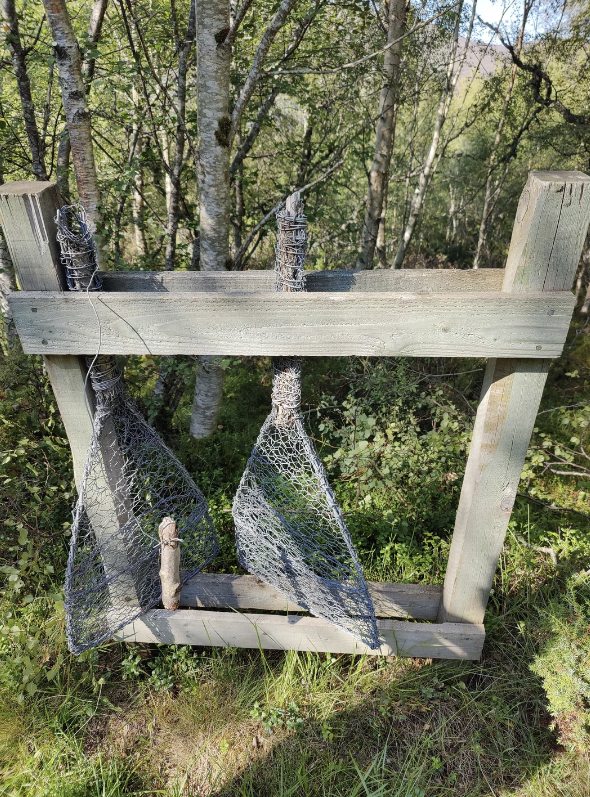
In the dappled sunlight that filters through the dense canopy of Scotland’s Highlands, hikers often come across an array of curiosities that speak of a time long past. Among these, a particularly intriguing artifact stands out: the fire beater. This seemingly primitive tool, often found handcrafted with a wooden handle and wire mesh, is steeped in history and speaks to the ingenuity of those who once relied upon it.
The fire beater harkens back to an era when the tools at our disposal were as raw and unrefined as the landscapes we sought to tame. There’s something distinctly poignant about such tools, which were created out of necessity and a deep understanding of the natural world. They are a testament to the resourcefulness of earlier generations, who fashioned utility from the materials readily available to them.
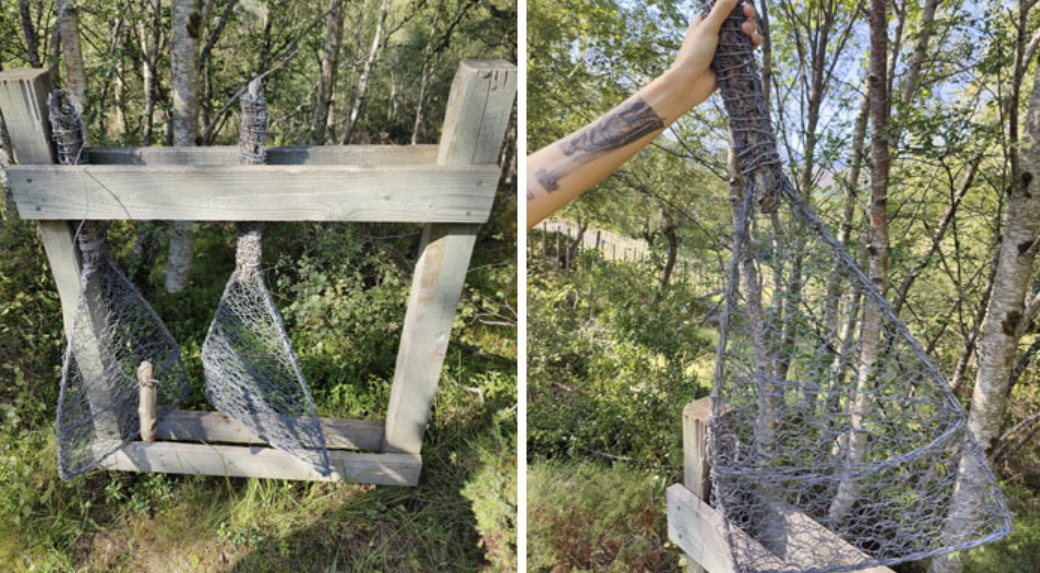
A fire beater, although simple in design, is emblematic of such inventiveness. It consists of a long, sturdy handle, typically made from wood, which offers safety and leverage to the user. Attached to it is a piece of wire mesh, skillfully shaped into a paddle. It’s a rudimentary design, yet its utility in combatting wildfires cannot be overstated.
These beaters were, and in some places, still are, used to smother and extinguish fires. In the wild expanses of Scotland’s Highlands, where the heather and gorse grow thick and dry, wildfires were not an uncommon occurrence. The fire beater provided a means of battling these blazes before they could spread and wreak havoc on the landscape.

The methodology of using the fire beater is as simple as its construction. Upon finding a small flame or smoldering embers, one would use the beater to pat down upon the fire, stifling it under a barrage of suffocating thumps. The lack of oxygen snuffs out the flames, allowing the wielder to control and contain potential wildfires with speed and efficiency.
This tool, though rudimentary, is steeped in a rich heritage of survival and environmental stewardship. It is a reminder of a time when life was inherently connected to the rhythms of the earth, and our survival was directly linked to our ability to work with, rather than against, the forces of nature. The fire beater was not just a tool; it was an ally in maintaining the delicate balance of ecosystems.
Its construction, often by the hands that would wield it, imbued the fire beater with a personal touch that is largely absent from modern, mass-produced equipment. Each wire bent and handle carved represents a story, a day spent in laborious effort to create something both functional and enduring.
As we advance technologically, tools like the fire beater become relics of the past, evocative of a nostalgia for a simpler time. They remind us of the skills that have been overshadowed by convenience – the ability to create with our hands, to understand the materials we work with, and to respect the natural world that provides for us.
The fire beater also symbolizes a communal effort. Wildfires were a threat to entire communities, and the use of such a tool was often a collective endeavor. Neighbors would come together, forming lines to beat back the flames that threatened their homes and livelihoods. It was a symbol of unity and cooperation, traits as crucial today as they were then.
In today’s world, where we often seek out the most advanced technology to solve our problems, there is wisdom to be found in the fire beater’s simplicity. It represents a sustainable approach, using minimal resources to achieve its purpose. There’s a lesson in its design: that sometimes the most effective solutions do not come from complexity but from an elegant simplicity that aligns with the environment’s own logic.
As an artifact found on a hike, the fire beater serves as a bridge between times, linking us to the past and urging us to carry forward the values it represents. It stands as a symbol of ingenuity, of the deep bond between humans and the land, and of our enduring capacity to adapt and overcome challenges with the simplest of tools.
The beauty of such objects lies not only in their physical form but also in their embodiment of a time when every tool told a story, every creation had a purpose, and every action was taken with a conscious thought for the world around us. The fire beater, in its humble grace, is a powerful reminder of the genius that resides in the most basic of human inventions.