What Secrets Did This Old Piece Hold?

May 14, 2026
source: Reddit
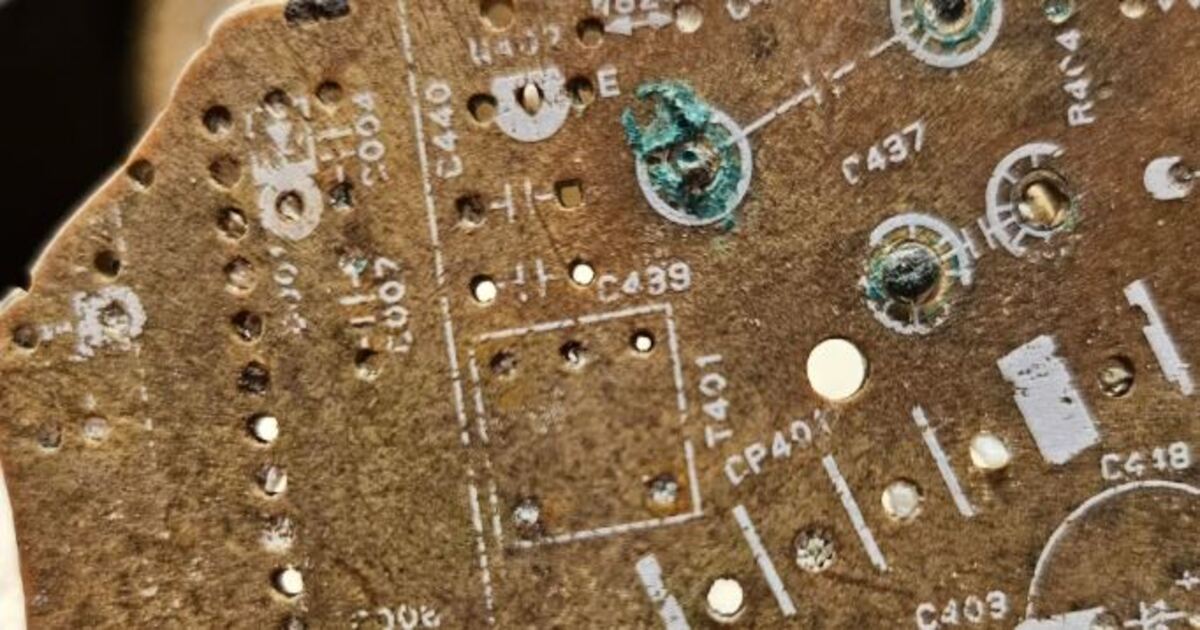
What makes an object “junk” is sometimes how we perceive it at first glance. This former marine circuit board is a prime example. At a distance, it looks like nothing more than a discolored scrap of brown material with vague fading letters, voids, and some form of rust or oxidation on it. But it probably used to be located inside a marine radar, depthfinder, or another type of marine electronics unit.
And therefore, there’s a story here.
What if this board was helping a mariner understand what was happening beneath him or her? Or help him/her navigate through fog and rain. What if this board was simply sitting behind the dash board of a boat, out of sight from the operator but still carrying out its duties?
While the captain was viewing the display on his/ her unit, this small board was passing signals along via copper pathways and tiny electronic parts.
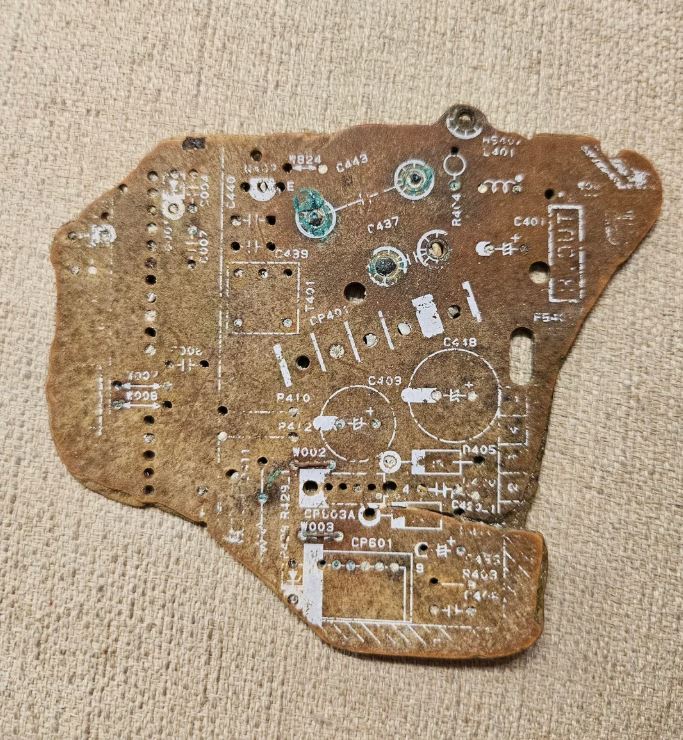
An Old Marine Circuit Board with a Function
Older marine electronics units were built to withstand harsh environments. The combination of salt spray, moisture, vibrations, and heat would eventually wear down even the best of them. However, most older radar and depthsounder units operated for several years. And when these systems did fail, many folks chose to repair them rather than replace them.
A repair technician could take apart the exterior casing of the unit, examine the board (in detail), and check every component. The white-printed labels made it easier to determine which resistor, capacitor etc., was being referenced. Most individuals looking at the marking on a circuit board think they’re just randomly placed. A tech sees them as a road-map.
There seems to be something nostalgic about that repair culture today. Many of today’s products are sealed, discarded or upgraded before people ever consider repairing anything. In fact, back in the day, a malfunctioning system usually ended up at someone’s bench with a soldering iron, multimeter, and service manual.
A Reminder of Hands-on Boat Operation
Pre-touchscreen displays, boats typically had multiple gauges/instruments per function. For instance, one gauge displayed your depth. Another displayed your radar information. Another told you your speed or direction. Each instrument required its own knobs/lights etc.
These instruments taught boaters to rely upon them. As well as learn their moods. Perhaps your screen needed a few minutes to “warm-up”. Perhaps the readings would flicker during heavy waves or you had to turn that particular knob a certain amount of times.
This old marine circuit board represents that time frame. It serves as a reminder of a time when technology seemed more tangible and understandable. You can literally see the workings of a machine; you can trace the paths and imagine the flow of signals within them.
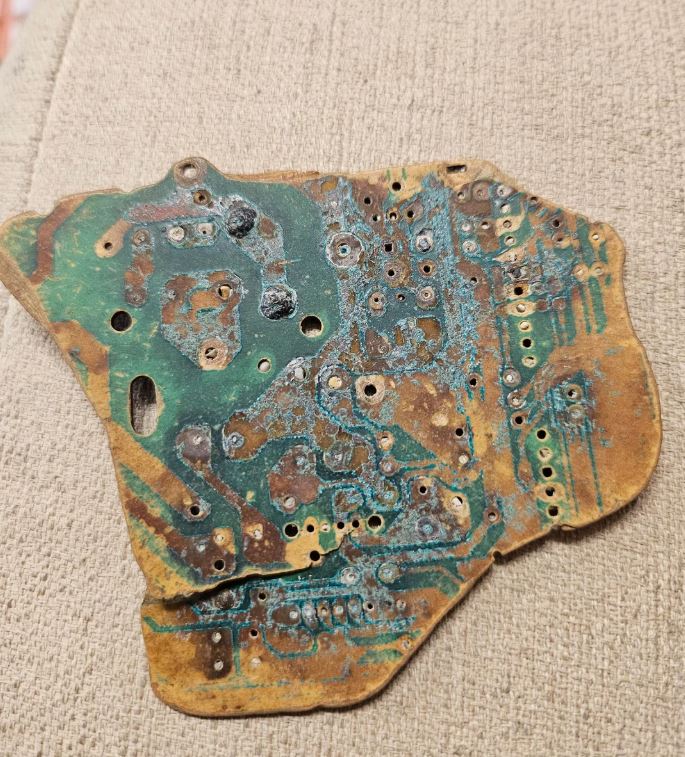
Small Artifact From Salt Water Life
The oxidation on this board tells a lot too. Marine equipment has always been subjected to a tough environment. Whether it is protected or not, salt and moisture will find ways into equipment. This weathered appearance adds character to the item; it no longer resembles trash; it appears more like an artifact from the long and arduous life of a boat.
Perhaps it no longer guides boaters through shallow waters or foggy mornings. Nonetheless, it holds memories of piers, repair benches, toolboxes and those early morning hours on the water.
Ultimately, this old marine circuit board illustrates why old technology is still relevant. It was functional; it could be fixed/repaired; and it served a specific purpose. Just because it is broken fragments does not mean it cannot remind us of better days when people truly understood their machinery part by part.