What It Is and How It Worked

February 10, 2026
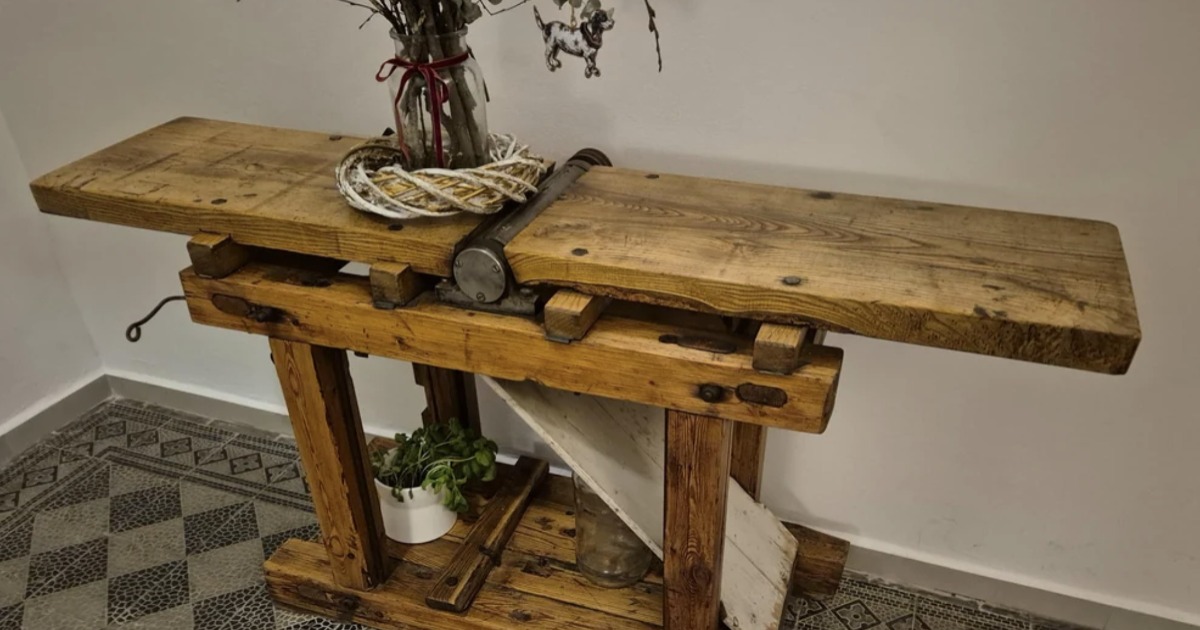
Source: Reddit
I am a sucker for old tools that look like they would be able to withstand a tornado. When I came into an apartment building hallway and spotted a rugged console table that had a large metal cylinder in the middle of it, I stood still. That was no generic table from the local vintage store. It was more than likely a repurposed antique wood jointer table. This was a woodworking jointer made decades ago that someone decided to turn into a decorative piece of furniture.
What an Antique Wood Jointer Table Is
A woodworking jointer is a tool that is used to create one flat surface on a board and one straight edge. This is important because raw lumber can come in many forms such as warped, cupped, or twisted. To achieve tight joints and straight edges you must first joint the material. As a result, panels will glue together cleanly.
The typical antique wood jointer table is a flat surface with two parallel flat surfaces, a gap in between, and a means to move the wood over those surfaces using your hands.
What the Metal Cylinder Does
That metal cylinder in the middle is the cutter head. In a functional woodworking jointer, the cutter head rotates quickly and contains blades that shave off a very thin layer of wood. Wood is fed into the jointer from the infeed side then across the cutter head. Afterward, it is fed onto the outfeed side. With each pass the surface becomes flatter or the edge becomes straighter.
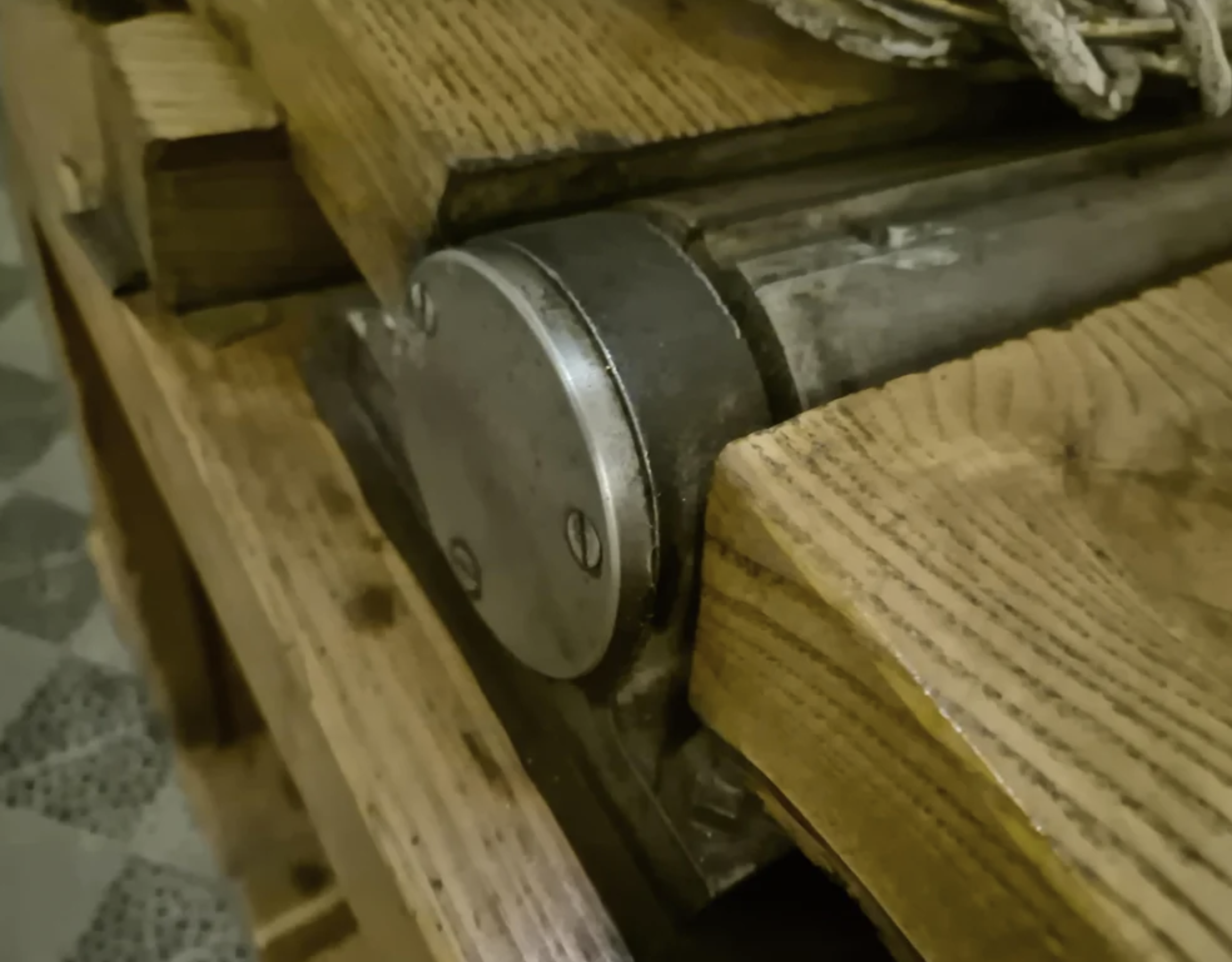
Shavings and chips fall under the area where the cutter head is located. That is why most jointers have a chute or are open under the cutter head.
Why People Confuse It with a Planer
Both a planer and a jointer remove wood, so confusion between these two tools is understandable. The key to making the distinction is how the board is moved and what the intended result is.
A planer is a device that pulls a board through using rollers and reduces the thickness of the board to a specific measurement. A jointer requires you to manually push the board over the top surface and produces one flat surface or one straight edge. Once the flat surface or straight edge has been produced, a planer is much more useful.
This is the reason the design is significant: two long beds with a gap in the center is indicative of a jointer.
What is Probably Missing
There are few things that can be done to an old machine that has been turned into a decorative item. These things will immediately identify it as being a machine. Most likely the parts that are removed to create the machine into a decorative item are:
- Fence along the back to hold edges square
- Cutter head cover to protect the knives
- Belt/pulley system or motor mounts
- Mechanical devices to adjust the height of the infeed bed
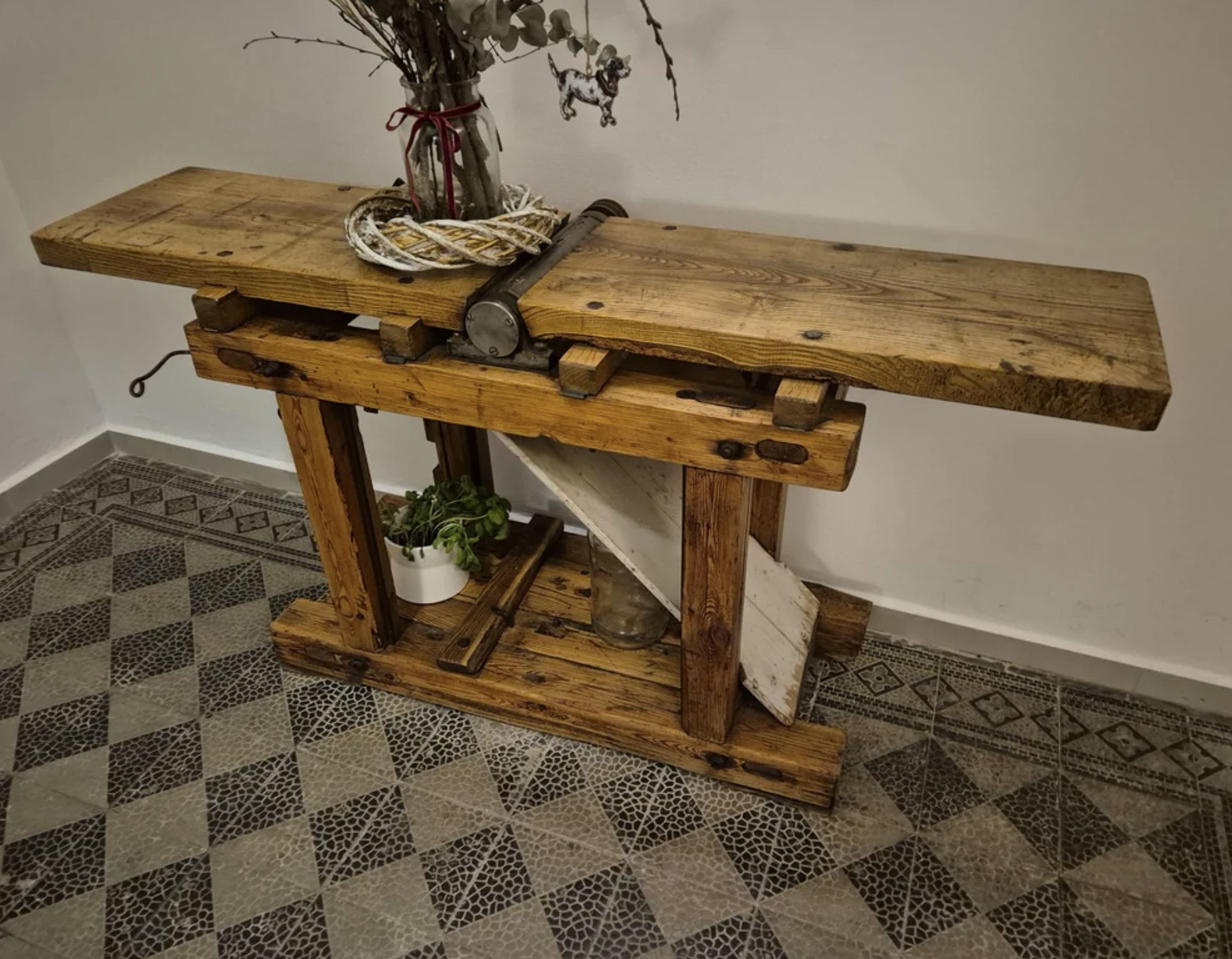
When these components are removed, the jointer begins to resemble a heavy table with a strange drum in the middle.
How I Would Verify It in Person
In two minutes I would determine whether:
- The two tables are at different levels (the infeed is lower and the outfeed is at the level of the cutter head)
- Holes for bolts or tracks along the rear for fences
- Pulley marks or evidence of motor mounts on the underside
- Stamps, numbers, or castings near the cutter head
Although stripped-down, the combination of the two-bed configuration and the location of the cutter head is the best indication.
Why It Makes Good Hallway Decor
An antique wood jointer table makes good hallway decor for the same reasons it served well in a shop; it is heavy, stable, and durable. Additionally, the piece of equipment tells a story. People see it and ask what it is. All of a sudden, a hallway has a story to tell instead of just a place to put junk mail.