What Did This Strange Machine Do 120 Years Ago?

November 18, 2026
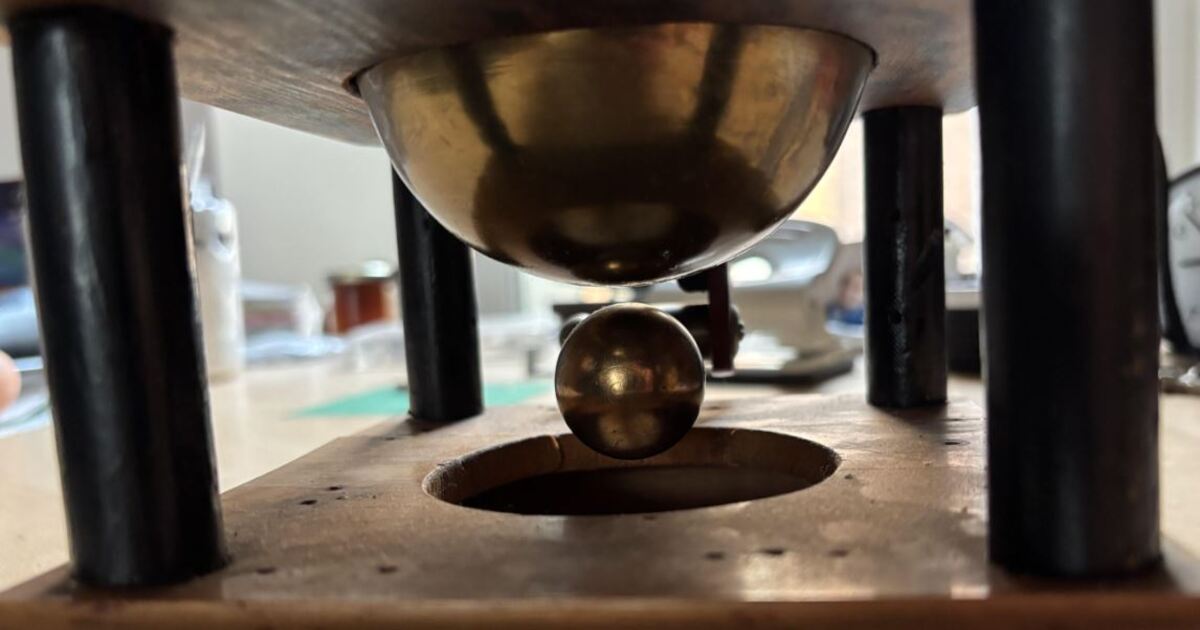
source: Reddit
Long before radios became common household items, scientists were experimenting with unusual machines that could send invisible signals through the air. One of them was the Righi oscillator, an early spark-gap transmitter that played an important role in the development of wireless communication.
With its brass spheres, glass container, and sturdy supports, the Righi oscillator looks quite different from modern radio equipment. Yet around 1900, instruments like this helped scientists demonstrate that electromagnetic waves could travel through space without connecting wires.
It was a remarkable achievement that helped pave the way for radio as we know it today.
What Was the Righi Oscillator?
The Righi oscillator was a scientific instrument developed by Italian physicist Augusto Righi during the 1890s. It generated short electromagnetic waves, often called Hertzian waves, through electrical sparks.
Righi built on the discoveries of German physicist Heinrich Hertz, who had demonstrated the existence of electromagnetic waves in the late 1880s.
By improving the spark-gap design, Righi created a more reliable way to generate shorter wavelengths. His work became an important step in understanding wireless transmission.
Although the apparatus looks simple today, it represented an impressive achievement in experimental physics.
How Did the Righi Oscillator Work?
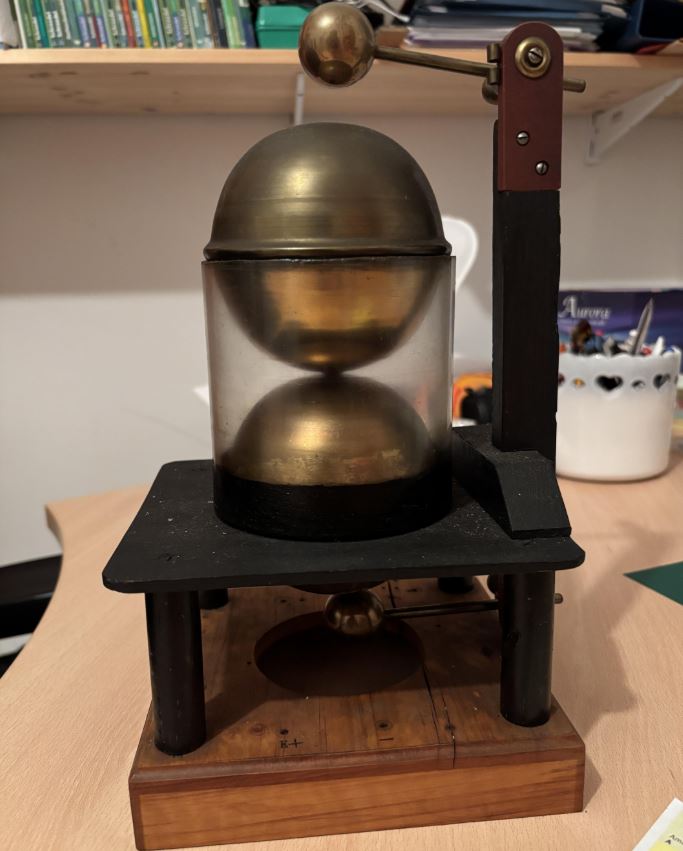
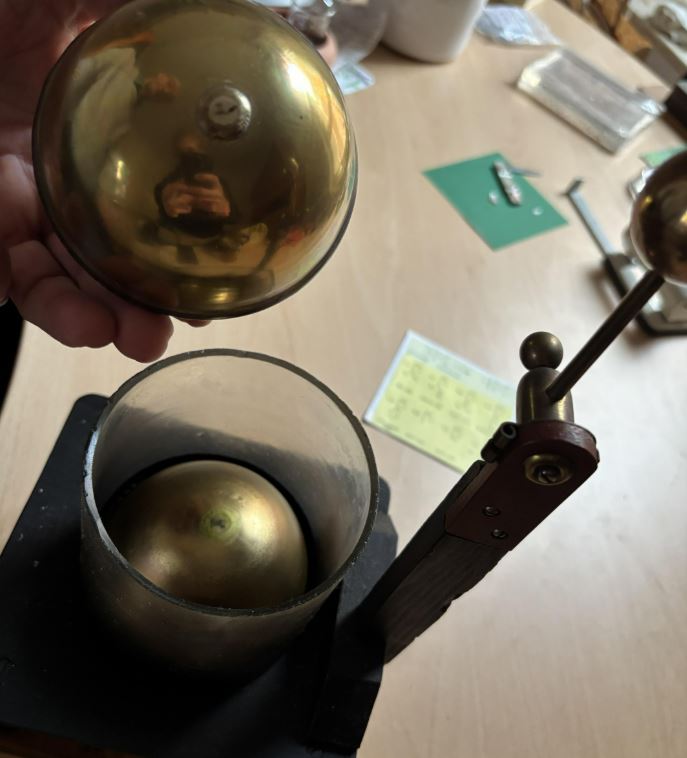
The Righi oscillator pictured here features two large brass spheres positioned vertically inside a transparent cylindrical container. A narrow gap separates the spheres, while smaller external electrodes connect the apparatus to a high-voltage induction coil.
When the coil supplied electricity, the voltage increased until sparks jumped between the electrodes. The rapid electrical discharge between the central spheres generated electromagnetic waves.
These waves traveled through the surrounding space and could be detected using suitable receiving equipment.
The process happened extremely quickly. While observers might hear the snapping sound of electrical sparks, the electromagnetic waves themselves remained invisible.
For students in early physics classrooms, this was a fascinating way to demonstrate something that could not be seen directly.
Why Was There Oil Between the Brass Spheres?
One of the most unusual features of the Righi oscillator was the insulating oil surrounding its central spark gap.
The oil served several important purposes. It allowed a higher voltage to build up before the spark occurred, helped protect the brass surfaces, and made the electrical discharge more consistent.
Without the oil, repeated sparks in air could damage the electrodes and produce less reliable results.
Righi commonly used vaseline oil in his experiments. The oil-filled gap helped him generate shorter electromagnetic waves, making his oscillator particularly useful for scientific demonstrations.
It was a clever solution to a problem that early electrical researchers frequently encountered.
The Connection Between the Righi Oscillator and Marconi
Perhaps the most interesting part of the Righi oscillator’s history is its connection to Guglielmo Marconi, one of the pioneers of wireless communication.
During the 1890s, Marconi became interested in transmitting messages without wires. At the time, long-distance communication relied heavily on telegraph cables.
Marconi studied the work of Heinrich Hertz and Augusto Righi and experimented with equipment based on their discoveries.
He used a Righi oscillator in some of his earliest wireless experiments. The History of Science Museum in Oxford preserves an example from 1895 that Marconi used in Bologna before bringing it to England in 1896.
The instrument helped generate the electromagnetic waves needed for his early demonstrations.
Marconi later improved his equipment considerably, but Righi’s oscillator helped provide a foundation for his initial experiments.
A Familiar Instrument in Old Physics Classrooms
Around the turn of the twentieth century, instruments like the Righi oscillator became valuable teaching tools.
Physics classrooms looked quite different from those of today. Teachers used induction coils, Leyden jars, electrostatic machines, and other fascinating devices to demonstrate the principles of electricity.
The Righi oscillator fitted perfectly into this environment.
Its brass components, visible spark gaps, and unusual construction made it an interesting object for students to examine.
The Science Museum in London even preserves a Righi-pattern oil-bath oscillator dating from around 1910, manufactured for scientific demonstrations.
Imagine sitting in a classroom more than a century ago, watching a teacher operate one of these machines. The sharp crackle of electricity and the idea of invisible waves traveling across the room must have made quite an impression.
Why Did Spark-Gap Transmitters Disappear?
Despite their importance, spark-gap transmitters eventually became outdated.
They produced short bursts of electromagnetic energy and generated signals across a broad range of frequencies. As radio technology advanced, engineers developed more efficient and controllable transmitters.
Vacuum tubes later made continuous radio transmission practical, helping transform wireless technology into a reliable means of communication.
By the 1920s, when radio sets were becoming popular in homes, spark-gap transmitters were already giving way to newer equipment.
However, their contribution to the development of wireless communication remained significant.
A Fascinating Reminder of Early Wireless Technology
Today, the Righi oscillator looks more like an antique scientific curiosity than an important piece of communication technology.
Its brass spheres, glass container, and carefully constructed supports reflect an era when laboratory instruments combined practical engineering with traditional craftsmanship.
Yet behind its unusual appearance lies a remarkable story.
The Righi oscillator helped scientists investigate electromagnetic waves, inspired early wireless experiments, and contributed to the development of radio communication.
It reminds us that some of the technologies we now take for granted began with surprisingly simple equipment.
More than a century later, this strange brass machine remains a wonderful reminder of the early days of wireless communication, when a few sparks could open the door to an entirely new world.