This Old Wooden Thrift Find Looks Decorative—But It Has a Secret Purpose

February 24, 2026
Source: Reddit
There are numerous types of thrift store thrills. For example, one of the most exciting experiences is finding something that has a history to it.
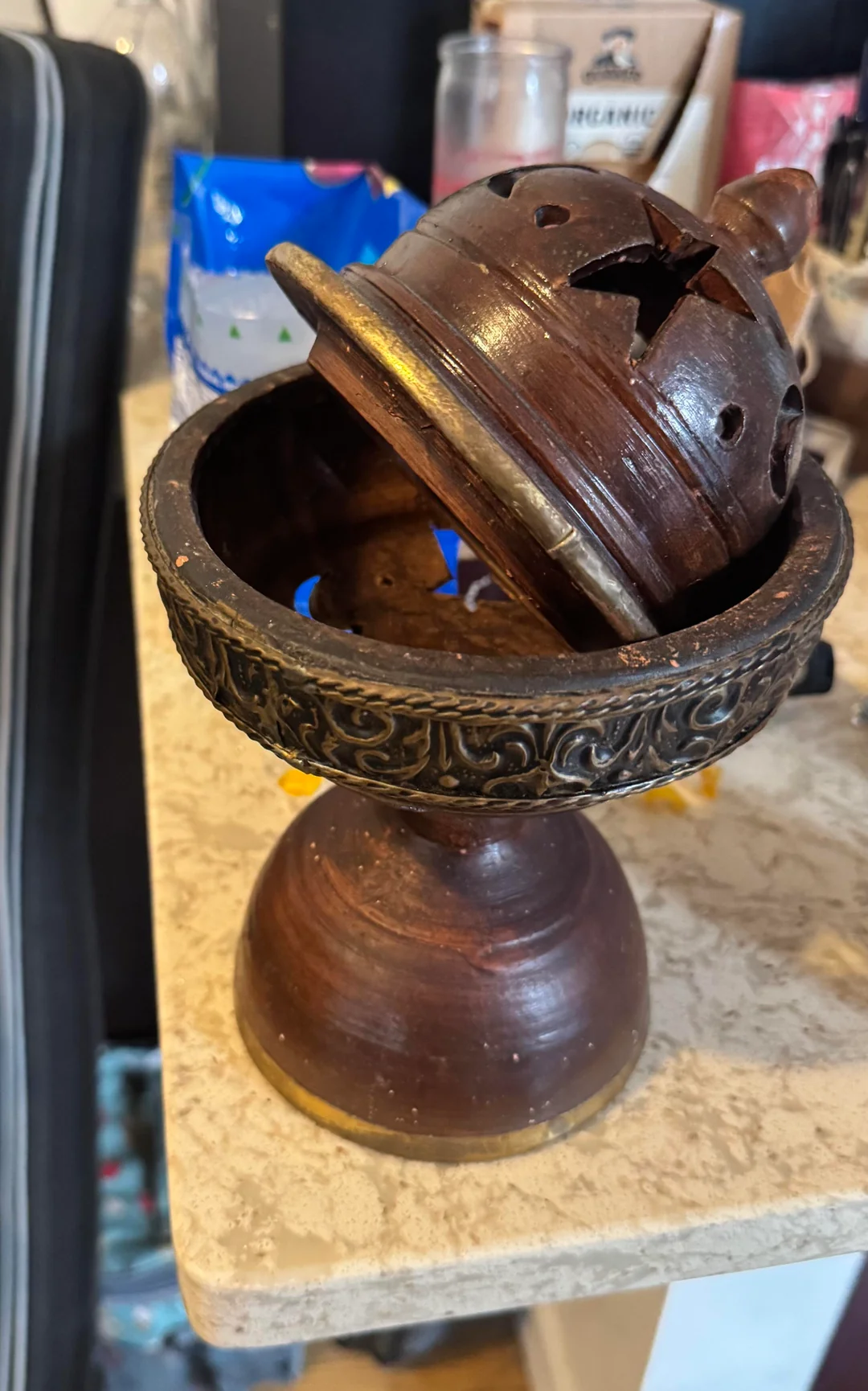
The incense burner seems to be purely decorative in its original state. The turned wood piece looks like a pedestal and the dome-shaped lid with star and crescent cuts are features that indicate “handmade craftsmanship,” whether the incense burner was handmade or mass produced. The defining feature of the item is the design. The top of the incense burner has ventilation holes and the bottom of t it has a recess for containing the smoldering incense.
What it Is: An Old Style Classic Incense Burner
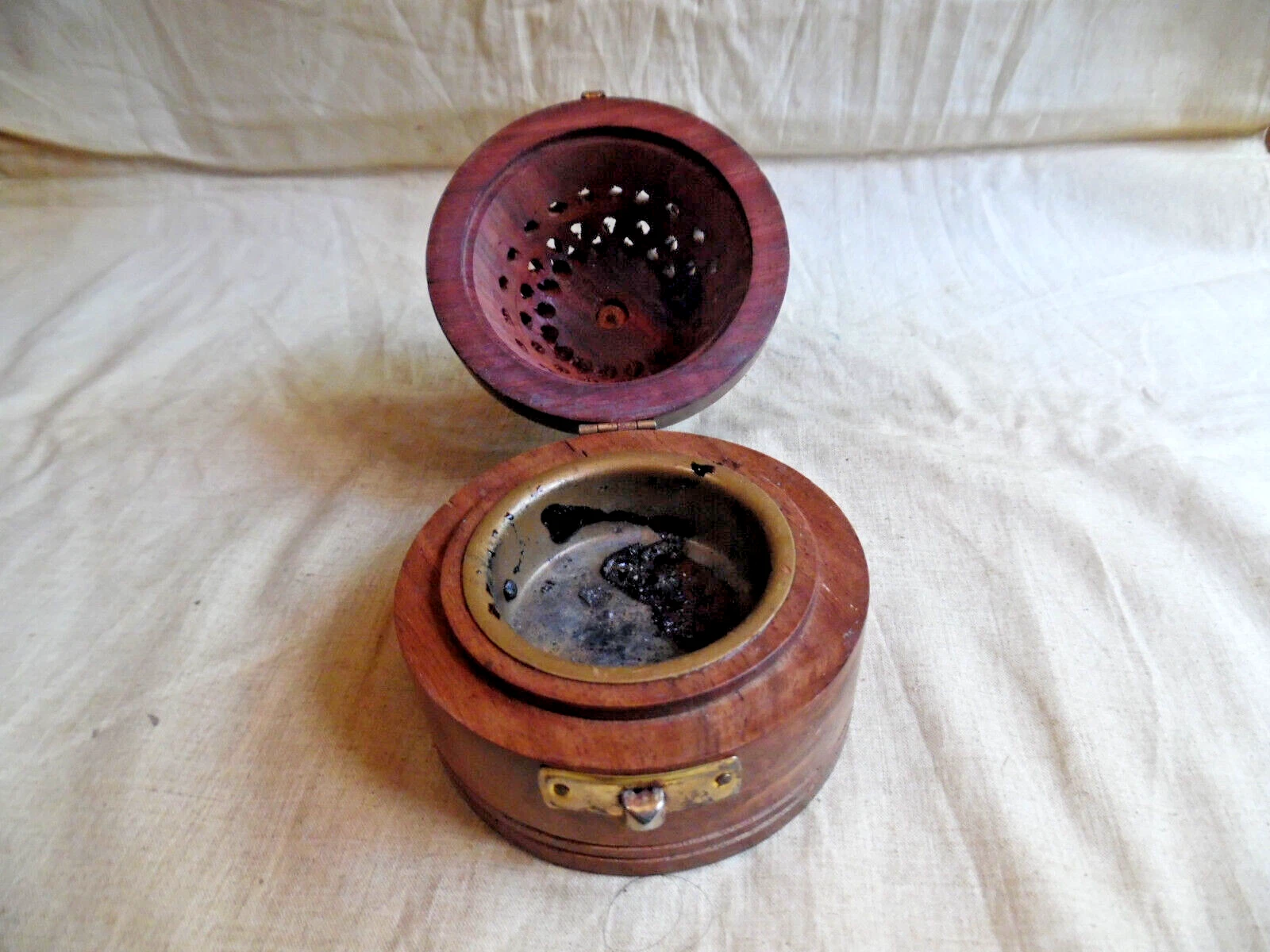
As long as the incense burner is made of wood and contains a metal insert, it can be used safely. In the past, incense burners were manufactured with an outer shell (such as wood, sometimes brass trimmed) and a metal lining. Cup or tray to contain the ash produced by burning incense and protect the wood from the heat produced by the burning incense.
Unlike modern incense burners that are primarily for function alone, older incense burners were decorative items. To be placed on a table or mantle and were meant to produce a particular atmosphere in a room. When using this item today, try to recreate a similar atmosphere to the one that existed when people originally purchased and used the item.
Purpose of the Lid Ventilation Holes
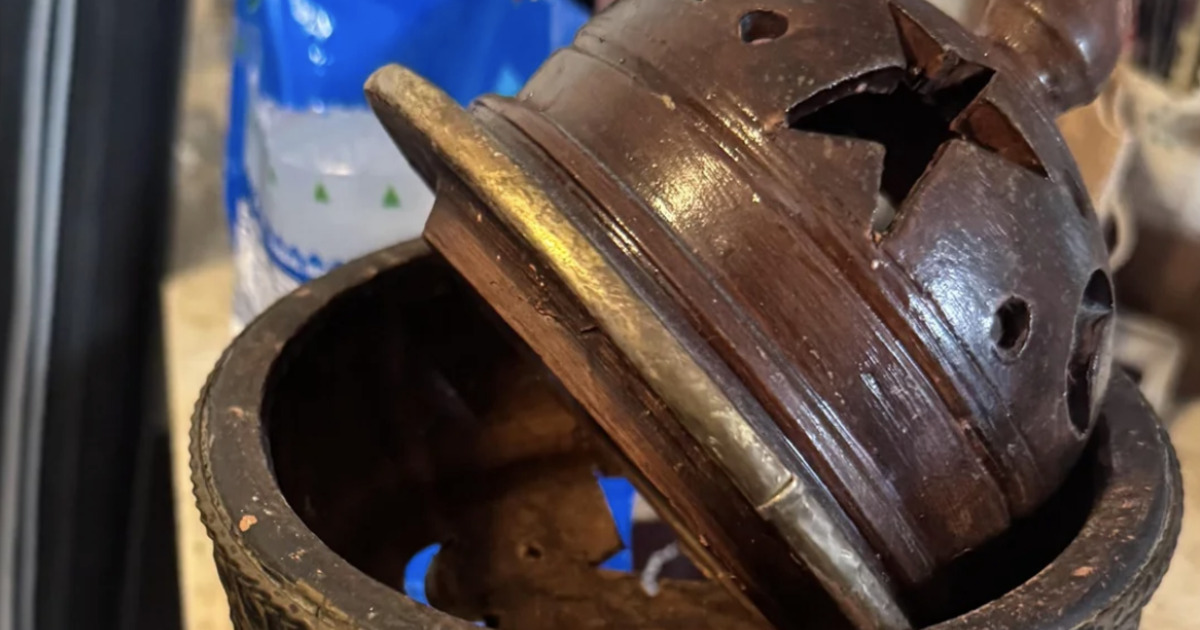
The star and crescent cuts in the lid aren’t just for decoration. The ventilation holes allow for airflow to the incense so that it continues to burn, and for a path for the smoke to escape from the area. The ventilation holes allow the smoke to leave the area slowly rather than all at once when it would rapidly leave the area.
To be honest, the slow escape of the smoke is part of the allure of the item. It produces ambiance. Incense didn’t just eliminate odors. It produced moods.
Problem with Lid Dropping into Dome
If the lid falls into the dome portion of the item when you try to close the lid, there are several possible causes:
A. Missing Inner Rim or Insert Piece. Some incense burners were equipped with a thin metal ring or a small ledge that the lid rested on. If either of these pieces are missing, the lid will not stay in place.
B. Swelling/Wearing of the Wood. Wood is not a static material. As the wood is exposed to different humidity levels, it begins to swell or shrink. As the wood swells or wears, the edges of the dome where the lid comes into contact may no longer be in proper alignment.
C. Designed to Have a Type of Latch System. A large number of incense burners were designed with a type of latch system, hinge, or pin system to hold the lid in place.
Good News: The Item is Not Useless
Even if the lid drops into the dome, the item is not necessarily unusable. It simply requires gentle placement of the lid into the dome and/or you may need to think creatively about how to use the item and not rely on the lid being closed.
How People Used These Items Back in the Day
The vintage-style incense burners would have fit perfectly into the aesthetic of living rooms, dens, reading areas, and meditation spaces throughout the second half of the 20th century. Think:
Living Rooms with Paneling and Record Players
Bedrooms with Posters, Beaded Curtains and Stack of Mix Tapes
Reading Corners with Table Lamps Featuring Warm Yellow Bulbs
Meditation/Yoga Spaces Before Yoga Was Something You Booked Through an App
Incense was both a scent and a statement. Sandalwood, Patchouli, Nag Champa – those scents represented an entire persona.
Safe Use Today
As the item is made of wood, you must take precautions. The safety of the item depends upon the containment of the heat in the metal insert and not allowing the burning incense to make contact with the wood. To safely use this item, follow the guidelines below:
1) Check the Metal Insert (Ensure it fits Properly)
Do not attempt to burn incense in the wood cavity if the metal insert is missing. Instead, put a small metal dish in the wood cavity and add enough support to prevent the ash from spilling over.
2) Only Use Incense Cones or Short Sticks
Incense Cones are good options for enclosed burners as they tend to remain stationary and drop ash nicely.
Short sticks can also be used as long as there is a holder or a sufficient amount of sand within the metal insert to stabilize the stick.
3) Add Sand or Ash to the Insert
Add a thin layer of clean sand to the metal insert to help control the heat of the burning incense and provide support to the incense cone.
4) Place the Incense Burner on a Heat Resistant Surface
Regardless of the metal insert, do not place the incense burner on a surface that can easily be damaged. Instead, place the incense burner on a ceramic plate, a stone coaster or a heavy-duty trivet.
5) Watch the Burning Product
This is known as the “Grandma Rule” and is the safest rule. Incense may appear harmless until it is not.
Thrill of Thrift Store Finds
One of the charms of the thrill of finding items at thrift stores is that items such as this were built to last. It is not a disposable plastic item that breaks in a year. It is a durable, functional and aesthetically pleasing household item – personal and peaceful.
Someone bought this item previously because it suited their home, style, or perceived comfort.
Now, it is your turn. You now have the opportunity to buy this item for the same purpose: to bring a sense of warmth and comfort to your home.
Nostalgia in Every Whiff of Smoke
When deciding whether or not to use this item, start by choosing a fragrance that brings back memories of “the good old days.” Perhaps sandalwood reminds you of a bookstore. Maybe vanilla reminds you of a warm kitchen. Or maybe you choose the classic Nag Champa to recapture a memory you never knew you still had.
That is the beauty of an antique-style, wood incense burner with a hinged lid and metal insert. It is not just an incense burner. It is a time machine for your senses – creating a connection to the present moment and bringing the past closer than ever before.