This Cute Little Hippo Is Hiding a Surprisingly Useful Secret

February 17, 2026
Source: Reddit
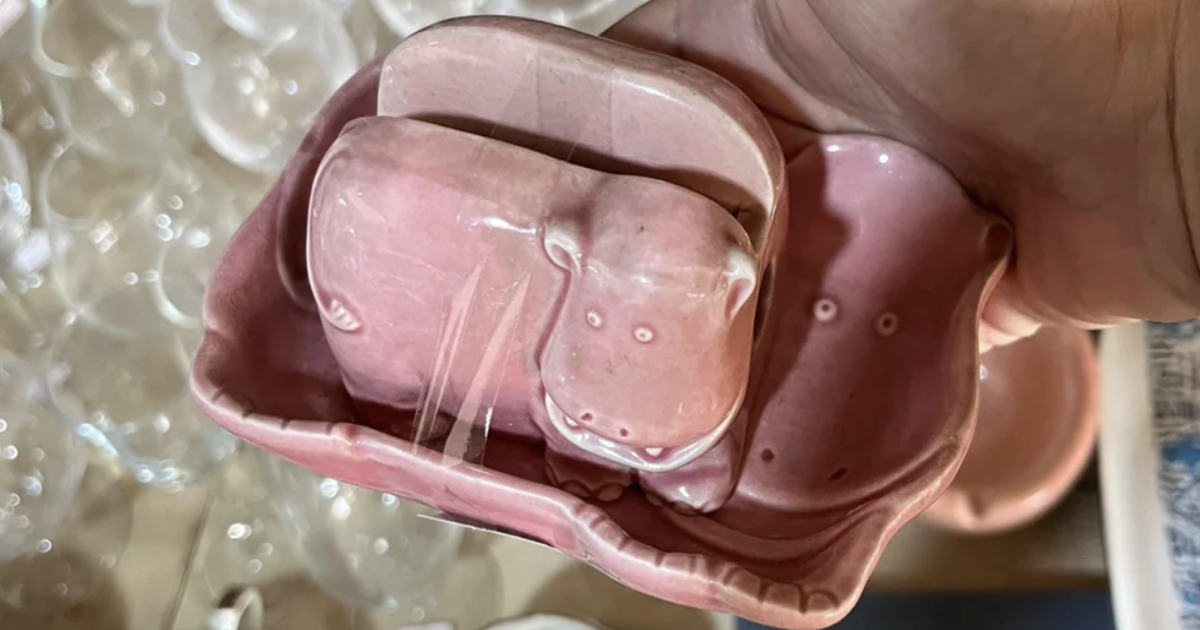
You know that feeling like when you’re rummaging through a thrift store shelf and something’s sort of staring back at you as if to say, “I had an occupation… You, uh. You just forgot what it was”? That’s exactly what happens with a small ceramic hippo dish like the one in the picture. It’s adorable, it’s weirdly specific, and it looks like something that would have fit perfectly in a 1950s bathroom alongside a glass tumbler and unmelting bar of soap.
So what is it? The educated guess — and the one that makes sense given that groove and those holes — is that this is a hippopotamus toothpaste squeezer dish. In other words, it’s a container for a basic tube of toothpaste and plastic rolling pin that helped make sure you got every last drop out of the tube.
The need for a hippopotamus toothpaste squeezer dish at all
In the day when toothpaste was in a metal tube (and then in an early plastic one that continued to fight you), wasting it felt wrong. It wasn’t just because it looked like the middle was empty, and you didn’t chuck a tube. You flattened it. You rolled it. You made it behave.
That’s where tube squeezers came into the picture. A lot of these were metal gadgets you clipped on the end of the tube. Others were little pins or rods that you threaded through holes, and then rolled the tube around like a wee window shade. Another such dish likely performed these two functions at once: holding the tube and keeping the rolling pin in place.
How the likely design of the hippo worked
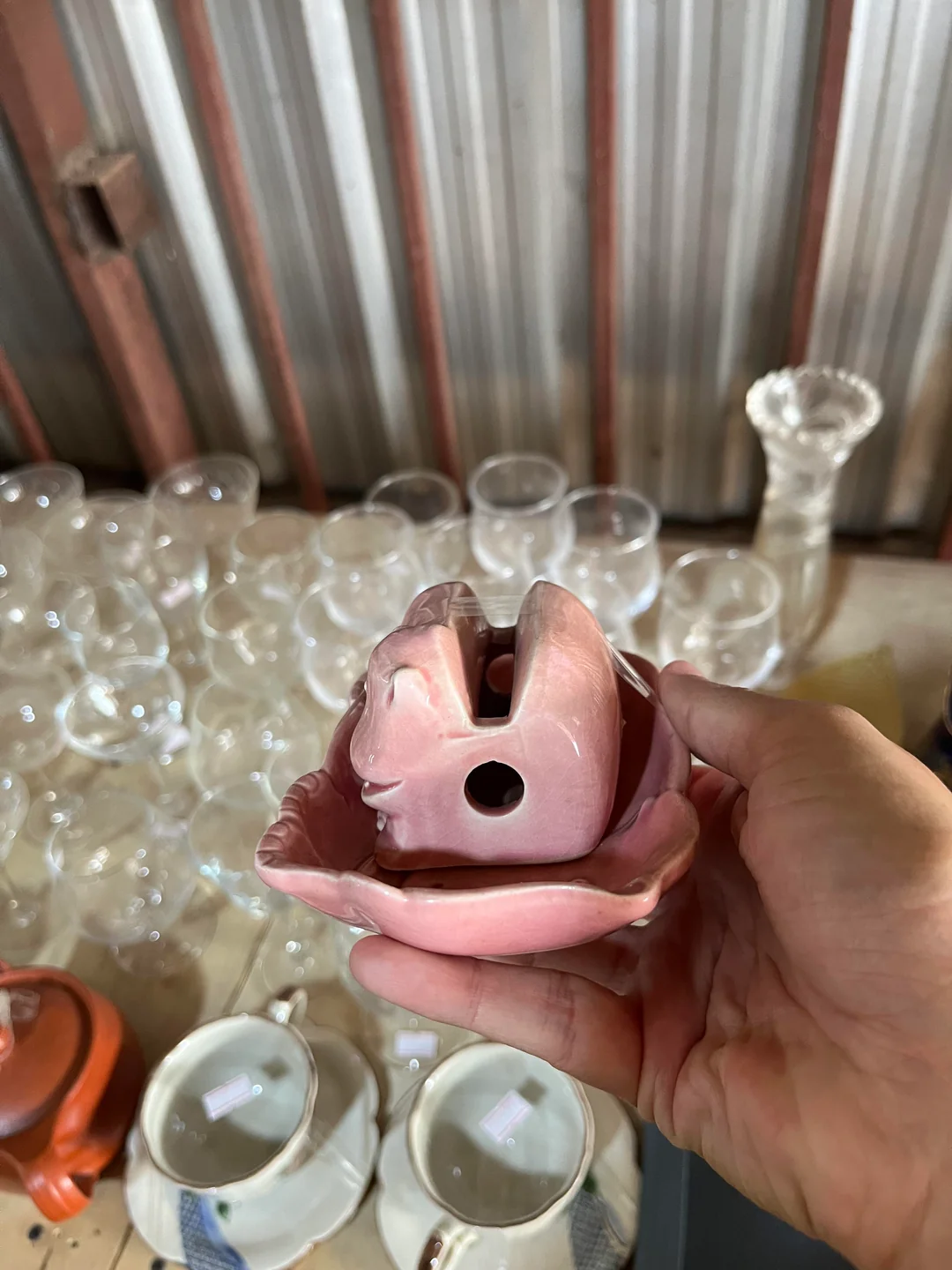
Study the design — and it begins to make sense. The “body” of the hippo is a tray, and the long groove where you brush your teeth each morning is where the toothpaste tube would lay. Those tiny holes are the giveaway. They weren’t decorative. They held a pin (or small rod) that passed through the folded end of the tube.
Here’s the basic idea:
- The end of the toothpaste tube you fold over the pin.
- You stick the pin in the holes so it locks into place.
- You then roll the pin, and it rolls the tube tight while you use your toothpaste.
- The tube remains flatter, cleaner and also less wrinkled.
It’s simple, a bit fussy and, to be honest, sort of satisfying — like neatly wrapping up a cord as opposed to just shoving it in a drawer.
The “good old days” bathroom problem it addressed
The hippopotamus toothpaste squeezer dish wasn’t just a matter of thrift. It was also about neatness. Older bathrooms placed a high value on “a place for everything.” Toothbrush in the holder. Soap on the dish. Razor in the cup.
And toothpaste? Toothpaste was messy. Tubes leaked. Caps got crusty. Paste built up around the threads like it was paying rent. A tray raised the thing off the counter and managed to contain the mess. And when people visited, the bathroom looked assembled as opposed to a toothpaste crime scene.
How it got to be the shape of an animal (and why that matters)
Here’s the bit I love: someone could have made a plain, practical ceramic tray. Instead, they made a hippo.
Which is quite a comment on the era this stuff appears to be from. Housewares from the middle of last century tended to aim for a happy look. Even the most dull details — like managing toothpaste, for instance — paid a wink to personality. An animal on the vanity added an extra padding to mundane rituals.
Kids probably liked it, too. If you’ve ever had to convince a child to brush her teeth, you know a hippo helper never hurts.
Could it be something else?
Admittedly, thrift store mysteries are full of “maybes.” Some people see these and say:
- soap dish
- sponge holder
- trinket tray
- novelty candy dish (tiny little candies, perhaps)
The combo of groove and hole really shouts “functional rolling” to me, more so than a mere resting place. A soap dish does not require a long channel or pin holes. A trinket tray might, but it would be weird to have holes that only serve a purpose if something goes inside them.
And if you do find one, what should you look for?
If you are attempting to test in the wild the theory of hippopotamus toothpaste squeezer dish: Signs to look for:
Are the hole oriented such that a rod could rest flat?
Does tube sit inside the groove (inside metal tracking) and show wear through as if some got hung up for years?
Does the dish look like it’s part of a set for a bathroom (the same glaze, or similar, as vintage soap dishes)?
The pin may be omitted at times, which can make the item a bit baffling. Discover a hippo dish with the rod still in it, and you’ll get it immediately.
How you can use it today
Even if you roll toothpaste never like it’s 1962, this little hippo is still charming. You could use it as:
a ring-and-earring tray next to the sink
a hairpins or bobby pins holder
a tube of hand cream holder (still related!)
a soapdish, if the glaze and drainage will accommodate it
But if you want the authentic experience, take a small rod, thin dowel or even fat skewer (smooth) and do it with a tube. There is something almost enjoyable about watching a disheveled tube transform into neat little roll.
The real reason people adore finds like this
That’s part of the magic of thrifting: Coming across items from a time when even little inconveniences had specific solutions — and that those solutions came with personality. You don’t need a hippopotamus toothpaste squeezer dish. It’s not life-changing.
But it is a quintessential example of the good old days: practical, playful and built to last long enough to confound someonewho finds it in a thrift store 50 years from now.