The Forgotten Tool That Transformed Beauty and Built Empires

January 14, 2026
Source: Reddit
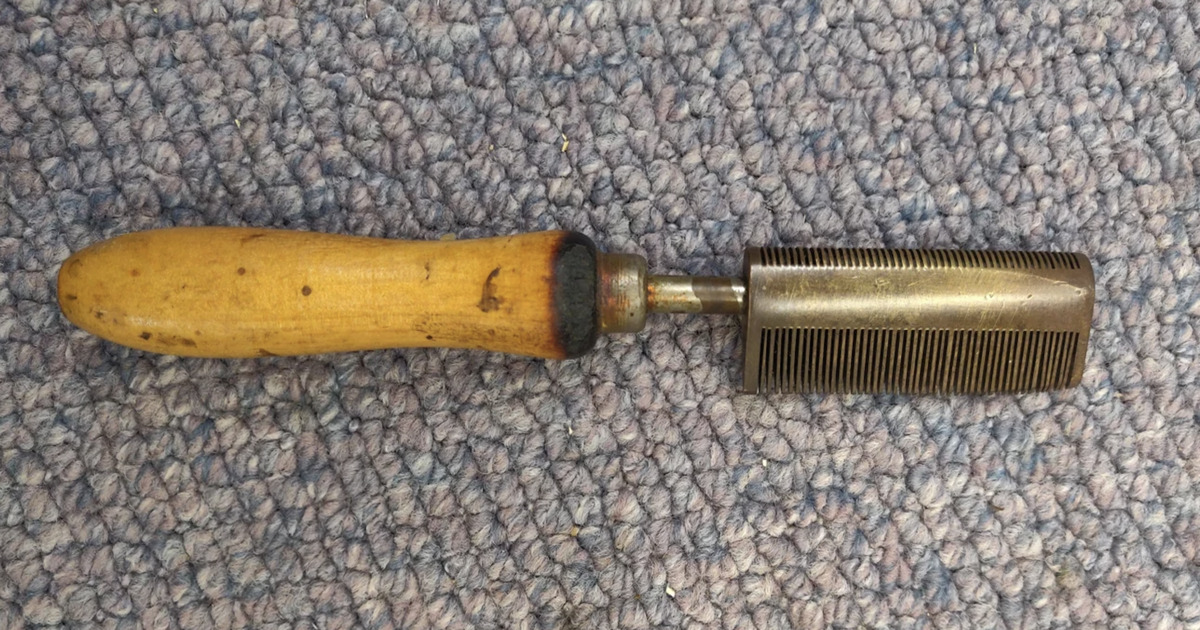
Finding an old tool can be exciting — especially if there is a story behind it. Do you remember finding an old metal comb with a wood handle? Maybe you found it in a closet, in a garage, or in a box of an old man’s “stuff” from his days as a retired hardware repairman? Whatever you have done, I am sure you have found a hot comb. They seem so simple, but their legacy is deep rooted.
Let us go back to the beginning of the hot comb. In fact, they are among the oldest hair straightening tools. They represented beauty, self-care and even social advancement — particularly for African-American women in the twentieth century. As you may know, we do not see hot combs being used much anymore, however, the significance of their legacy still has resonance.
Early Development of the Hot Comb
Heated combs have been around since 19th Century France, where they were used by women with coarse or curly hair that desired a more smooth and sleek look. However, the hot comb did not gain popularity in the United States until the early 1900s.
Enter Madam C.J. Walker — a pioneer, inventor, and the first female self-made millionaire in America. Although she did not create the hot comb itself, she created a product that made the it very successful and changed the black hair care industry forever. Walker created a full-line of hair care products for African-American women including hot combs which were designed to work more effectively and safely.
Walker’s goal was to provide African-American women with the opportunity for economic independence and confidence in their appearance. She created jobs for thousands of women as sales agents providing them employment at a time when jobs were scarce for black women.
How It Was Used
To properly use a hot comb, it took both patience and skill. First, the metal comb had to be heated (on a stovetop or over an open flame) and then carefully pulled through each section of hair while smoothing out and straightening as it moved through the hair.
In addition to making hair look good, straightening hair was often seen as a way to fit into what society deemed acceptable beauty standards — particularly when many of the natural Black hairstyles were not socially accepted. For many women, using the hot comb was a deeply personal experience — either empowering, or divisive.
Saturday Mornings and the Smell of Pressing Oil
For many of those who grew up in households where the hot comb was used regularly, the memories of the hot comb are vivid. The smell of the pressing oil. The sizzle of the hot comb gliding through the hair. The anxious wait as you sit on a stool and hope your mom or grandma does not pull the comb too close to your ear.
These experiences created long-lasting memories. Some experienced these moments as bonding experiences. Others saw these moments as markers — school picture day, church Sunday, or a special occasion.
The hot comb was more than just a tool — it was a shared experience passed down through generations.
From Stovetops to Electric Versions
Over time, electric hot combs replaced the traditional stovetop versions, providing greater convenience and better temperature controls. Many now choose flat irons or other newer styles of tools. However, the classic hot comb remains a significant part of beauty history.
Many stylists continue to use hot combs in their practices, especially those in natural hair salons. Collectors find nostalgic value in discovering them in thrift stores or hidden away in an old repair shop.
Legacy of the Hot Comb
The legacy of the hot comb is expansive. It represents a story of innovation, perseverance, and cultural identity. It demonstrates the ways in which beauty standards change and how tools such as this influenced not only hairstyles, but also lives.
Madam C.J. Walker’s legacy extends beyond hair care — she demonstrated how a simple grooming tool could become a powerful means of empowerment.
Therefore, the next time you encounter a strange metal comb with a charred wooden handle, do not quickly dismiss it as simply another antique. That small tool helped millions of women to develop confidence. To control their appearance, and in many cases, to create their own businesses.
It is not just history — it is legacy.