Can You Solve This Mystery?

October 21, 2026
Source: Reddit
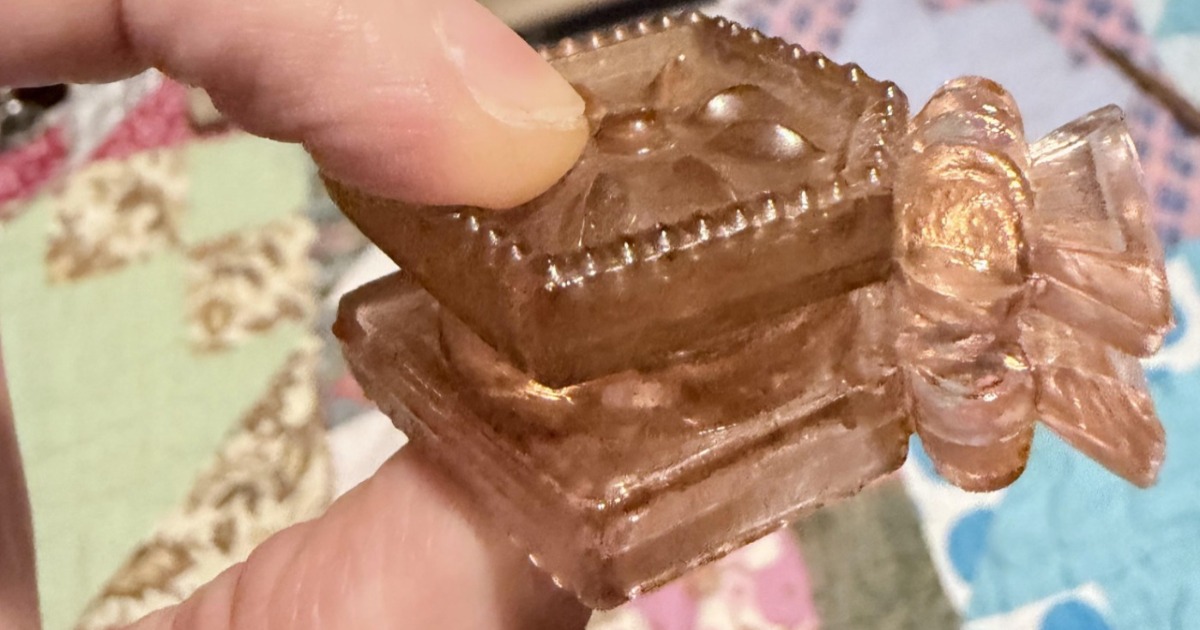
I love finding old objects that leave me wondering what they were used for. Sometimes, the smallest antiques are the hardest to identify. This little pink glass object is a perfect example. Measuring just 1.5 inches long, it has a molded flower design, beaded edges, and an unusual flared projection at one end. The pale pinkish-amber glass looks like something you’d find among a grandmother’s treasured dressing-table accessories.
But the interesting part is how it comes apart.
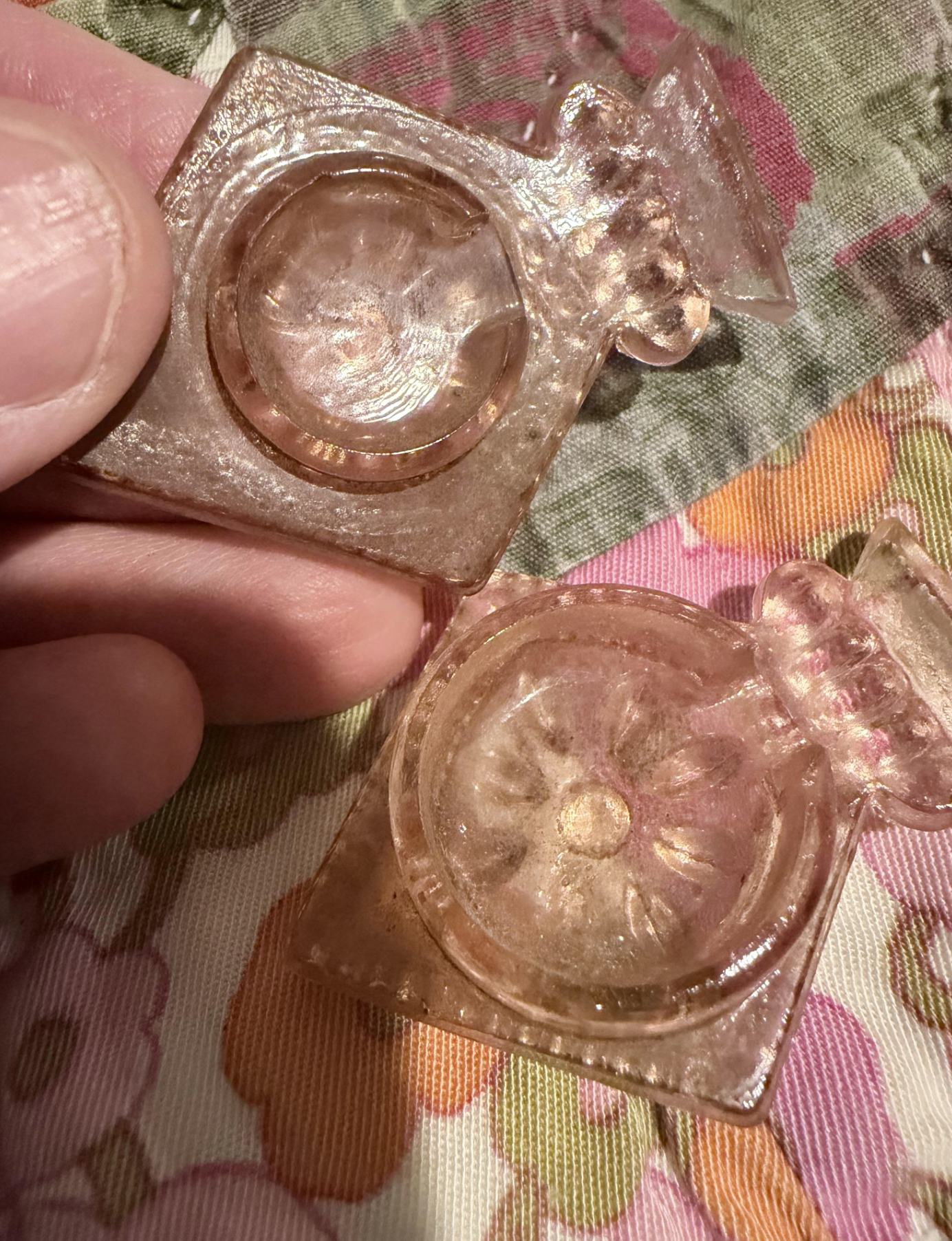
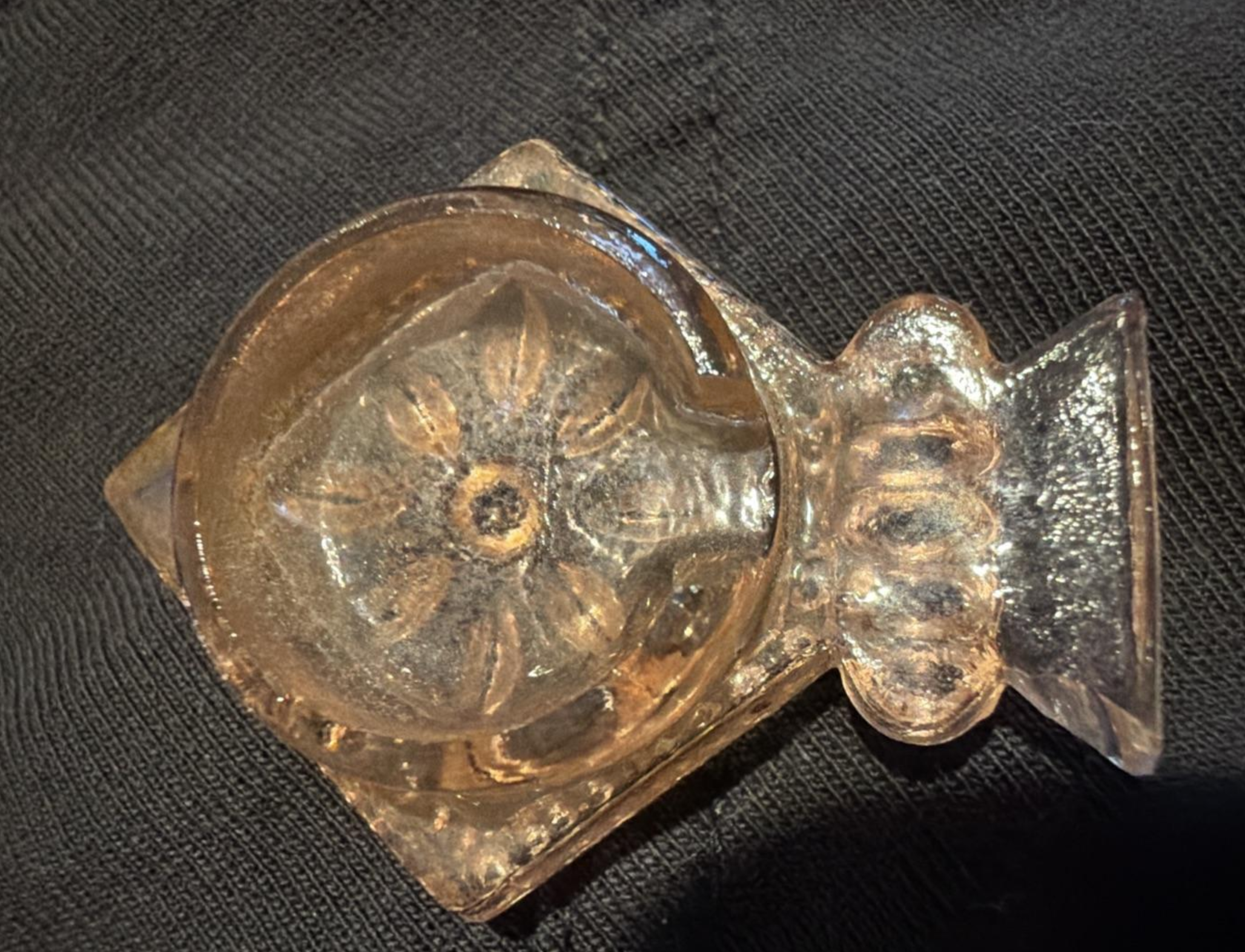
The object has two matching halves, each with a raised circular rim. One rim fits inside the other, creating a small hollow compartment. Little notches leave narrow openings when the pieces fit together.
That unusual construction is what makes this antique pink glass mystery so intriguing.
What could someone possibly have kept inside?
Could It Be an Old-Fashioned Perfume Holder?
My first thought was perfume, although probably not the liquid kind. Perhaps it held scented balm, wax, or another solid fragrance. The small openings might have allowed the scent to escape while keeping the contents inside.
I can imagine someone keeping this little glass container on a dressing table and occasionally holding it beneath their nose for a pleasant whiff.
That possibility led me to an interesting historical accessory: the pomander.
Victorian Pomanders and Forgotten Fragrances
Pomanders have existed since medieval times. People carried small decorative containers filled with fragrant herbs, spices, resins, and other aromatic ingredients.
Many had tiny openings that allowed the scent to escape.
Some were elaborate pieces of jewelry, while others served a more practical purpose. People once believed pleasant aromas could help protect them from disease, particularly when unpleasant smells were thought to spread illness.
By the 18th and 19th centuries, small fragrance accessories had become fashionable personal possessions.
One example was the vinaigrette.
Despite its name, it had nothing to do with salad dressing!
A vinaigrette usually contained a small sponge soaked in aromatic vinegar. A perforated metal grille allowed the owner to enjoy the fragrance.
The Science Museum Group has a silver vinaigrette dating to 1802, while the Metropolitan Museum of Art preserves a combination vinaigrette and scent flask from 1871.
Could our pink glass object have served a similar purpose?
Possibly. The hollow compartment and narrow openings certainly make sense for something intended to release fragrance.
However, I’ve yet to find a documented pomander or vinaigrette that matches its unusual two-piece construction.
An Unexpected Possibility: Victorian Piano Insulators
While searching for similar pressed-glass objects, I came across something surprising.
Victorian piano insulators.
These decorative glass supports sat beneath piano legs or wheels. They helped protect floors, and manufacturers also advertised other supposed benefits.
According to World Piano News, advertisements for piano insulators began appearing around 1850.
The article includes photographs of beautiful pressed-glass examples in blue, green, amber, and yellow. Several have circular recesses, elaborate molded patterns, and decorative edges.
Some look remarkably similar to our little pink object.
However, piano insulators generally consist of single pieces designed to support a piano leg or wheel.
Our mystery object is much smaller and consists of two interlocking halves.
I can’t see how those narrow openings would serve any purpose beneath a piano.
So, although there’s a resemblance, I’m not entirely convinced.
Is This Antique Pink Glass Mystery Actually Depression Glass?
The pink color immediately reminded me of Depression glass.
During the 1920s and 1930s, manufacturers produced affordable pressed-glass dishes and household accessories in several colors. Pink became particularly popular.
But colored pressed glass existed long before the Depression era.
Victorian glassmakers also produced elaborate molded designs, including flowers, beads, and decorative geometric patterns.
Without a manufacturer’s mark or an identical catalog example, it’s difficult to determine when this object was made.
It could be Victorian, Depression-era, or something later.
The color alone doesn’t tell us enough.
Could It Have Held Makeup Instead?
Another possibility is an old cosmetic container.
Before modern mascara tubes became common, some manufacturers sold mascara in solid cake form. Users added water and applied it with a small brush.
Rouge and other cosmetics also came in small containers.
Could the narrow openings have accommodated a tiny applicator?
Perhaps, although the openings seem unusually small.
And if the object held makeup, why wouldn’t the two halves close completely?
That’s what keeps bringing me back to the perfume theory.
A container holding solid fragrance might actually benefit from small openings.
The Strange Little Details
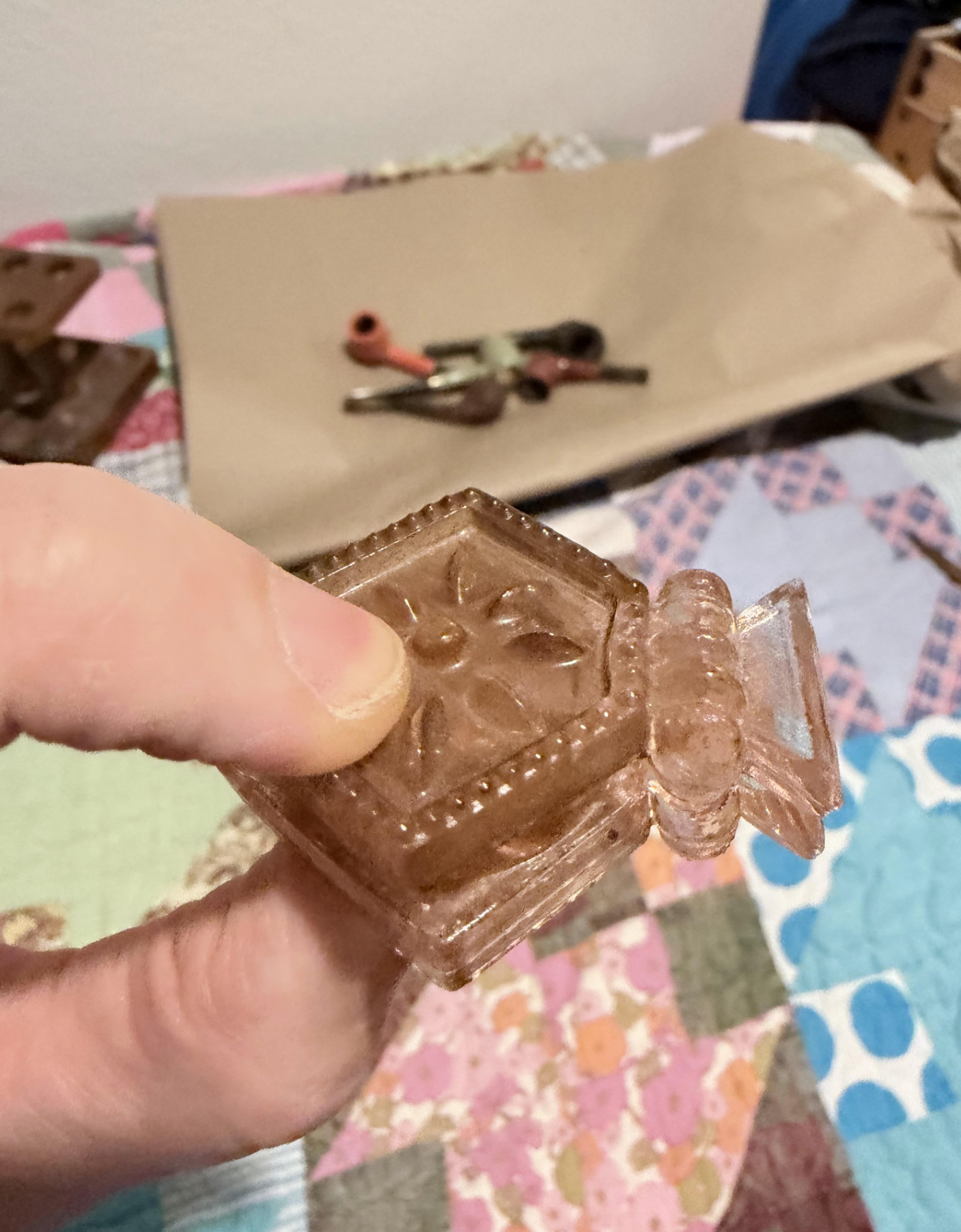
What puzzles me most is how carefully the two pieces fit together.
The matching flowers and circular rims suggest someone deliberately designed the object to form an enclosed space.
Then there’s the flared projection at one end.
Is it a handle? A decorative feature? Or was it supposed to connect to something else?
I suspect those details hold the answer.
Unfortunately, without finding another example, it’s difficult to know what they mean.
So, What Was This Little Pink Glass Object?
I’m still leaning toward some type of miniature fragrance holder or pomander.
The hollow center could have contained a scented substance, while the narrow openings allowed the fragrance to escape.
That seems more convincing to me than the piano insulator theory, although neither identification has been confirmed.
The object might even have had a completely different purpose that we’ve overlooked.
That’s what I find so fascinating about old household accessories. Things that were once perfectly familiar can become genuine mysteries a century later.
And this little pink glass curiosity certainly has me stumped.
Have you ever seen one of these before?
Perhaps you remember something similar on a grandmother’s dressing table or tucked away in an old family collection.
I’d love to know whether it really was a miniature perfume holder or something entirely unexpected.