Old Houses Had This Clever Trick—Most People Have No Idea

January 14, 2026
Source: Reddit
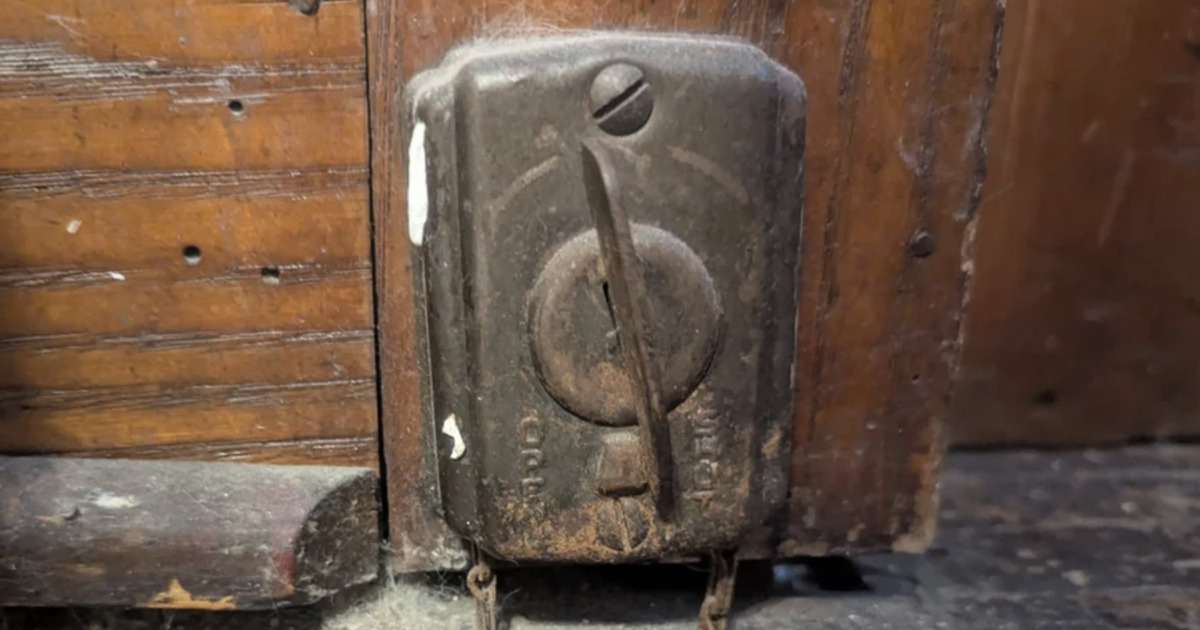
Have you ever seen one of those weird metal boxes with a knob? And two short chains hanging down into the floor at the bottom of a doorway in an older house? If so, chances are it’s a furnace control switch dating back to the 1940s.
That rusty little device may resemble a lost security piece or a door handle. But for many years, it served a vital purpose in keeping houses warm and comfortable.
Now, we’ll take a closer look at exactly what this mysterious furnace control switch is. How it works and why it was important to homes — especially those built between the 1920s and the middle of the 20th century.
The Early Days Of Home Heating
Prior to the advent of smart thermostats, central air conditioning systems and touch screens, homes relied on gravity-fed or coal burning furnaces to warm up their spaces. Those furnaces were typically installed in basements and produced warmed air. Warmed air would flow upward and out into upper level rooms via open vents. However, determining which rooms received the warmed air wasn’t as simple as flipping a switch.
This is where that odd little wall mounted or floor mounted furnace control switch comes in.
The Mechanical Device: A Manual Damper Control
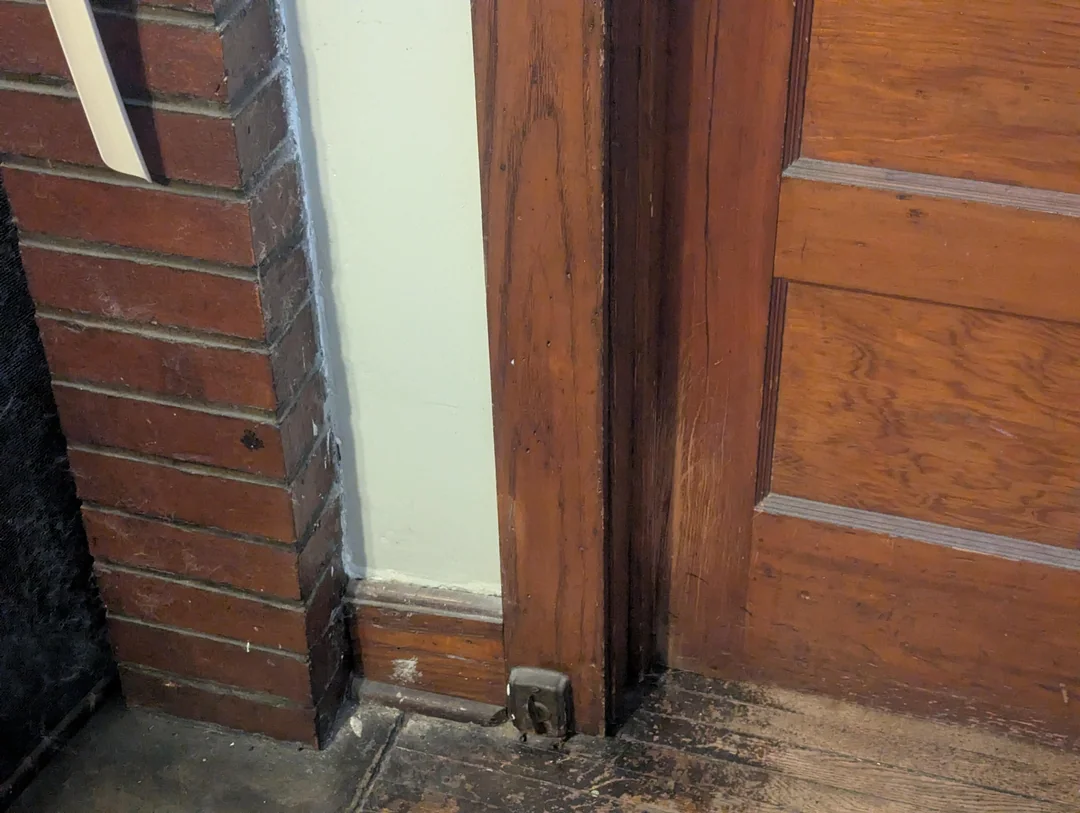
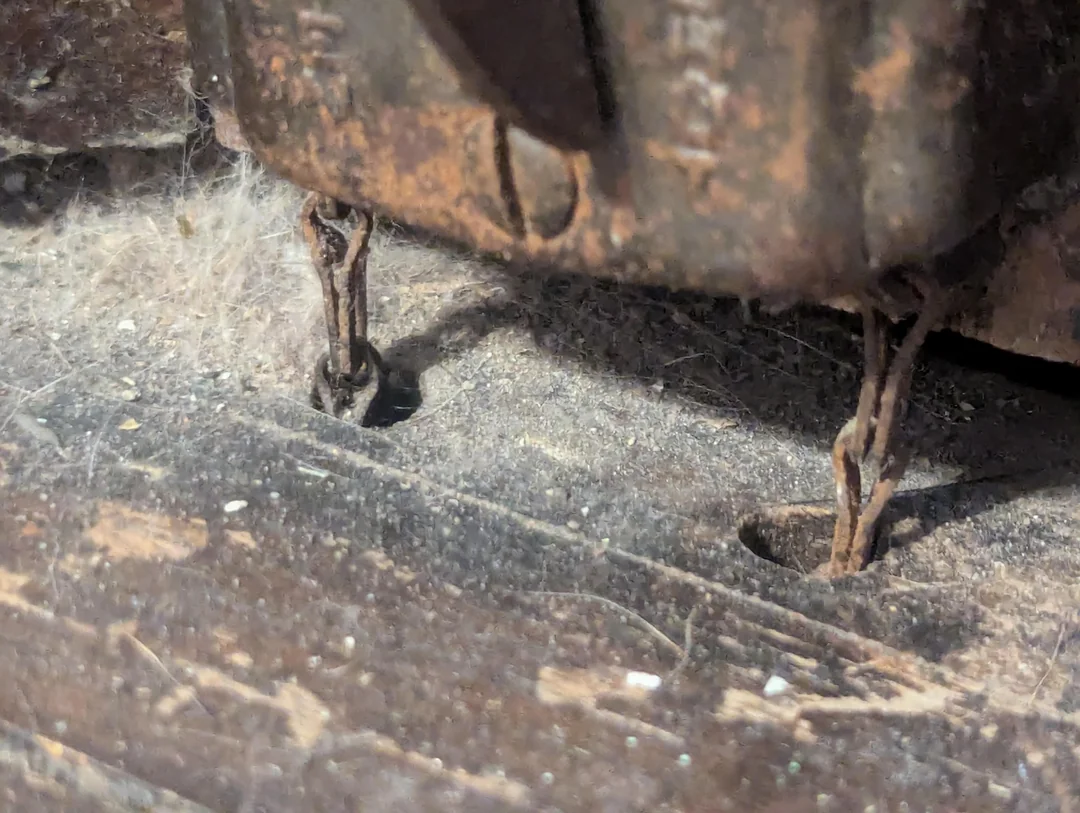
That knob and chain configuration represents a manual damper control, a type of equipment found commonly in homes equipped with gravity fed or early versions of forced-air heating systems. Typically, the chains will connect to dampers (small metal flaps) within the duct work or registers. As the knob is turned, it pulls the chain that changes the position of the damper to either allow more or less hot air into a given room or to redirect it to another area altogether.
For all intents and purposes, it was the 1940s version of “zone heating”.
Because zones refer to areas within a home where some require warmer temperatures than others — such as bedrooms or living rooms… These manual damper controls were particularly valuable to homeowners.
As I’m sure you’ve seen in the movie A Christmas Story. The father of the main character is always fiddling with the furnace in his basement to get it to produce the desired temperature. This is the exact type of furnace control. Switch being described here, and possibly even the exact same type of system.
What The Lettering Means
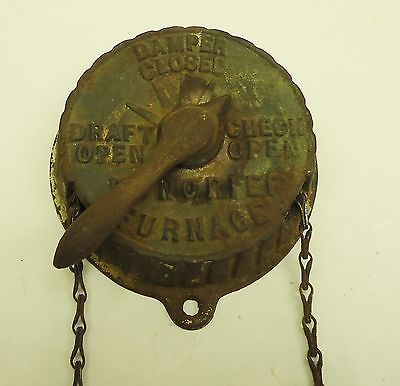
The lettering on the switch can be somewhat difficult to see due to the corrosion and rust. However; the majority of the time it will have the following lettering:
“Open”
“Close”
These represent the positions of the damper and whether or not the damper is allowing air to enter a room or block it.
“Heat”
“Cool”
This indicates the direction of airflow or whether the air is entering the space or being diverted elsewhere.
Some times the switch will simply have an arrow pointing in the direction the user should turn the knob.
This lettering provided homeowners with a basic intuitive method for managing airflow without requiring a written guide.
Where Did They Put Them?
Since you stated that the furnace control switch is located in your living room. Near a fireplace and a bedroom located to the right of the living room, this is not unusual at all. These types of switches were usually installed in the central part of a home. Or near transitional locations where homeowners could easily reach and manipulate the damper based upon which zone required additional heat.
During the cold months of the year, you would turn the damper “open” to allow the warm air to travel into the bedroom prior to going to bed, and then close it to direct the warm air into the living room throughout the day.
Does It Still Work?
If you turn the knob and the chains move, this means there is a strong possibility it still connects to a functional damper or at least a preserved section of the original duct work. If your home still has its original furnace or vents, there is a strong chance it may still function in a partial capacity.
Be careful, though: Old systems are a relic of the past, and using force to activate the mechanism could damage brittle components. If you are attempting to restore your home or merely preserve it, this piece is an excellent representation of vintage home engineering.
Why Are They Important?
To many people today, these switches appear to be nothing more than quaint, insignificant remnants of the past. To the contrary, they represent a time when homeowners had to manually manage the temperature and humidity levels inside their homes. In an age devoid of digital thermostats and zoned HVAC systems, homeowners were dependent on manual, mechanical devices to achieve the desired indoor environment.
These types of switches also serve as a reminder of a time when hardware was visible and accessible. Hardware was not hidden behind walls, but rather designed to be durable, functional and long-lasting.
Next Time Someone Asks About Your Switches…
The next time someone asks about the mysterious switch with chains at the bottom of your doorway, you can tell them it is not just a strange old relic. It is a furnace control switch from the 1940s and a small piece of living history.
Bonus Tip: Want to See One in Operation?
If you’re curious about how it operates, try looking for it in the basement or crawl space. Follow the chains with a flashlight and you’ll likely find the damper it controls, possibly still in the same position it was left decades ago. A small testament to a bygone era when turning the thermostat was a more labor-intensive process.