The Hidden Code On Every Hot Water Bottle

November 22, 2025

source: Reddit

Before widespread use of central heating, many households were able to warm up using the aid of a “hot water bottle”. Although the functionality of these bottles was relatively simple (to provide heat & comfort) they had a very small but important detail that enhanced the safety of the products. That detail is known as the “hot water bottle stamp”.
The stamp is typically located around the neck of the bottle, and serves as a manufactured date indicator. It allows the consumer to know whether the product is still safe to use.
How to Read the Hot Water Bottle Stamp
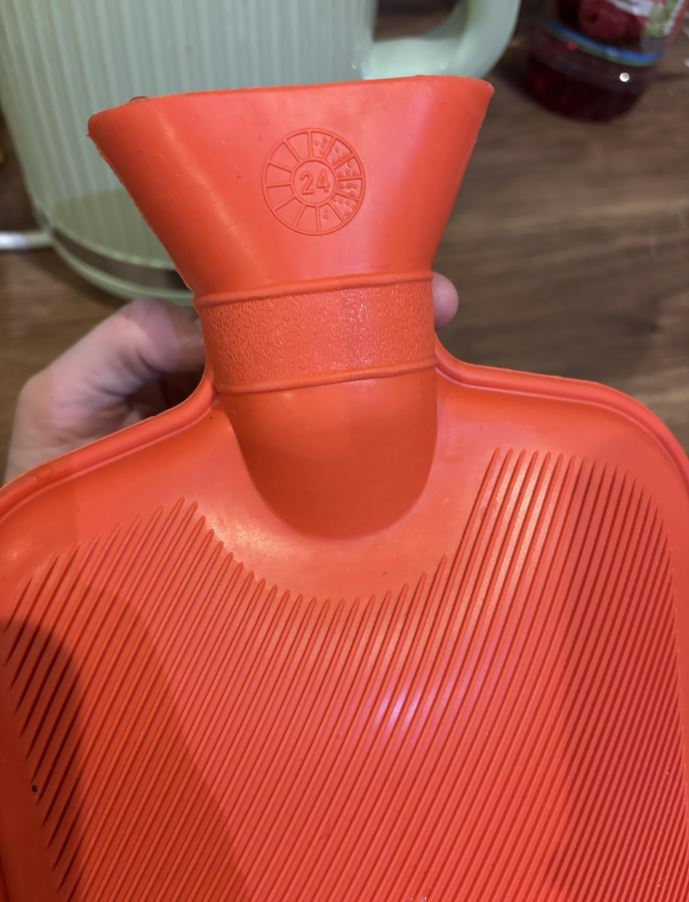
There are three distinct components of the stamp: A circle with a number in the middle, 12 sections or “petals” surrounding the center number, and some of those 12 sections have holes (dots) punched through them.
- The number in the middle indicates the year that the bottle was manufactured.
- The 12 sections/petals represent the 12 months of the year, beginning at the top with January and progressing in a clockwise direction.
- The dots punched into the individual petals represents the week of the month in which the bottle was produced.
Using the example below:
- The number “24” indicates the year of manufacture as 2024.
- There is a single dot in the first petal which represents January.
- The single dot in the first petal signifies that the bottle was produced in the first week of January 2024.
Importance of the Stamp
Rubber deteriorates over time and older hot water bottles can be hazardous. Just because a hot water bottle looks fine on the outside does not mean it has not weakened on the inside. If you fill an older hot water bottle with boiling water, it may split or leak.
The manufacturer recommends replacing hot water bottles every two years. The stamp provides a visible and permanent record of the manufacturing date. Thus, it eliminates the need for printed labels that will eventually wear off.
Creating the Dots
Each week – usually on Fridays – factory workers would create the dots by hand. They did so by using a spring-loaded center punch tool to punch a small hole in the mold’s insert. This created a raised dot on every bottle produced with that mold for each subsequent week.
If there were holidays and the factory was closed for the day – like Good Friday, then no holes were punched that week. Therefore, the absence of a dot represented the week(s) the plant was out of operation.
When a technician changed the molds’ year inserts in January, the same mold continued to produce the same type of bottle for several years.
Safety Tip
Never pour boiling water directly into a hot water bottle. Always let the water cool down slightly before placing it in the bottle. By doing so, the rubber is preserved. Moreover, the risk of burning yourself or having a hot water bottle rupture is greatly diminished.
An Elegant Solution
The hot water bottle stamp is an excellent example of how a simple household item from the past provided a useful and practical solution to a genuine issue. In addition to providing a method for manufacturers to track the age of the bottle, the hot water bottle stamp allowed consumers to safely utilize their hot water bottles.