This Strange Wooden Strip Under Old Tables Has a Genius Purpose

July 4, 2025
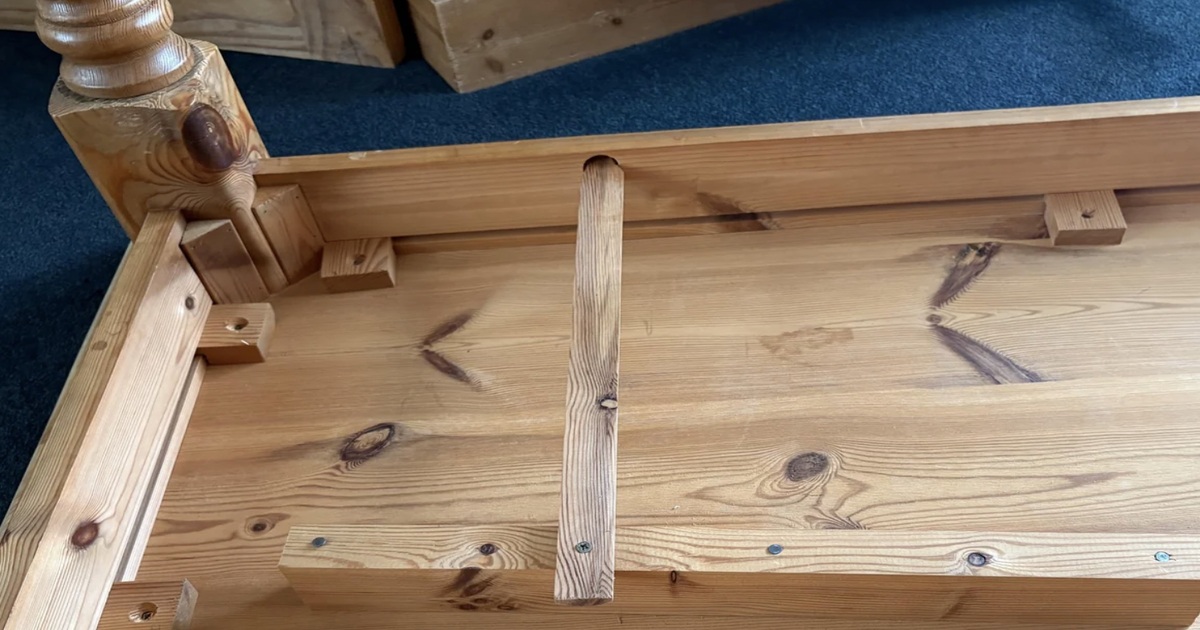
Source: Reddit
What’s That Piece of Wood Strip Under Your Old Pine Table? A Discussion About Table Anatomy and Shipping Design
If you’ve ever turned over an old pine table, you may have noticed a strange wooden rail nailed to the underside, commonly referred to as a strip under the table, and wondered what it was for. This wood strip under the table may have seemed random or perhaps a mistake in production. But this piece of wood serves a purpose and it is much more important than you might realize.
📦A Support … but Not in The Way You Think
You may have initially thought this rail was structural, helping to brace the top. Look again. It’s asymmetrical and does not extend the distance of the full table. Its position as just a strip of wood under it has an intent and defines usability. it’s likely a transport or storage support for the table legs.
Older or inexpensive tables were often for flat-packed shipping, or for ease of transport. This piece was often built into these tables for leg access when disassembled. This rail was actually designed for this!
When the old table legs are removed, they usually attached with corner blocks or through threaded bolts — are rested against this rail. Sometimes there are extra straps, hooks, or notches, to hold them on. This kept everything orderly by keeping the legs attached to the top, and ensured no one ended up losing a leg in transit. ✍️ A Bit of Carpentry with a Convenience Twist
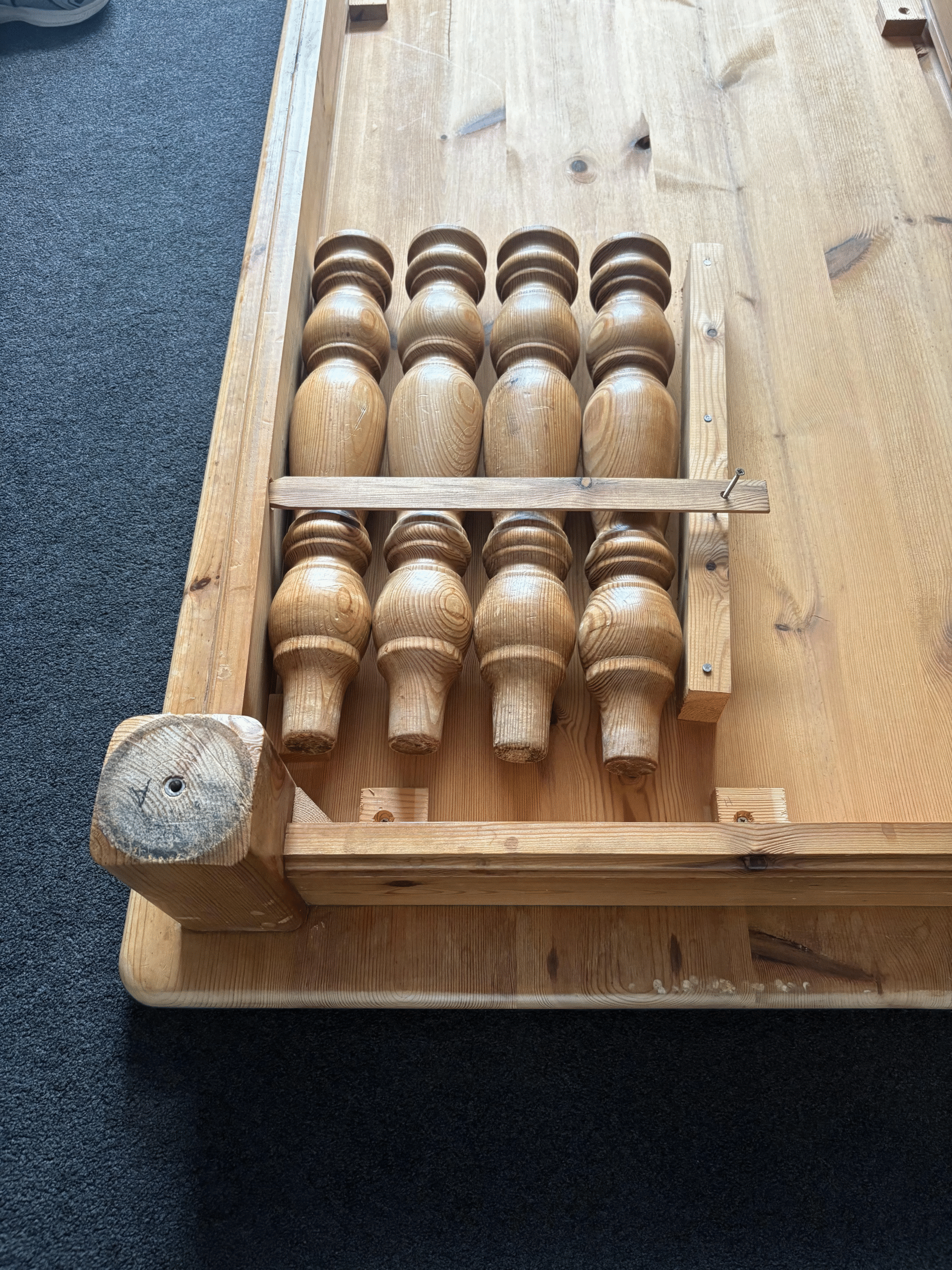
✍️ Carpentry Meets Convenience
This incredibly simple solution is a tip of the hat to thoughtful, old-fashioned carpentry. Long before IKEA and Allen keys, many furniture makers made their furniture practical. Tables with removable legs were really made to last—and to be movable. The rail below with the “partners” helped families assemble and disassemble their dining room or picnic tables for seasonal storage, for distance moving, and, even evacuation during wartime.
Not every rail like this one is made to simply store the legs. Some supported extension leaves, or rarely, held table pins or center bracing. Among other uses for this strip under the table, there is no suggestion of any leaf hardware. And there are no rails on the length of the table. Just a single horizontal rail most likely placed to support something removably like the legs.
🔧To Remove or Not to Remove?
If you don’t intend to disassemble the table anymore, you may want to consider removing the strip for aesthetics or refinishing, but please do so with caution. Not only can you damage the top in the removal, but you will also be removing a bit of original craftsmanship and history.
Then again, who knows? You may want to move it again in the future—and you will be happy the builder was designing ahead with considerations like the wood strip under the table.