Why This Rustic Tool Is Worth More Than You Think!

September 3, 2024

source: Flickr
When it comes to handmade item, there are few items that remind us of the more utilitarian age of the blacksmith such as the foot operated vice. A reliable friend in the smith’s shop, this tool has been instrumental to the fabrication of metals in history, a testament to man’s craft and machinery.
The foot operated vise or the leg vise or post vise is another type of bench vise which stands out from the rest of the vises due to its design and operation. It has a long and vertical leg which directly pushes down on the floor thus allowing blacksmiths to apply much pressure on the work piece while at the same time using the foot to control the clamp. This design enabled the blacksmith to have better control and to work faster and in a more effective manner as opposed to the traditional blacksmithing which was very time consuming.
First invented in the early years of metalworking the foot operated vise was widely used in blacksmith shops across medieval Europe. Due to its sturdiness it became an essential tool for manufacturing weapons, armors, horseshoes and later on plows, nails and other farming equipment.
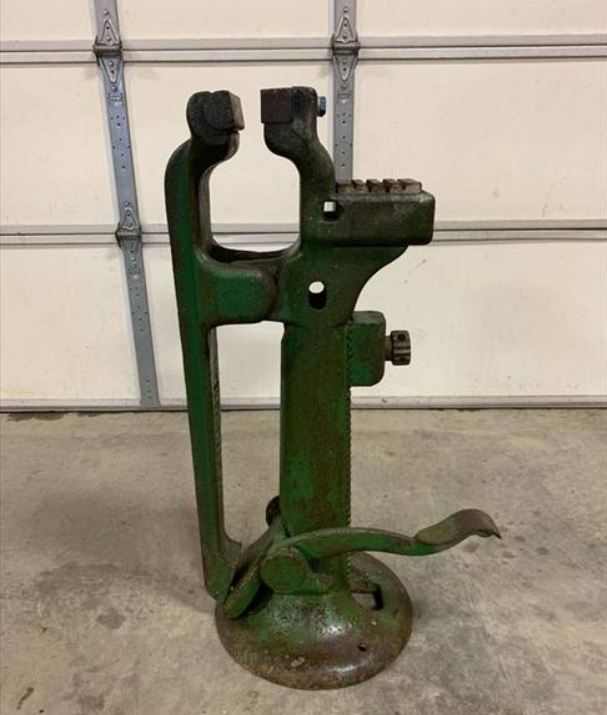
As the mechanical advantage of the blacksmith’s foot vise, it symbolizes more than a piece of tool; it depicts the age when manual labor was the driving force for the development of the society and the economy. Blacksmiths were therefore not only artisans but also important people within their communities whom everyone turned to for various needs and who also played a great role in the economic systems. The vise therefore is not just an object that has been preserved but it is a connection to the past where skills where highly valued and particularly in the area of craftsmanship.
Artisanal and traditional crafts have also experienced a revival in the recent years due to people’s desire to be in touch with manual labor and pre-industrial techniques. This type of vise, in this context, has been brought back into use especially among the blacksmiths and metal workers. Those who work and create in their workshops as well as the hobbyists cherish these tools due to their reliability, the fact that they are an essential part of history and the ability to feel the work that went into the creation of these tools.
In addition to its utilitarian function, the foot operated vise is used in workshops to illustrate the history of vise use. For the enthusiasts, it allows them to engage and work with traditional blacksmithing to gain knowledge of manufacturing techniques and growth of tools.
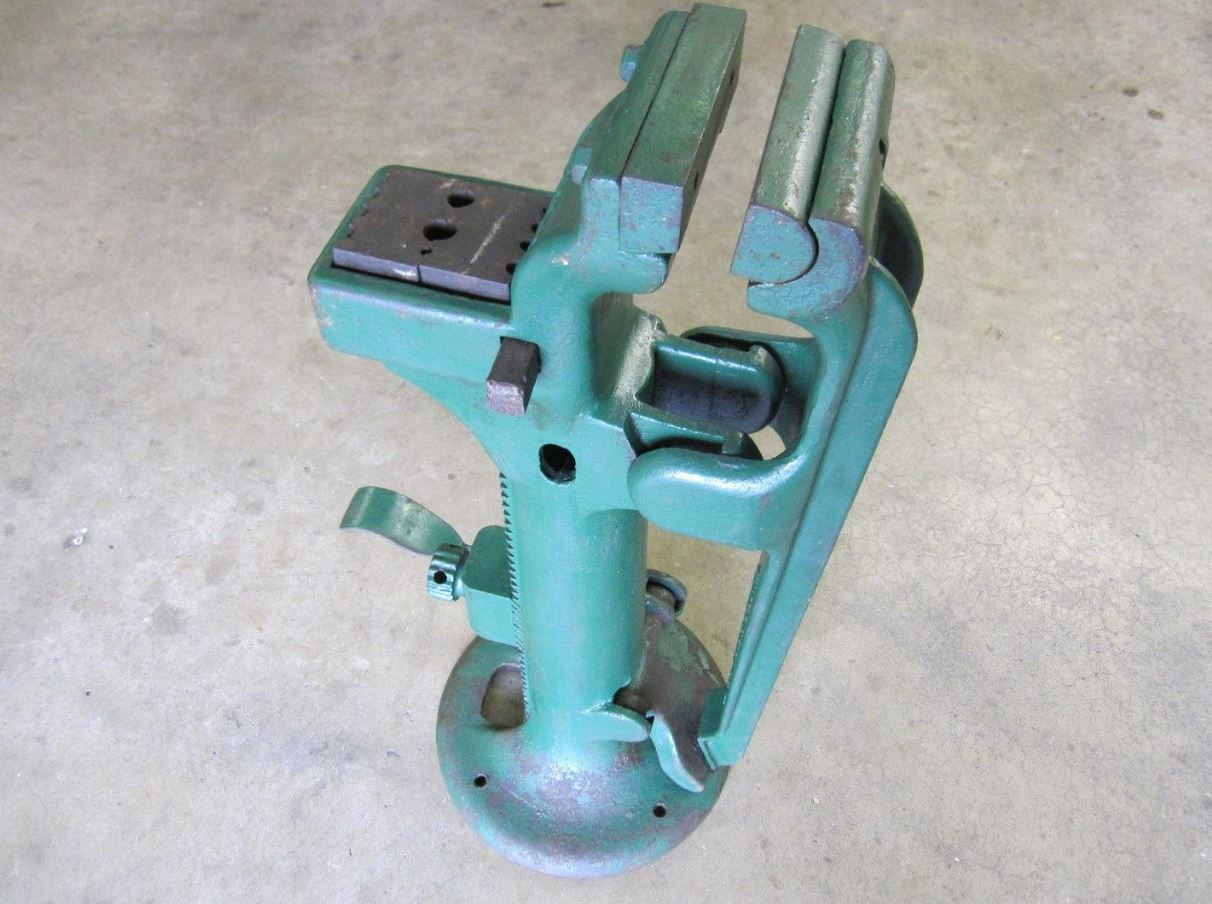
Such foot-operated vise is widely used in the community workshops and historical reenactment groups to promote the culture of traditional blacksmithing and how it can be done. In this way, the vise does not only impart knowledge but also fosters revival of a new generation of craftsmen and supporters.
The foot operated vise is not only an instrument; it is a link between the present and the past as well as a luminary that invites upcoming craftsmen. Despite the ever increasing technological advancement in the society, the society can never be devoid of appreciating the basic tools and techniques in human civilization. The foot operated vise represents the hand made techniques of the past with the contemporary flames, it is a testimony of the importance of skill and the physical touch of creation.