What Is This Mysterious Plastic Peg On The Wall?

July 11, 2026
source: Reddit
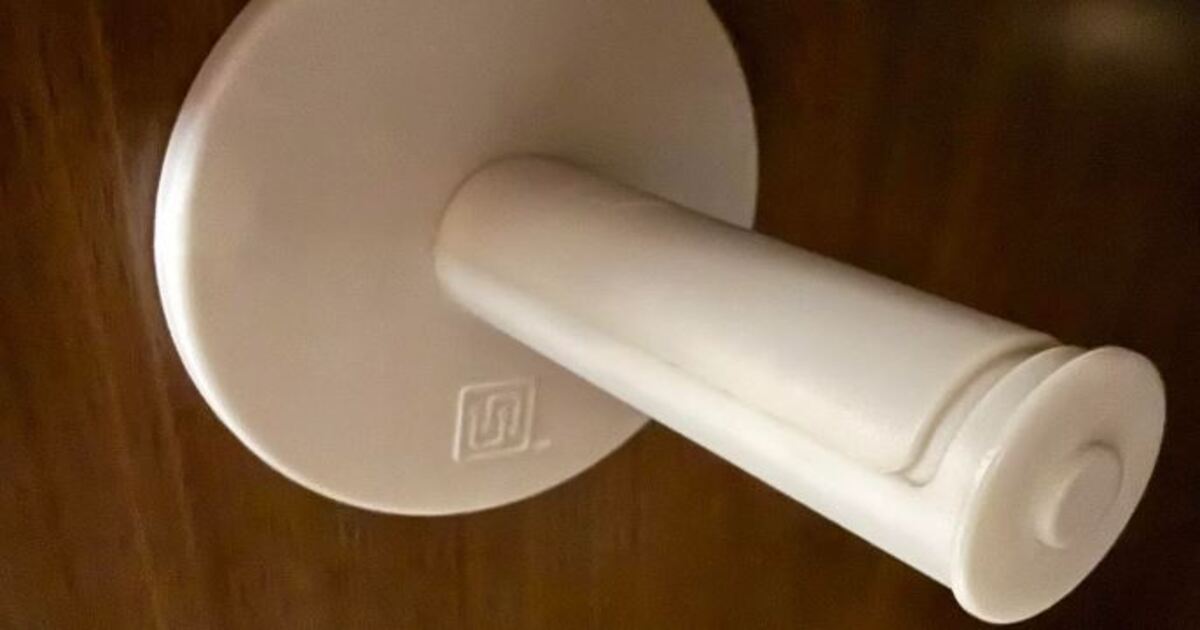
An initial examination of the item shown in the picture yields nothing regarding its intended function. At a cursory glance, it resembles an unusually large plastic peg. It consists of a flat round bottom portion. There is a thin cylindrical central area. Finally, a smaller “cap” is located at the end.
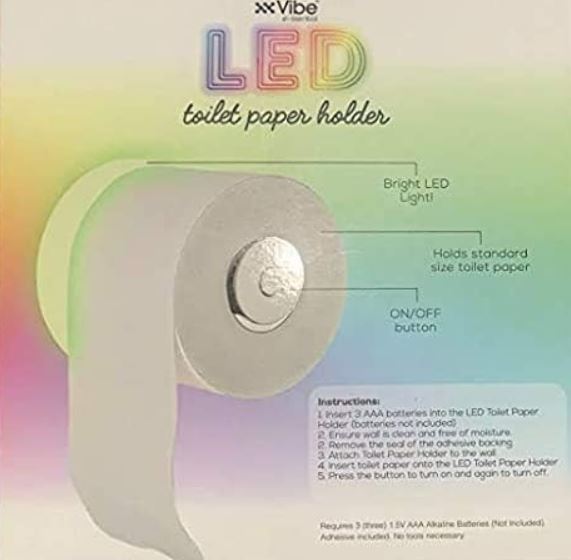
While nothing about the item immediately points to its use as such, it could possibly serve as an electrically-illuminated Toilet Paper Holder. In fact, the unique configuration of the item may suggest that it fit within the interior of a toilet paper roll. The larger end may have been secured by means of a spring-loaded clamp (or similar attachment) to a bracket mounted to the wall. In addition, an electrical component contained within the plastic body of the unit likely provided a gentle glow when needed. Presumably this would occur during late evening or nighttime trips to the restroom.
This is somewhat typical of many household devices of earlier decades. Both inventive and strange-sounding items often found their ways into common usage. Many examples of older household items are remembered fondly due to this very combination.
A light-up Toilet Paper Holder
Standard toilet paper spindles typically perform one single task. They hold the roll and allow the roll to rotate.
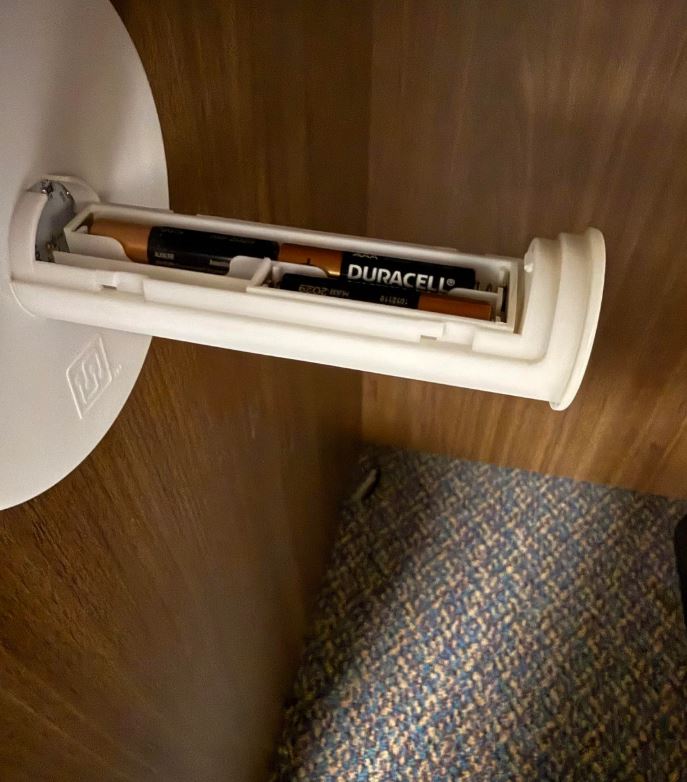
Light-up versions performed an additional function. They allowed users to illuminate the surrounding area where they accessed the toilet paper roll. This avoided needing to reach upward and flip an overhead light switch in the middle of the night. Patents describing light-up toilet paper holders refer to various types of units containing an electrical light source (bulb) and/or battery. All of these designs typically included a hollow tube that ran through the center of the toilet paper roll. This tube usually contained a removable cover or cap over each end. As a result, this allowed access to replace batteries and/or install new bulbs.
At first blush, the above-described concept seems peculiar. However, it addressed a widespread problem. Bright overhead lighting in bathrooms can appear extremely harsh upon waking. Yet, low-light levels afford sufficient visibility to navigate to and from the bathroom. They do this without illuminating the area as brightly as if you were outside on a sunny day.
Although the photograph depicts an item constructed from translucent plastic, which would seem ideal for creating a relatively inexpensive, small-sized illuminated item, there is insufficient information available to determine whether or not this particular item is actually an example of this type of product. Indeed, without a model number, package contents, etc., it is impossible to positively identify the item shown in the photograph. It remains nothing more than an unidentifiable example of some type of product.
What was so appealing about using night-lights in bathrooms?
For many years, night-lights have been effective in providing safe passage through dark hallways and rooms. Bathrooms have become among the most logical places to locate night-lights since People frequently use them while still partially awake.
To address this need, inventors attempted numerous methods. Examples include products that incorporated lights onto the top of toilet seats. Others integrated lighting into toilet paper holders or surrounding bathroom fixtures. Another inventor developed a night-light holder whose sole function was to softly illuminate during periods of nighttime use. In addition, it helped during power outages.
Products designed to provide this type of illumination generally offered utility rather than intense lighting. As opposed to attempting to light an entire room, they generated only a limited amount of illumination in close proximity to objects individuals know how to locate.
There is something novel about incorporating a glowing element into an otherwise mundane object like a Toilet Paper Holder. It lends an air of modernity and futurism to something that would normally be seen as simply functional.
A product from the era of clever molds and plastics
The style and coloration of this item remind me of all those many plastic household gadgets manufactured throughout much of the second half of the 20th century. Housewares manufacturers took existing simple objects and converted them into multi-function conveniences. They utilized white or cream-colored plastics that complemented bathroom fixtures including sink basins, bathtubs, toilets, etc.
Bathrooms became particularly desirable locations for creative thinking in terms of manufacturing household gadgets. Customers could purchase heated mirror defoggers, automated soap dispensers, aromatic fans, illuminated light switches and other products. All of these claimed to make performing routine tasks easier.
Some worked exceptionally well while others became quaint relics after batteries lost their charge or replacement parts became unavailable.
This may help explain why an item like this may confound some individuals today. Once detached from its mounting bracket and disconnected from any remaining packaging materials, it no longer visually identifies itself as an obviously-designed bathroom accessory. Consequently, it looks more like a toy part, wall hook or broken component from some older appliance.
Possible functionality
A possible light-up Toilet Paper Holder could utilize a small incandescent light-bulb or perhaps an LED in its latter iterations. Batteries would reside either internally within the spindle or at the rear-end of the unit’s base.
Activation of the light could occur via a push-button located at either end of the unit or automatically through motion detection, mechanical pressure sensing or infrared detection (depending on the manufacturer). There were numerous variations in operational methodology utilized by designers of individual products. Therefore, functionality specifics will depend on who designed it.
The wide diameter area depicted in the photograph may have enhanced or reflected illumination. The narrower end may have served as a release point for replacing batteries. However, this cannot be confirmed based solely upon visual inspection.
Careful inspection of any potentially surviving examples of this type of unit should provide further insight. Search for seams, battery compartments, switches, contacts, bulb sockets and/or molded model numbers (if present). Identification confidence level will significantly increase with discovery of any of these characteristics.
Reasons why illuminated toilet paper holders became obsolete
Illuminated toilet paper holders failed to become standard equipment in every american bathroom. While plug-in nightlights were less expensive and required far fewer components, modern homes began equipping themselves with dimmers switches, motion detectors and low-power LED lighting.
Many modern toilet night-lights adhere directly to either the underside of a toilet seat lid or directly onto the surface of the bowl. I am aware of at least one high-profile product released in approximately 2001 that detected movement and cast colored light in a perimeter pattern around the toilet. Thus, even though dedicated light-up holders did not achieve mainstream acceptance, ideas for illuminating nighttime bathroom activity never entirely went away.
Still, illuminated toilet paper spindles possessed a certain appeal. Although they concealed their internal technology within commonplace items requiring no extra countertop or floor space, they represented another example of taking a regular household item and adding yet another usable attribute.
Small tribute to home innovation
Regardless whether this item ultimately proves to be a light-up Toilet Paper Holder or another type of molded plastic item, it represents an aspect of design philosophy we see commonly. The concept is simple: take an everyday household item and add one more useful feature to it.
Countless products resulted from this type of thinking. Today, many such products lie in drawers, garage storage containers and estate sale inventory boxes devoid of operating manuals. Owners of those products knew precisely what those items did. However, nearly four decades later anyone else has had to guess.