Unveiling the Smart Home Hacks from the 1850s – They Knew Better!

April 20, 2024
Source: Reddit
In the heart of Charleston, SC, among the cobblestone streets and the whispers of the Atlantic breeze, stand testaments to architectural ingenuity – the old houses of the 1850s. These structures, weathered by time and seasoned by history, carry within them secrets of a smart design that modernity is only beginning to appreciate anew.
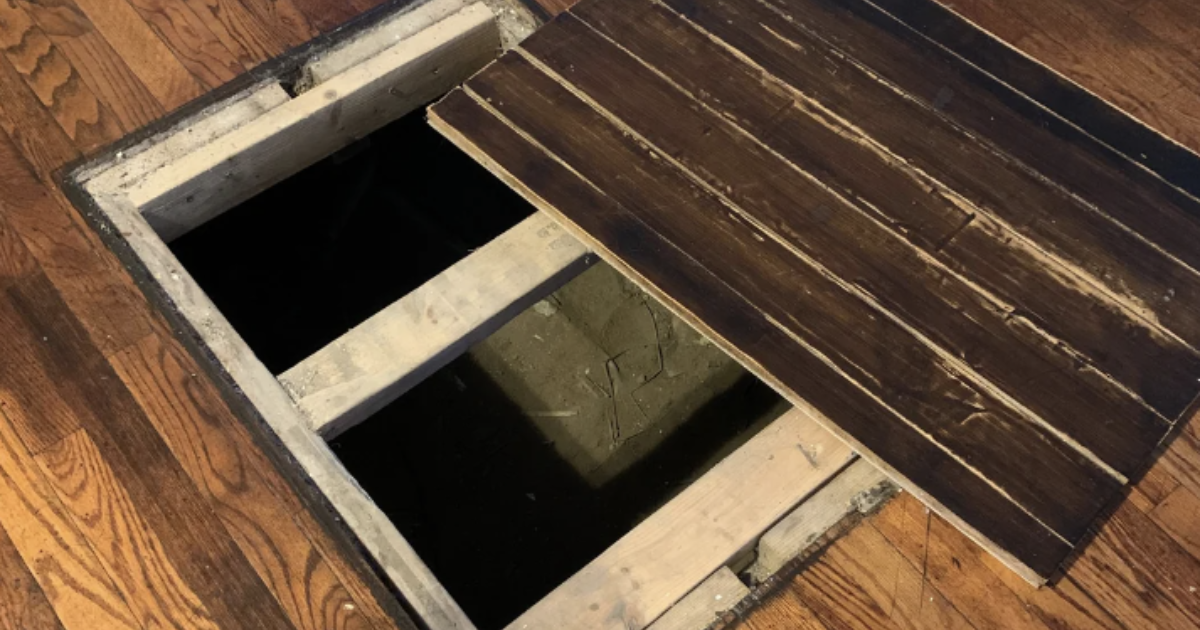
Upon first glance, one might simply see the aged patina of the wood, the quaint shutters, or the grand porches that these homes proudly display. But to truly understand the brilliance of their design, one must look beneath the surface, quite literally, through the trapdoors that lead to the crawlspaces below.
These homes, constructed in an era when air conditioning was the gentle draft of a coastal wind and ‘smart home’ meant thoughtful craftsmanship, were designed with an intrinsic knowledge of the local environment. The crawlspaces, accessible through cleverly concealed trapdoors seamlessly integrated into the flooring, are a marvel of function meeting form.

In the humid embrace of Charleston’s climate, these underground voids served not just as convenient nooks for plumbing and wiring but as vital components in a natural climate control system. Elevated just enough to prevent water intrusion, they allowed air to circulate beneath the home, keeping the floors cool and preventing moisture build-up that could lead to rot or mold.
The trapdoor, an unassuming feature to the modern eye, represents an era when sustainability was not a choice but a way of life. It speaks to a time when homes were built to last, to withstand the trials of nature, and to serve the generations. These homes didn’t fight the environment; they embraced it, with each beam and board crafted to harmonize with the elements.

Today, as we stride through the era of digital thermostats and insulated windows, there is a growing admiration for the smart designs of these old homes. There is a nostalgia for the simple elegance with which they addressed complex problems. There’s wisdom in the walls and floors of these enduring structures, wisdom that whispers to us of a simpler time when homes were both a shelter and a seamless extension of nature itself.
In the shadows of these crawlspaces, amid the neatly routed wires and pipes, lies a legacy of resourcefulness and ingenuity. It’s a design that respects its heritage, beckoning the modern world to pause and reflect on the intelligence embedded in the old ways. It’s a testament to the notion that sometimes, to move forward, we must look back and learn from the smart designs etched into the framework of history.

As we continue to innovate and build, let’s not forget the charm and cleverness of the old homes in Charleston. Let’s carry forward the spirit of their design, a spirit that finds beauty in simplicity, strength in adaptability, and intelligence in working with the natural world. After all, the smartest homes may not be those that boast the latest technology but those that have stood the test of time, telling the story of a bygone era not through words, but through the wise whispers of their design.