This Weird Window Find Could Be A Warning Sign

April 28, 2026
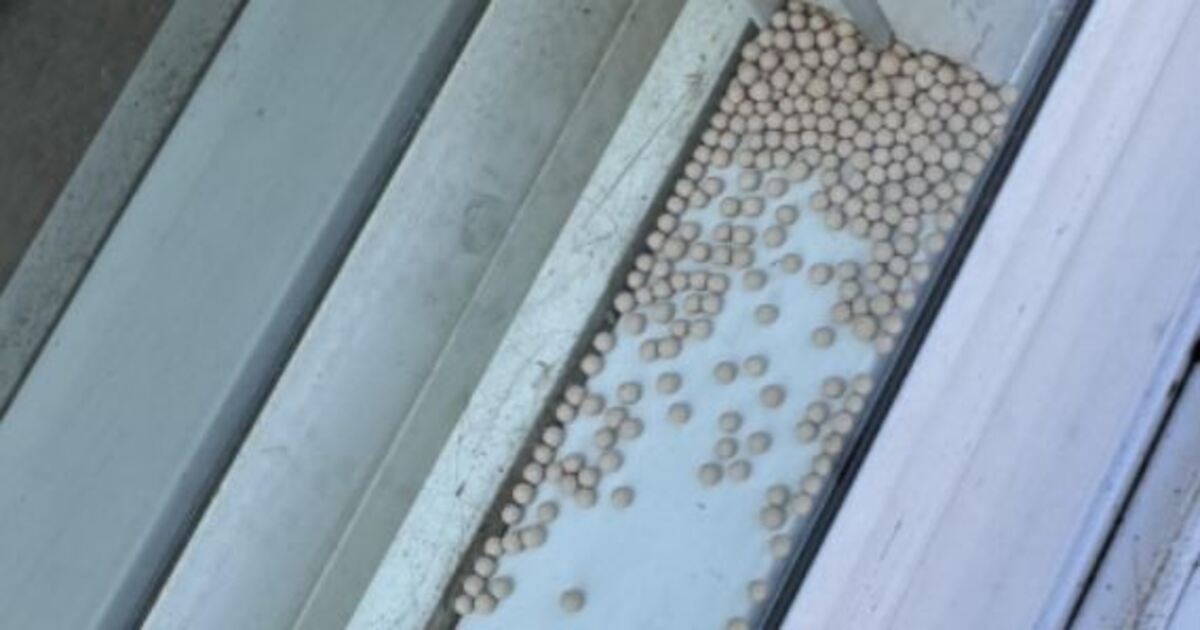
source: Reddit
Every once in a while, a house will give us a little enigma. It’s not necessarily the “i’m-afraid-of-the-dark” kind of mystery (the kind that makes you think someone/something creepy is lurking under the bed), but instead it’s the day-to-day type of mystery that leaves you thinking, “what in the world is that?”
This is precisely what happens when you spot tiny, beige Beads on the tracks of windows and sliding doors. At first, they could resemble anything — maybe bug eggs, seeds, crumb trails or anything else kids spill from a craft kit. Although in many cases, these little pellets are nothing other than lost desiccant Beads in windows. And although that sounds a lot more complicated than it needs to be, the story surrounding them is really pretty straightforward.
What are these little pellets?
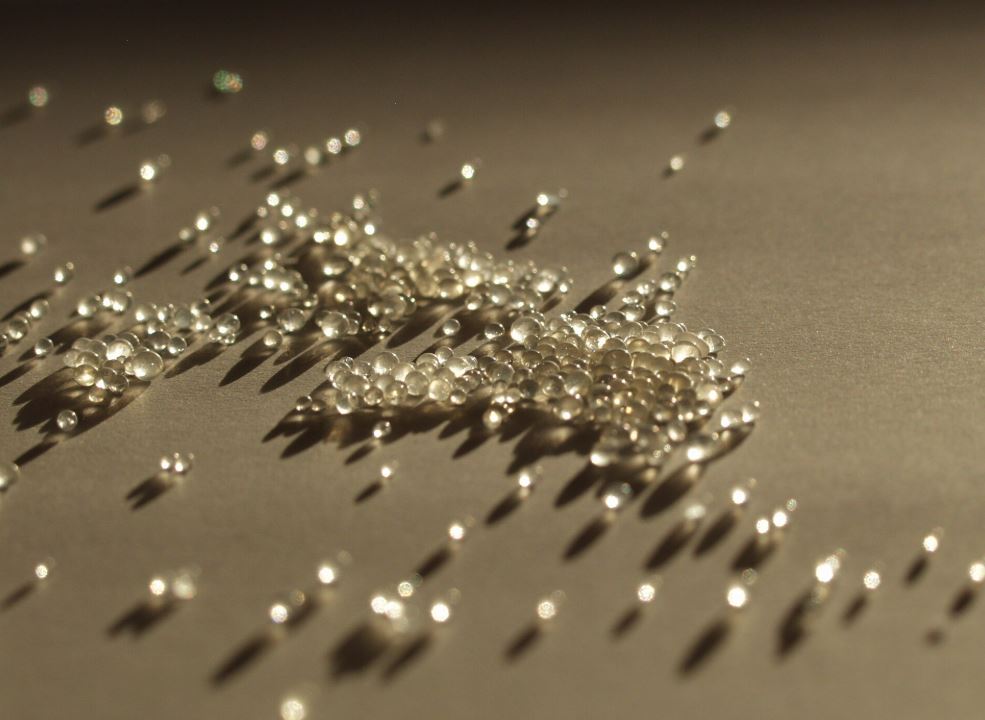
Desiccant Beads are small pellets designed to absorb moisture. Typically, companies embed them in insulated glass units, especially double pane windows and sliding doors. Their function is to absorb moisture trapped within the closed space created between the panes of glass.
You can think of them as being akin to the small packets found in shoe boxes, electronic equipment, or older camera cases. Those packets usually say “don’t eat!” And are meant to prevent moisture from reaching the product. The window desiccant functions similarly; however, typically it resides in a spacer bar located between the panes of glass. Most people don’t see them because they’re supposed to be invisible.
When you locate free floating desiccant Beads in windows, something probably has gone wrong.
Why did the desiccant Beads escape?
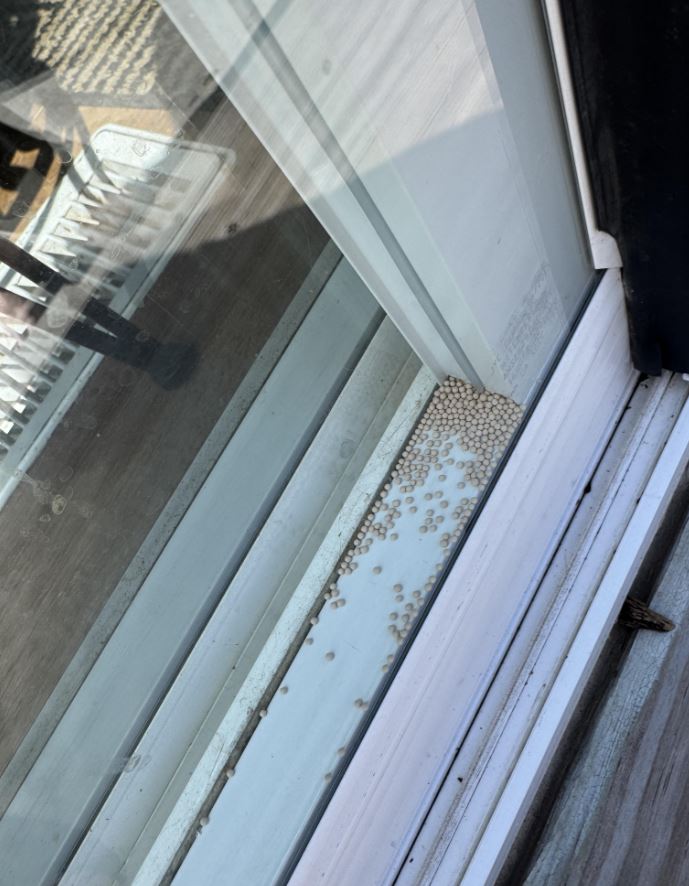
Typically, in a well-functioning insulated glass unit, the desiccant Beads remain confined within the edge spacer. Over time, however, the seals around windows will eventually degrade. They shrink, break apart or fail completely. Small openings develop. When a failure occurs in the spacer or when a seal breaks down, the Beads can become dislodged and fall into the track below the glass unit. This may be what occurred in the photo above. The Beads seem to be collecting along the bottom portion of both the frame and the glass, which is consistent with where free floating materials tend to accumulate.
As sliding doors and windows grow older, they typically display subtle signs of wear before they ultimately fail. Fog developing between panes, hazy or stained glass, moisture accumulation on surfaces or finding free-floating Beads in the tracks can all signal that the sealed glass unit may no longer be functioning as intended.
It’s not perhaps the most exciting of domestic discoveries. Yet, it offers a valuable lesson.

A bit of ‘good old days’ charm
Additionally, there is a certain nostalgic appeal to discovering this quirky little thing. Older homes frequently featured only simple single-pane windows. During winters, these windows rattled. They were prone to sweating during cold snaps and allowed each draft to loudly proclaim its presence. Homeowners commonly applied towels to sill areas, utilized heavy drapery or installed plastic window films during inclement weather.
Later arrived improved insulated glass. Double pane windows enabled homes to maintain warmth in winter and coolness in summer. They also provided reduced noise levels. Rather than utilizing a single piece of glass, double pane windows feature two sheets separated by a sealed gap between them.
The sealed gap became the secret. Moisture had to be kept out of this space. Therefore, manufacturers began including desiccant Beads to assist with maintaining it dry. For years, these tiny Beads remained silently contained within the frame of the window performing their lowly duty.
Seeing them loose seems somewhat like watching the stuffing spill from an old couch. You begin to realize that there was much more happening internally than you previously realized.
Should you concern yourself with them?
For the vast majority of times, loose desiccant Beads are more a sign of impending maintenance than an immediate crisis. Generally speaking, having loose desiccant Beads should not lead you to believe that your entire door or window will collapse. More accurately, they generally indicate that the insulated glass unit has developed issues or begun to deteriorate.
Your primary concern isn’t with the Beads themselves. Your concern should be with moisture.
If/when the seal fails allowing moist air to penetrate the space between the panes of glass, it will potentially create conditions for fogging, streaks and/or mineral deposits on the interior surface of the glass (where cleaning can be problematic). Moreover, due to loss of insulation efficiency within the window area, it may compromise its overall heating/cooling performance.
You can use a vacuum cleaner or wet paper towel to carefully remove any loose Beads on sliding door tracks. Avoid grinding or crushing them into the track. They may create rough spots and affect smooth operation of sliders as additional Beads gather in close proximity to rollers.
Children and animals should also be kept away from desiccant Beads since they are not meant for consumption.
Identifying whether window seal has failed
Some signs may help determine whether your window seal has failed:
Look for fogging between panes that doesn’t wipe away from either side. Inspect cloudy areas inside glass panes. Determine if condensation develops between panes rather than on room-side surfaces. Additionally, observe if water-staining or streaking develops on glass panes over time.
Occasionally, a window remains relatively clear. In such instances, loose Beads may represent an early warning sign of potential problems ahead. Although it continues to work properly for possibly awhile longer, the seal has likely been compromised.
Typically, a local glass company or professional specializing in window repairs can assess your situation and provide recommendations regarding repair/replacement possibilities. Often times you do not require replacing an entire frame to correct issues with your windows/sliding doors. Replacement of individual insulated glass units may be possible based upon specific design requirements for your door/window.
Solving One of life’s smaller mysteries
Perhaps One of the funniest aspects of either buying/having/maintaining a home is how regularly small details send you chasing after a rabbit hole. A ceiling stain, an unexplained odor emanating from your basement, a slight depression in your floor or a collection of bead fragments on a window track can trigger that exact detective mentality in you.
That is part of why we enjoy houses. Houses age alongside us and exhibit various symptoms as we age — creaking, settling, loosening and revealing their internal mechanisms One small clue at a time.
Loose desiccant Beads in your windows may seem insignificant; yet, they provide some insight into history as well as into their own future (and yours).
What to do next
Begin by removing loose desiccant Beads so they do not disperse further and obstruct movement in your sliding door track(s). Afterward, visually inspect your glass in daylight to identify any signs of fogging, haze or moisture accumulated between panes. Also take photographs documenting your findings and note whether additional Beads migrate into view.
If your window appears clear and operates normally at present time, you may choose to monitor it to ensure no additional problems arise. Nevertheless, if you detect fogging or more desiccant Beads escaping from the track(s) contact a company specializing in repairing windows. They can advise you whether replacement of an individual insulated glass unit can be accomplished without requiring complete replacement of the entire door/frame assembly.
Ultimately, this seemingly innocuous mess represents a small communication from your window itself.
And much like many clues related to household items, it rewards anyone willing to pause for a moment and wonder what they’re observing”