Explore the Intriguing Hidden Spaces in Historic Mansions!

August 11, 2024

Source: Reddit
That certain smell that one gets while using the freshly laundered sheets seems to soothe the soul. How they flutter in the wind when it is bright and sunny outside, or the sensation of touching them when you put on your nightwear and they are fresh, and still a bit rigid from the drying in the open air. Als wir noch klein waren, halfen wir unseren Eltern oder Großeltern beim Zielen und Sammeln von Wäsche zum Trocknen, und die simpleren Zeiten kehren zurück, als wir die Aufgaben des Alltags mit Geduld und Liebe verrichteten.
However, think of a time when even this task was a bit more complicated to complete. When houses were constructed, they had specific rooms not only for storage but for functions such as drying clothes. In a society where there were no electric dryers, individuals would have probably considered having a cabinet installed in the walls for drying of sheets and towels as being quite comfortable and reasonable. These drying cabinets, concealed by the plain panels can be seen in large , well furnished houses of the late victorian and Edwardian periods.
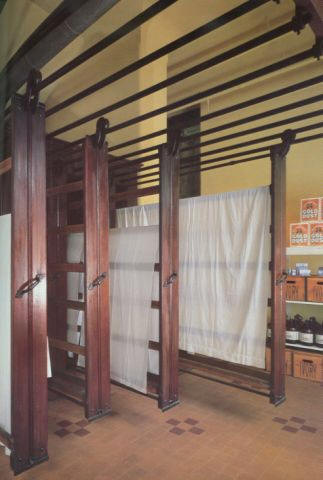
For instance, there is Biltmore House in North Carolina which was an epitome of architectural design not only in its size but also in the aspects of people’s daily life. In the basement, behind the luxurious rooms and corridors, one finds the main laundry drying room with walls that have wooden slatted for drying clothes. These cabinets were to provide for a means of hanging clothes to dry in a enclosed space where people would not be able to see them, yet with the best results. The racks could be easily wheeled out, new set of washed linens could be placed on it and then it could be wheeled back to let fresh air dry them up.
It is something that we can hardly even imagine these days, in the world of automatic washing machines and clothing that does not even need ironing, but back then, these drying cabinets were considered to be a great innovation. It portrayed a time when houses were not only dwellings, but mechanisms of living, beautiful and functional at the same time.
The mansion that you came across in Texas with its corresponding similar drawers is a common example of this. These would have been sideways drawers which were built into the lower part of the house and would have contained wooden racks to hang and dry all the household linens used in the house. One can almost see the housekeeper or one of the members of the house staff gently removing these drawers, arranging fresh sheets or towels one has just washed, and then putting the drawers back in place with the satisfaction of having done a good job.

Apart from their functionality, these cabinets narrate a story of a time when life’s tempo was quieter and the management of a home was a job that demanded time and effort. They make one recall the importance of a home in the past when houses were built to produce everything that was needed and living was a well-thought-out process.
When standing in these spaces and looking at these architectural details it is difficult not to be grateful for the effort put into designing them. They were not just objects to get a job done, they symbolized the notion that even the most basic activities, such as hanging and drying clothes, could be done with elegance. When life seems to be getting faster and people are constantly on the go, it is rather nice to be able to think back to a time when life was slower and homes were built with that in mind.

The next time you simply throw your clothes into the dryer consider the hidden cabinets in the old mansions, and the effort that went into each and every detail in those houses. Though they may be of the older generation, they still have much to tell us about how to live a good life.