Everyone Thinks It’s An Old Key, But The Truth Is Much More Interesting

November 10, 2026
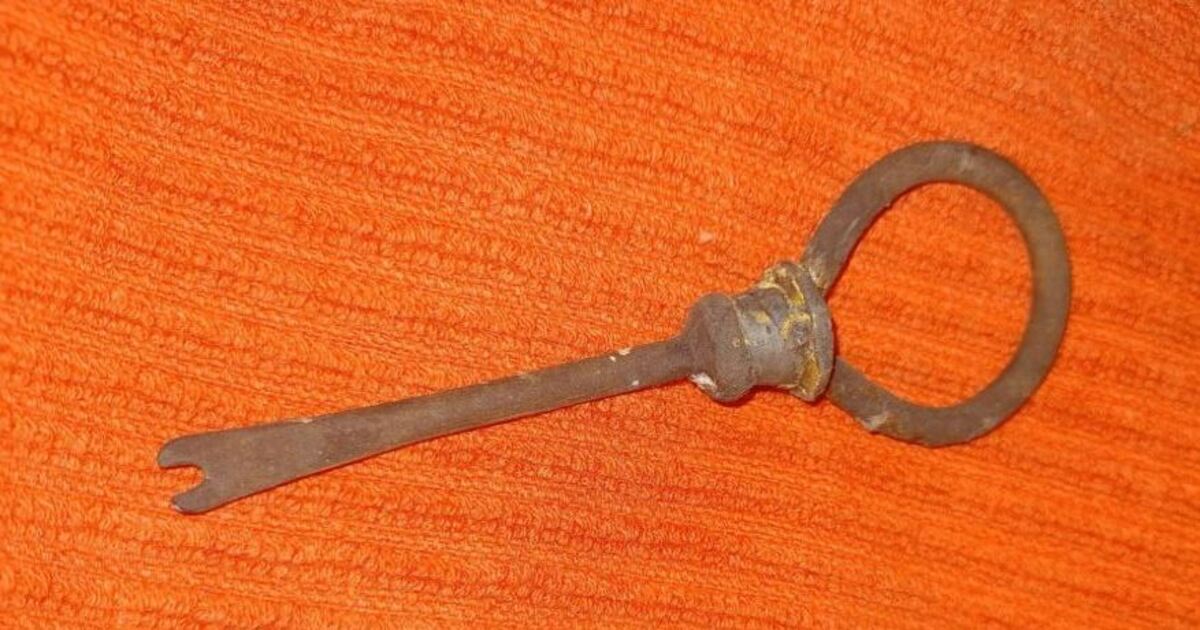
source: Joy Perry Roark/Facebook
Some old household tools are easy to recognize. A cast-iron clothes iron, a hand-cranked eggbeater, or an old-fashioned carpet beater tells us almost immediately what it was used for. Others are a little more mysterious, especially when they look like something that belongs on a giant keyring.
An antique fireplace damper key is one of those forgotten objects. With its circular handle, narrow metal shaft, and unusual working end, it can easily be mistaken for an old-fashioned door or furniture key. However, tools with similar designs sometimes served a completely different purpose: helping homeowners control the airflow through their fireplaces.
Back when fireplaces played a bigger role in everyday life, even a small metal tool could have an important job.
What Was an Antique Fireplace Damper Key?
An antique fireplace damper key was a tool used to operate certain older fireplace mechanisms. Instead of unlocking a door, it helped adjust a damper inside or above the fireplace.
The damper was a movable metal plate that controlled the opening leading into the chimney. When someone lit a fire, the damper needed to be open so smoke and gases could escape.
Once the fire had completely burned out, closing the damper helped prevent warm indoor air from escaping through the chimney.
Not every fireplace used a removable key. Some had levers, chains, or built-in handles. Others relied on rotating controls that required a separate tool.
How Did Old Fireplace Damper Keys Work?
One interesting feature of some older fireplaces was the use of a worm-gear mechanism.
Despite its unusual name, a worm gear is simply a device that uses a screw-like component to transfer movement. Turning the screw moves another part of the mechanism.
In a fireplace, this could allow someone to adjust the damper by turning a handle or key. Some designs offered more controlled movement than a simple lever.
This technology has a documented history. In 1923, inventor Ernest F. Donley received a United States patent for a fireplace-damper controller that used a worm mechanism. The design included a spindle extending through the front of the fireplace, allowing someone to operate it using an external handle.
It was a practical solution to an everyday household problem. However, not every antique tool with a forked end belonged to this type of mechanism.
Why Were Fireplace Damper Keys Important?
Today, fireplaces often serve as decorative features. In earlier homes, they had a much more practical purpose.
Before modern central heating became common, families relied on fireplaces and stoves to keep their homes warm.
Maintaining a fire involved more than adding logs. Someone had to remove ashes, manage fuel, clean the hearth, and make sure smoke could travel safely up the chimney.
Fireplace tools made these jobs easier. Pokers moved burning logs, tongs handled hot fuel, and shovels removed ashes.
Meanwhile, damper keys and other controls helped regulate the chimney opening.
A small metal key might not have looked impressive beside the larger fireplace tools, but it could serve an important purpose.
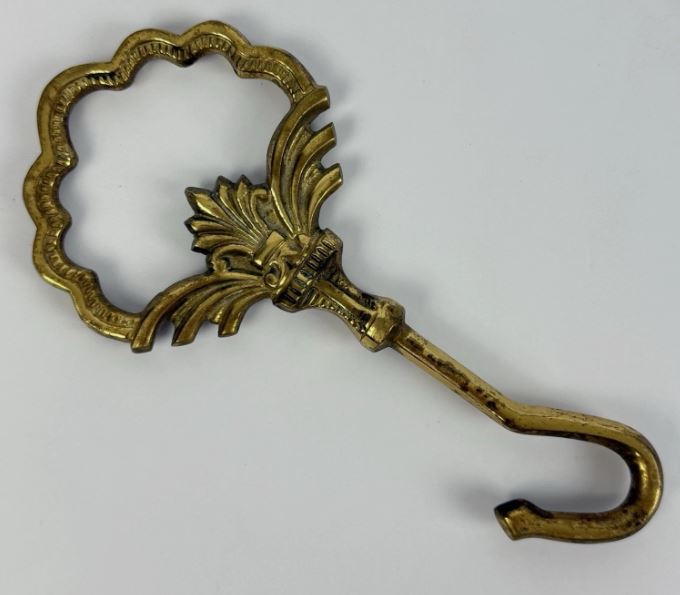
Fireplace Damper Keys in the Early 20th Century
By the early 1900s, manufacturers were developing different ways to make fireplace dampers easier to operate.
Some controls sat inside the fireplace opening, while others extended through the surrounding masonry.
A 1922 advertisement in The Architectural Record described several fireplace damper designs. Some featured control keys near the fireplace face, while others used levers that homeowners could operate with a poker.
The advertisement also mentioned an iron wrench for turning a hot control.
Interestingly, a 1952 advertisement for Donley dampers still promoted rotary mechanisms operated by turning a key at the front of the fireplace.
These examples show that fireplace damper keys were not limited to one particular design or period.
Why Do They Look Like Skeleton Keys?
One reason antique fireplace damper keys can be confusing is their resemblance to traditional skeleton keys.
Both may have a round handle, a narrow metal shaft, and a specially shaped end.
However, their functions were different.
A skeleton key operated a lock, while a damper key engaged a mechanical fitting to adjust the fireplace.
Some turning tools had forked or notched ends, while others used square sockets or differently shaped attachments.
This variety makes identifying old metal tools challenging. A forked tip alone doesn’t prove that an object was used for a fireplace. Finding a matching mechanism provides much stronger evidence.
Can Antique Fireplace Damper Keys Still Be Used?
Some older homes still have their original fireplace mechanisms, meaning compatible damper keys may remain useful.
However, years of rust, soot, and wear can make old dampers difficult to operate.
An unidentified antique tool should never be forced into a fireplace fitting simply because it appears to match.
A qualified chimney professional can inspect the mechanism and determine whether it’s safe to use.
It’s also important to remember that a fireplace damper must remain open while a fire is burning and until the embers have completely cooled.
A Small Reminder of the Good Old Days
An antique fireplace damper key might not look particularly special today. It’s simply a small piece of metal with an unusual shape.
Yet objects like this remind us how much everyday household life has changed.
There was a time when tending a fireplace was part of the daily routine. Someone had to understand how the chimney worked, adjust the damper, and keep the necessary tools nearby.
Today, most of us can warm a room by adjusting a thermostat. We rarely think about the mechanical devices that once helped people manage their homes.
That’s what makes these forgotten tools so interesting. They offer a glimpse into a time when even the smallest household objects had a purpose.
And sometimes, what looks like an ordinary rusty key can tell a fascinating story about life in the good old days.