An Ordinary Dinner Fork Or Something Else?

October 11, 2026
source: Lori Beauleaux Hennigan/Facebook
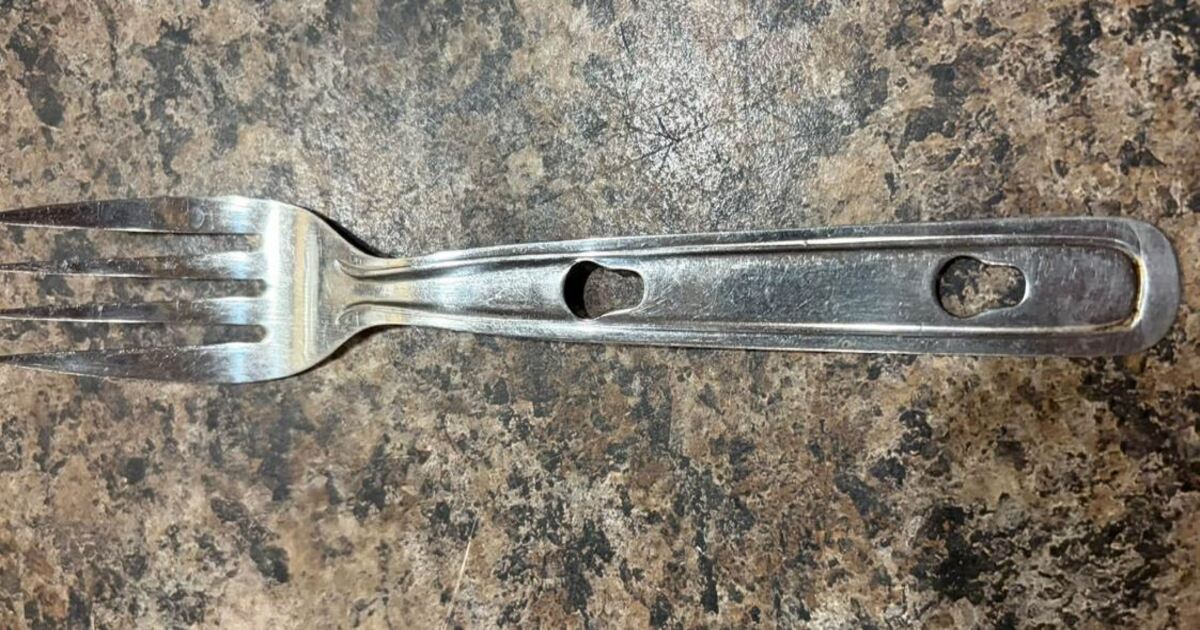
At first glance, this old dinner fork looks unusual. It has four ordinary tines, but its metal handle features two strange, keyhole-shaped openings. Why would anyone make a fork like this?
The answer is probably quite simple. This vintage dinner fork with a missing handle likely once had a wooden or plastic covering that has since broken or fallen off.
What remains is the metal body that once supported the original handle.
Why Does This Old Fork Have Two Holes?
The two openings in the handle probably served a practical purpose. Many older forks and knives featured separate wooden or plastic handles attached to a metal base.
Manufacturers used different methods to keep these coverings in place, including pins, rivets, and molded attachments. The openings on this fork may have helped secure its original handle.
Without the covering, the metal underneath looks rather strange. What was once an ordinary dinner fork now resembles a mysterious kitchen tool.
When Forks Had Wooden and Plastic Handles
During the 20th century, wooden and plastic-handled cutlery was common in many households. Wooden handles offered a traditional appearance, while plastic handles came in various colors and styles.
These utensils were often affordable and practical. Many families used them for years, even after the original matching sets became incomplete.
Over time, wooden handles could crack or split, while older plastics sometimes became brittle. Repeated washing and everyday use could also loosen the attachments.
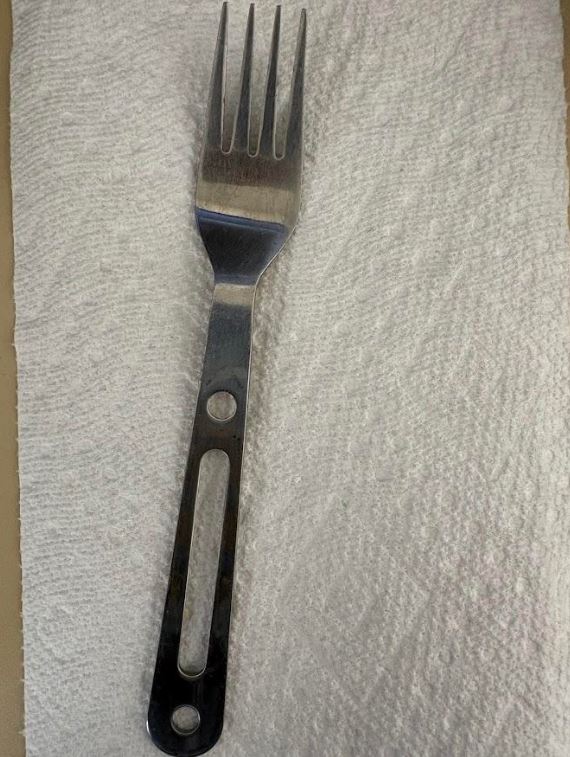
Eventually, the covering might break away completely, leaving the exposed metal handle seen here.
A Forgotten Piece of Kitchen History
For anyone who remembers older kitchens, this fork might bring back memories of crowded drawers filled with mismatched cutlery.
There was often an odd fork or spoon that didn’t match anything else. Some had worn wooden handles, while others had colorful plastic grips.
People didn’t always replace utensils simply because they looked old. As long as something remained useful, it often stayed in the kitchen.
Although the exact age of this fork is unknown, its construction offers an interesting glimpse into older cutlery designs.
A Simple Fork with a Story
Sometimes, the most ordinary household objects become interesting when a piece goes missing.
This vintage dinner fork probably started life as a perfectly normal utensil. Now, without its original handle covering, it looks like something designed for a special purpose.
It is a small reminder of the everyday objects that filled our kitchens years ago.