Why Do Some Trees Have Square Holes?

November 18, 2026
Source: u/CatDog671 / Reddit
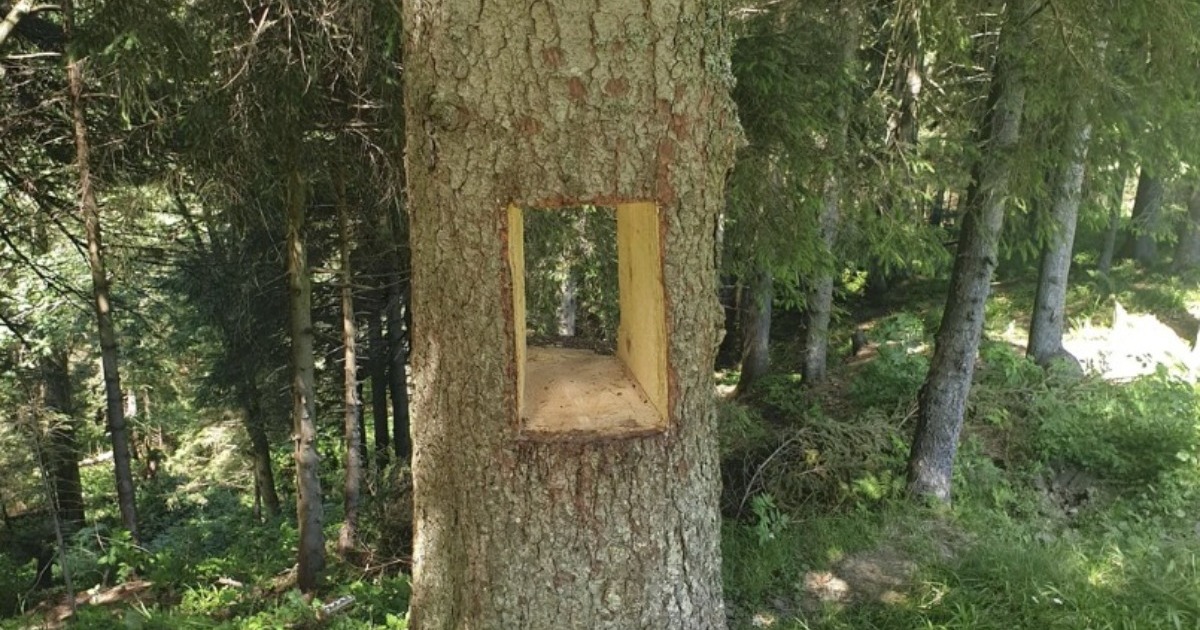
Imagine walking through a forest and coming across a tree with a perfectly square hole cut through its trunk. The edges are straight, the corners are sharp, and you can see right through to the other side. It looks like someone took a chainsaw to a perfectly healthy tree. But why would anyone do that? One possible explanation is tree veteranisation, a conservation technique that helps younger trees develop features normally found in ancient trees.
What Is Tree Veteranisation?
As trees grow older, they naturally develop hollows, cracks, broken branches, and areas of decaying wood. These features provide valuable habitats for birds, bats, insects, fungi, and other wildlife.
However, it can take hundreds of years for a tree to develop such characteristics.
Tree veteranisation speeds up parts of this process. Conservation specialists deliberately create cavities, cracks, and other features in selected trees to imitate natural ageing.
The aim is to provide habitats that might otherwise take decades or centuries to appear.
Why Cut a Square Hole in a Tree?
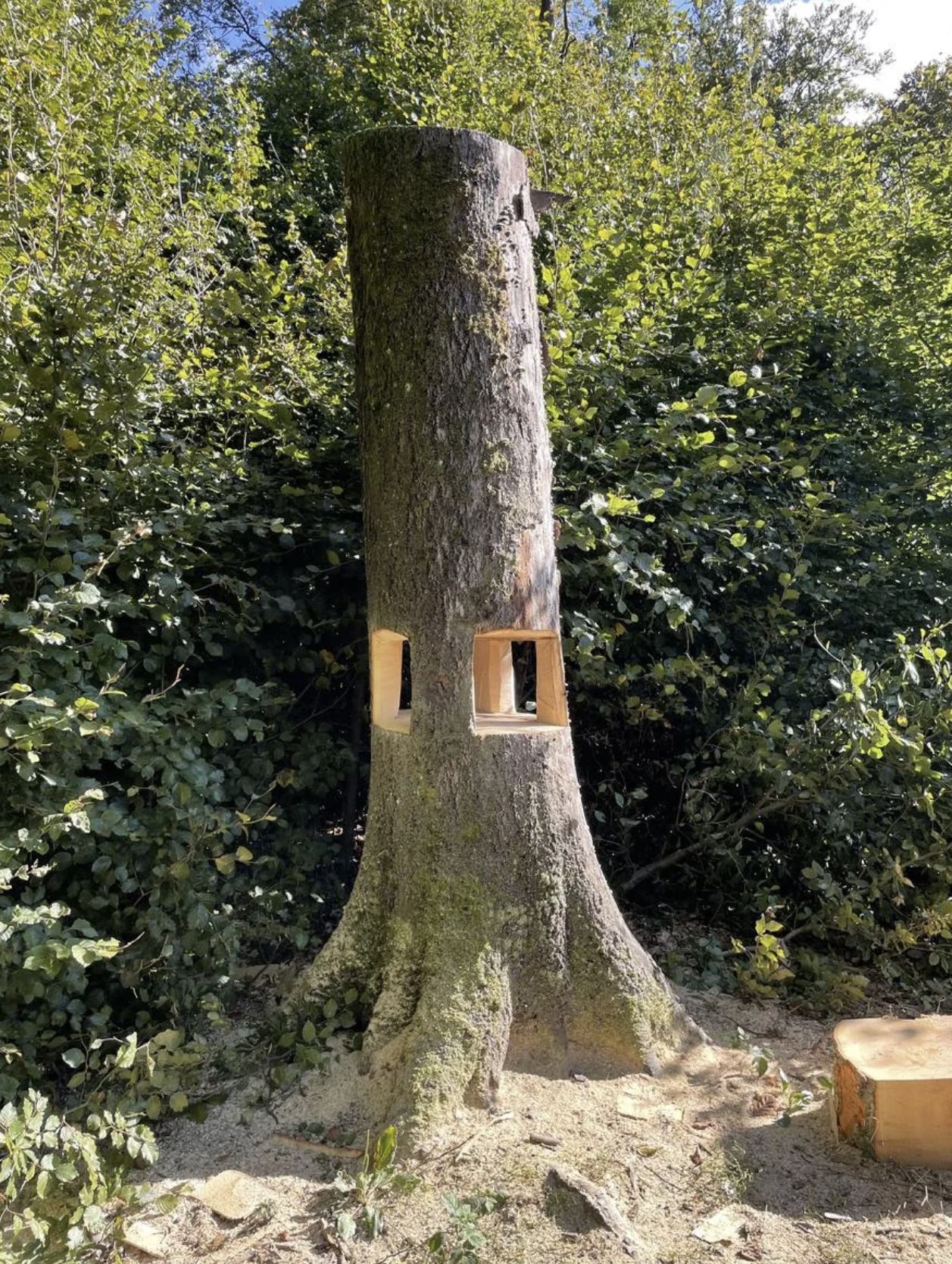
A square or rectangular opening may be an example of artificial cavity creation.
In nature, tree cavities often form when branches break off or fungi gradually decay the wood. Over time, these openings can become homes for various animals.
Conservationists sometimes use cutting tools to create similar spaces much sooner.
Depending on the technique, they may:
- Cut hollows into trunks to create potential nesting or shelter sites.
- Make narrow cracks that could provide roosting spaces for bats.
- Create broken-looking branch ends to encourage natural decay.
- Leave standing deadwood to support insects, fungi, and birds.
The square hole in the photograph could be one of these features, although its purpose cannot be confirmed from the image alone.

Why Are Old Trees So Valuable to Wildlife?
Ancient trees support entire communities of living organisms.
Woodpeckers and other birds use cavities for nesting. Bats shelter beneath loose bark or inside cracks. Beetles and fungi depend on dead and decaying wood.
Even a partially hollow tree can support species that struggle to survive in younger, managed forests.
The problem is that many woodlands lack enough veteran trees.
Historically, people often removed hollow, dying, or damaged trees because they considered them dangerous or untidy. Modern woodland management increasingly recognises their ecological value.
Tree veteranisation helps address this shortage by creating certain habitat features in younger trees.
Can Trees Survive With Holes in Their Trunks?
Yes. Some trees survive for decades with hollow trunks.
A tree’s living growth tissues lie mainly near the outer part of its trunk. The inner wood provides structural support but does not need to remain alive for the tree to continue growing.
However, cutting a large opening can weaken the trunk and increase the risk of decay or breakage.
For this reason, tree veteranisation requires careful planning and professional expertise. Not every tree is suitable, and the technique can reduce an individual tree’s lifespan.
Can Veteranisation Replace Ancient Trees?
No. An ancient tree provides far more than a few cavities.
Its bark, dead branches, decaying wood, and complex structure develop over centuries. Together, these features support a wide variety of wildlife.
Veteranisation recreates only some of these characteristics. It cannot replace the ecological value of a genuinely ancient tree.
Instead, the technique helps bridge the gap between younger and older trees, providing additional habitats while new generations mature.
A Strange Hole With a Useful Purpose
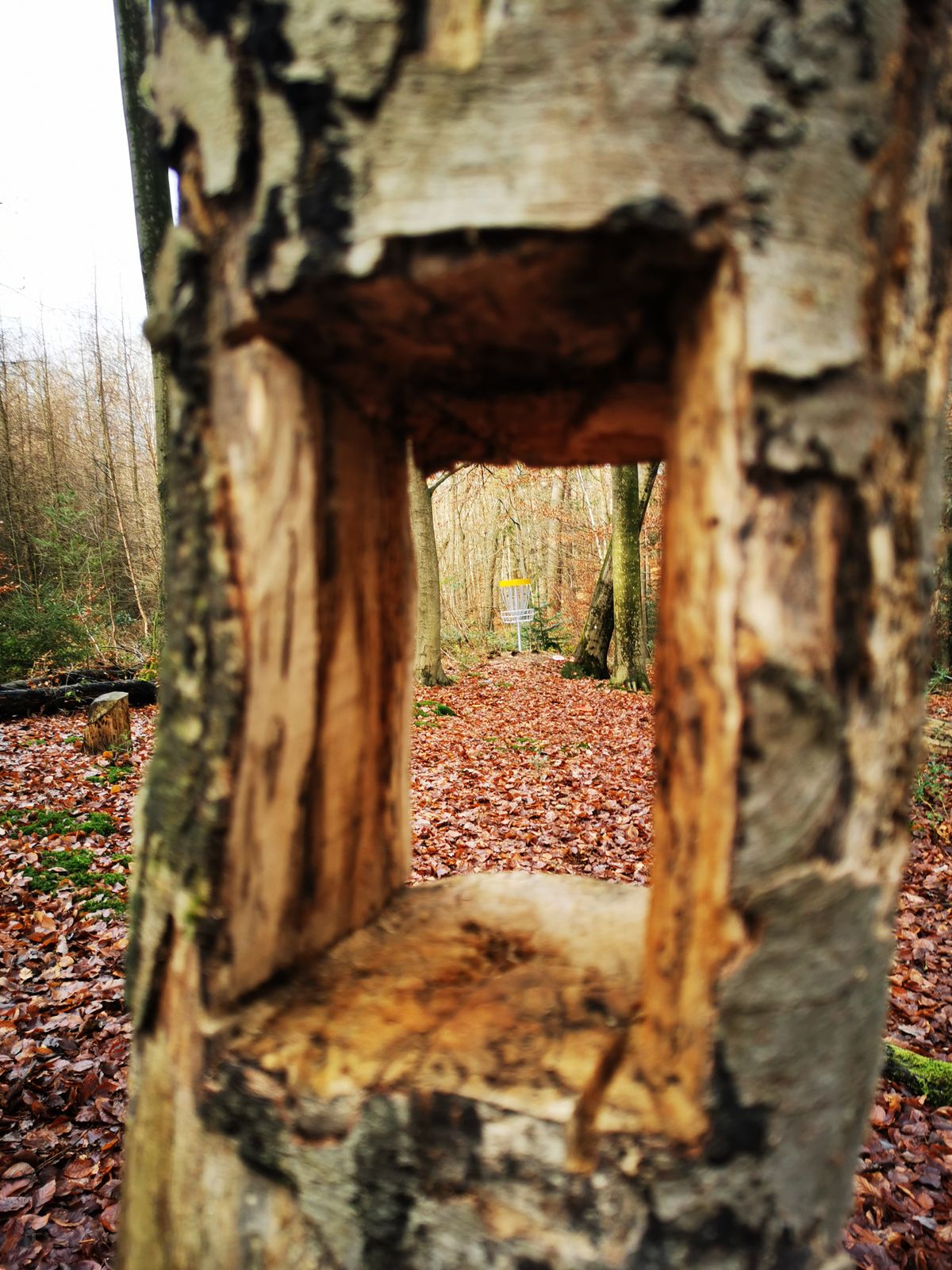
The perfectly square opening in this tree may look like an act of vandalism, but it could be part of a wildlife conservation effort.
Over time, exposed wood can begin to decay, creating conditions that attract fungi and insects. Cavities may also provide shelter for birds or other animals.
Not every unusual hole in a tree is an example of veteranisation. Still, this little-known technique offers a fascinating explanation for some deliberately cut openings in woodland trees.
What appears to be damage could actually be an attempt to create wildlife habitat decades before nature would produce it on its own.