This Wasn’t Supposed to Still Exist

January 26, 2026
Source: Reddit
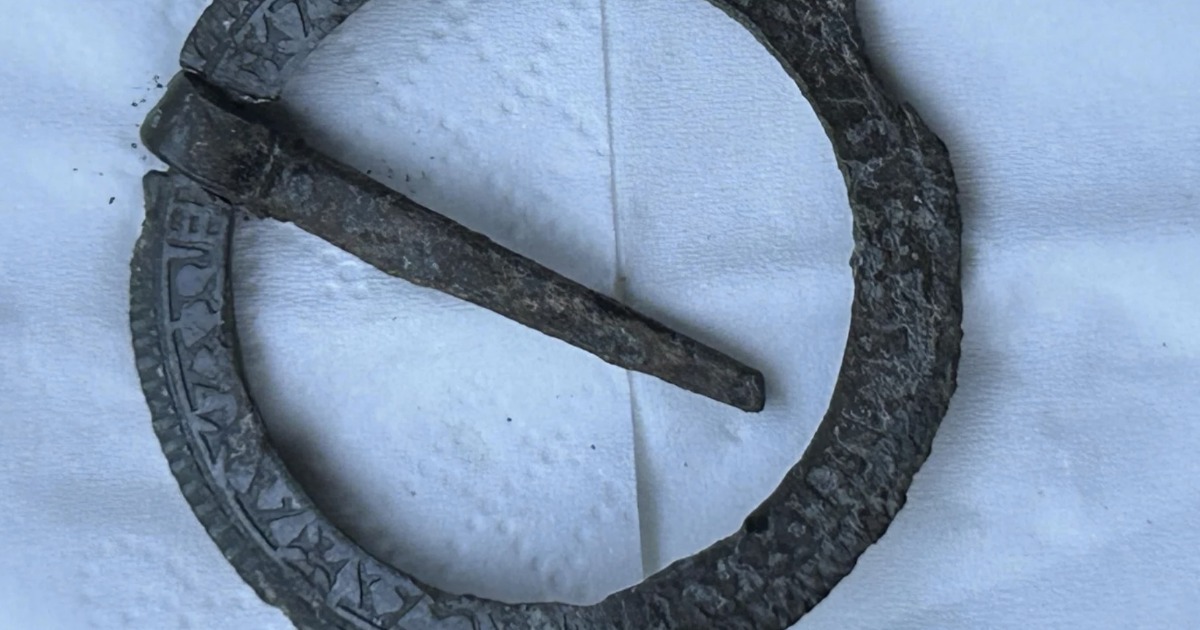
I know that this isn’t a buckle. Buckles connect leather. This is a fastener for fabric, specifically an iron cloak pin.
Brooches such as this were in use throughout Europe from the 12th to the 15th century. To secure a woolen cloak you would simply pass the pin through the thick wool, then turn the pin in the ring until the woolen cloak secured. The design was simple yet very effective; this iron cloak pin is a prime example of efficient medieval fastening methods.
This has a long thin pin that is specifically designed to penetrate heavy fabric. The ring itself is strong. There is no ornamentation present for the sake of ornamentation; it was built to function like a classic iron cloak pin.
Edge Decoration
There is an irregular line of raised marks that resemble letters around the outside edge of the brooch. These raised marks probably don’t have any meaning.
In the Middle Ages many brooches used imitative inscription. Many craftsmen copied the appearance of written Latin texts without creating readable text. The addition of visual interest and the idea of creating an important-looking artifact created a unique opportunity for artisans.
This example of the brooch follows this pattern of having raised marks that are visually interesting and appear to be letters but do not create any readable text.
Iron, Not Silver
The surface tells you everything. Deep pits. Deep corroded. That’s iron. Clearly, this is from an iron cloak pin, not a silver one.
You will find silver versions of this type of brooch that were well-preserved and are now owned by wealthy individuals. The iron versions were common. Less expensive than the silver versions. More durable than the silver versions. Easy to replace if broken.
Iron provides another explanation for why complete versions of the brooch are relatively rare. In general most did not endure the passage of time buried underground.
A Direct Match from the 14th Century
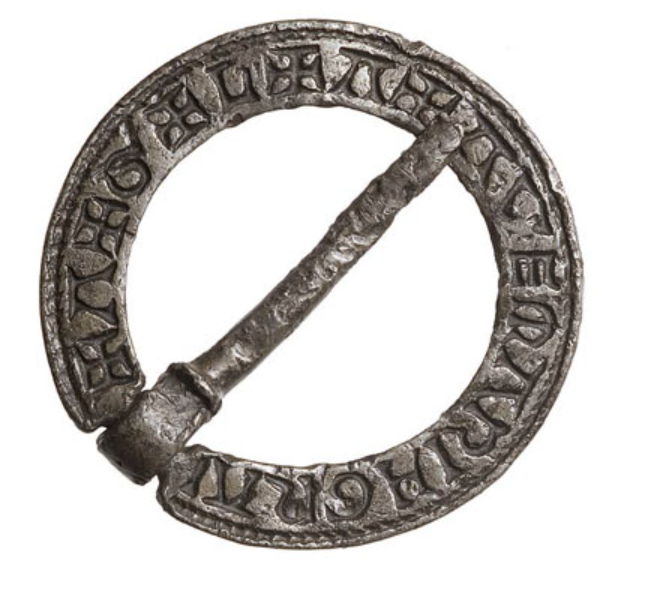
By matching it to the published photographs of various archaeological finds, I matched a nearly identical version of this brooch, made from silver, in the Lexis Project collection, which dates back to approximately 1350–1450. Same ring style, same pin style and same edge decorations.
The only difference is that this is made from iron.
Therefore, this brooch can be dated to the 14th century based upon its similarity to other artifacts that date to this period.
The Coin for Scale
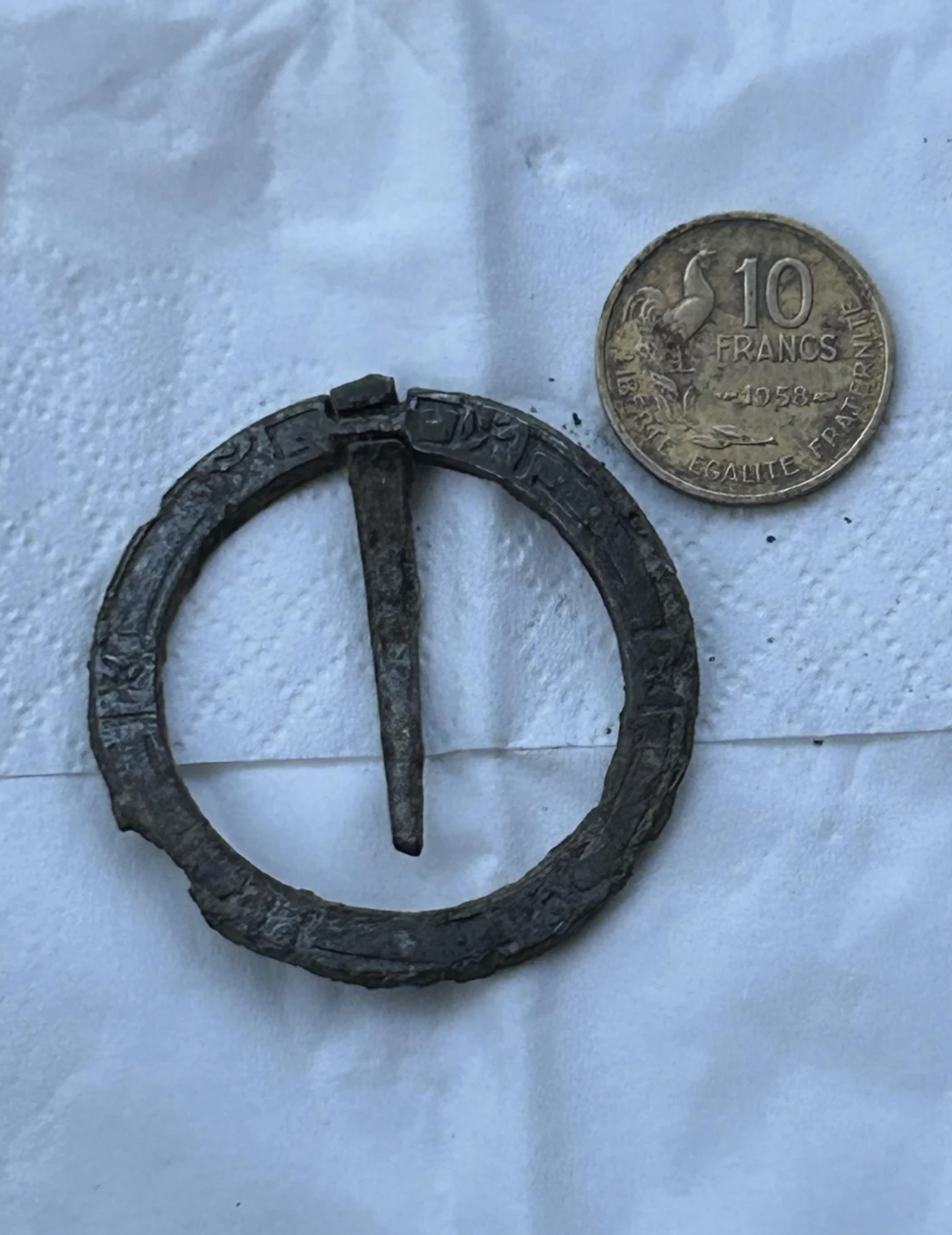
I used a 1958 10 Franc coin for scale as that is what I happened to have on my person. The coin clearly demonstrates the size of the brooch and does not take away from the actuality of the object. While this is not a typical method for scaling artifacts, it is an effective way to demonstrate the relative size of the brooch. In fact, the scale shows the dimensions a typical iron cloak pin might have had in everyday medieval use.
The brooch is large enough to be functional and small enough to be carried and worn every day.
Why It Matters
This iron 14th-century brooch was not unusual when it was made. That is why it is so valuable.
It belonged to an ordinary person. A person who needed their cloak to remain closed. A person who dropped it or lost it and continued to walk.
The discovery of these types of artifacts remind me that medieval history was not just about castles and kings. Medieval history was about practical people using practical tools such as this iron cloak pin.