The Weird “Wheel” in the Woods

March 2, 2026
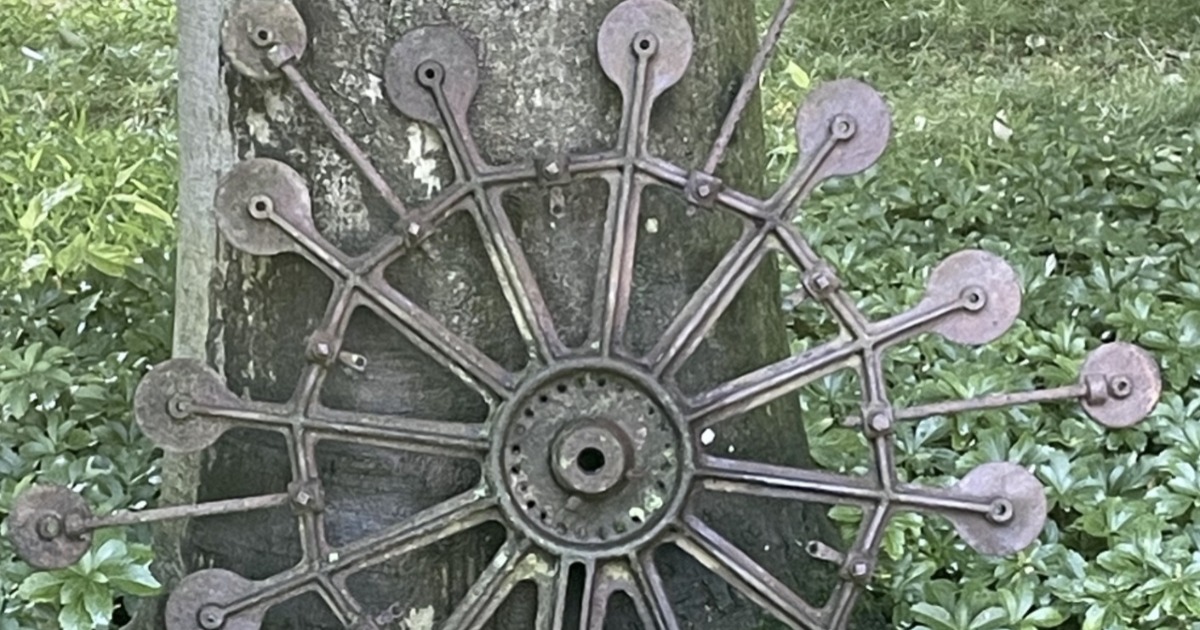
Source: Reddit
I’ve always had a thing for unusual old metal objects found in the woods. Recently, one of these discoveries led me down a rabbit hole about something called a dipping spider. I spend time looking at them, taking pictures of them, and arguing with Google about their origins. Because Google likes to think that anything I find in the woods will turn out to be a wagon wheel, which is ridiculous.
At first glance, this one seems wheel-like. But up close it does not behave like a wheel at all. The metal is thick, cast, and non-circular; and it has mounting points for attaching the object. Therefore, it was made in a factory rather than being carried down a trail.
It’s Not A Wagon Wheel
To make a wagon wheel there need to be both a rim and symmetry. This object has neither.
- No rim
- There is no evidence of the existence of an outer rim on this object. No indication of the presence of a tire or band
- Spoke patterns are unusual
- Instead of radiating cleanly, spokes branch and split
- Hub has bolt circle pattern for attaching to machinery
What It Is In Reality: An Industrial Dipping Spider
Based upon my research, the closest match to this object is an industrial dipping spider latex dipping machine part. This object is described as a rotating carrier used in dipping lines that manufacture balloons, gloves, finger cots and other types of thin latex products.
Factory machines use multiple forms on a rotating fixture allowing them to dip many pieces at the same time. The spider holds these forms and rotates them through the dipping process.
Reasons For Uneven Arm Lengths And Offsets
The reason for the uneven arm length and offset spacing is for functionality. If all the forms were placed at the same radius they would either collide or interfere with each other as they rotate. The uneven spacing allows for “nesting” of the forms closer together while providing clearance between the forms when they are spinning.
Purpose Of Disc Like Features At Ends
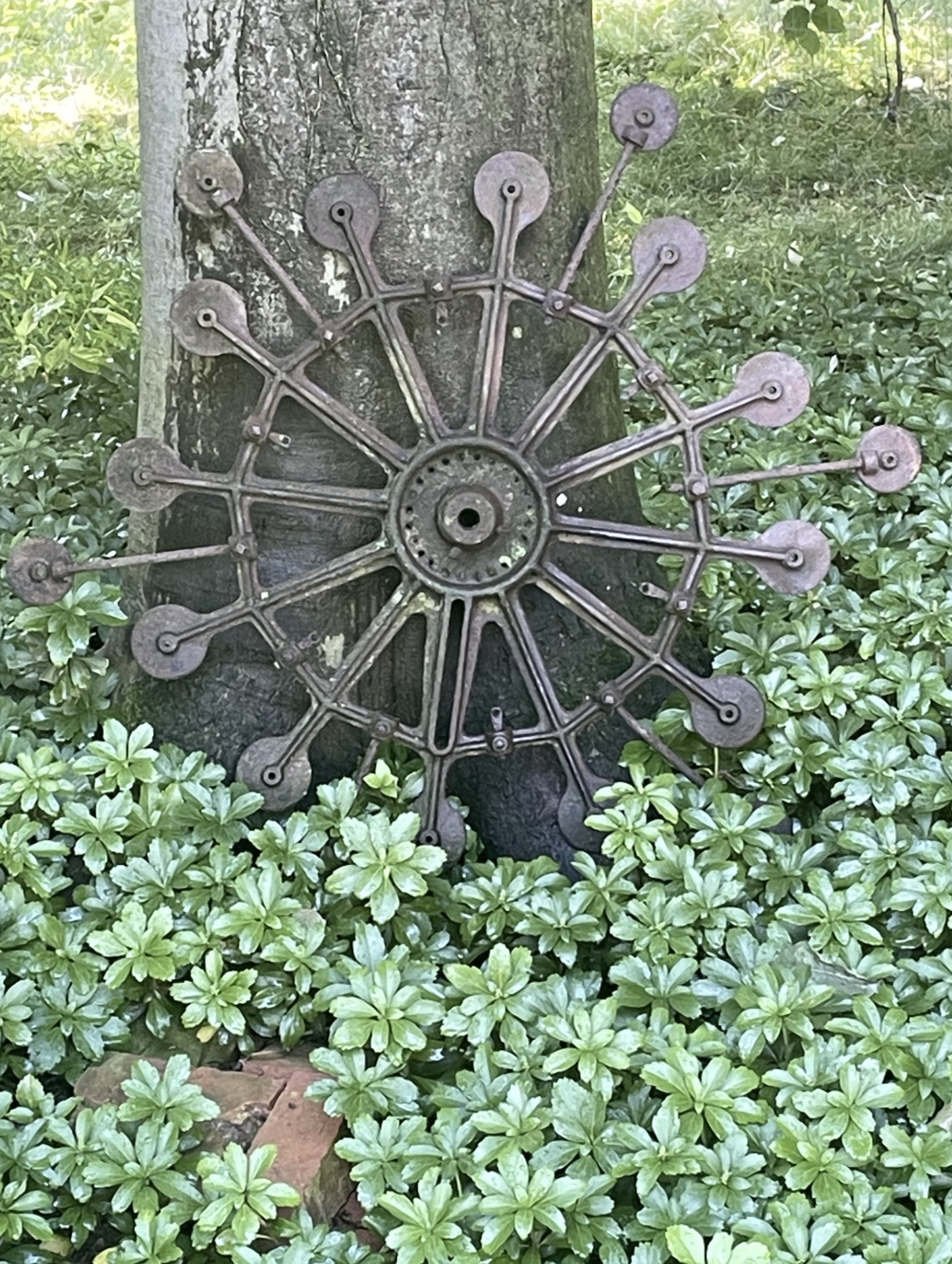
These disc like features with center holes are intended for attachment of the forms or the brackets holding the forms. Depending upon what the dipping line produces, the forms can be porcelain, ceramic or metal.
Mounting Pattern Indicates Belonging To Machine
The central opening along with the ring of small holes indicates the part was bolted to a rotating shaft or flange. This design provides for the part to be easily removed for maintenance purposes while maintaining its rigidity during the rotating process.
Functionality Of Latex Dipping Line
The cycle of operation for the dipping line includes the following steps:
- Dip mounted forms into liquid latex
- Raise the forms from the liquid latex and allow the coating to drain and level while rotating
- Apply heat as necessary to cure the latex coating
- Remove the finished latex product from the forms
- Repeat for production runs and thickness control
Possible Reasons For Finding It In Pennsylvania Woods
As a result of the large manufacturing base in Pennsylvania and surrounding areas (including rubber products, glass, machinery and metal working) plants frequently closed or upgraded leaving behind heavy parts such as this one. Cast iron can last for many years, so the part remains even though the factory may have disappeared.
Options For Disposition
If the part is legally allowed and safe to retain, it can be used for sturdy garden or yard art and provide a conversation piece. Prior to retaining the part, verify if it has:
- Shaft mounting wear patterns or keyways in the center hole (bolt circle)
- Bolt marks or scars on the end pads (where the forms were attached)
- Remnants of any hardware that attached the forms.