The Odd Backyard Tower With A Secret Mission

April 28, 2026
source: Amos Butler Audubon Society
There’s something quite nostalgic about watching birds soar over the evening sky. Birds appear to “dance” in the sky, flitting, chirping and chattering around the trees like fireflies bursting from a campfire. Many people associate Chimney Swifts with summertime, warm nights, open windows and nature winding down after an extended period of activity.
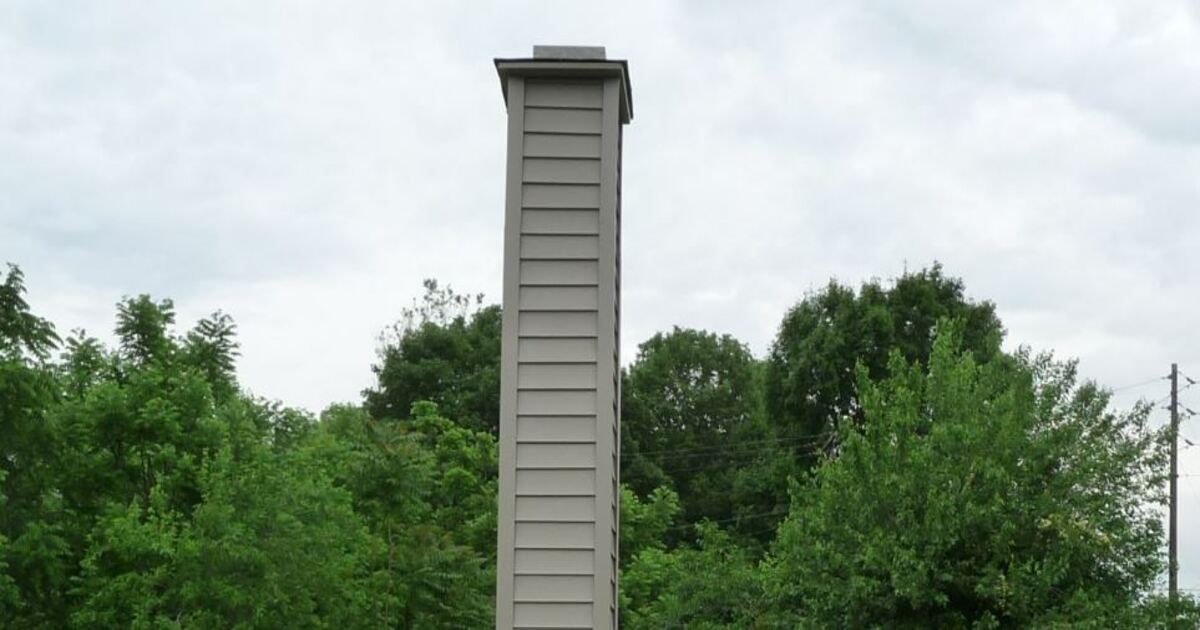
This is why having a Chimney Swift tower in your own backyard makes it feel extra special. The tower itself is likely to be very basic (tall, skinny) and unobtrusive sitting near the woods; however, to a struggling bird it offers a safe location to rest, to nest, and to raise its young within a rapidly changing world.
Why Chimney Swifts Need Assistance
Chimney Swifts previously nested in tree cavities, cave entrances, and face cliffs. Once urbanization became prevalent in towns and cities, swifts adapted by using brick chimneys that provided a similar environment to hollow trees. For generations this worked well. As homes were being constructed by builders with masonry chimneys, and as many old chimneys were torn down, capped, lined, screened or modified for contemporary heating systems, many Chimney Swifts no longer had available nesting locations.
Herein lies the value of a backyard tower.
How Does a Backyard Chimney Swift Tower Benefit the Birds?
A backyard Chimney Swift tower replicates a natural chimney providing a secure enclosure for the birds to cling to the internal surface and construct their nest. Although a tower might appear as nothing more than a slender column externally, internally it creates the same type of darkened sheltered shaft that Chimney Swifts typically desire.
Chimney Swifts do not perch such as robins or sparrows. These birds’ feet function best to hold onto vertical surfaces. Most of their time is spent in flight capturing insects in the air. Thus, whenever they cease flying and require resting spots with walls, not branches.
Swifts also create unique nests. While in flight swifts collect small twigs and upon landing at their chosen nesting site they use their salivary glands to affix those twigs to the internal surface of their nesting site. Within short order a few twig strands will form into a nursery area for their developing young.
Nostalgia Surrounding Chimney Swifts
Chimney Swifts evoke feelings of nostalgia due to their historical association with older homes in smaller towns during summertime. In years gone by families would know if they had swifts in their chimneys by listening to the soft chirping/whistling sounds emanating from above the fireplace. Some families perceived them as periodic visitors each year.
Not all residents have understood the birds. Small amounts of scratching or fluttering within the chimney can cause concern among some homeowners. However, Chimney Swifts are beneficial to humans since they consume flying insects. Furthermore, generally speaking, they depart for warmer climates following the completion of their reproductive cycles.
Towers provide swifts a nesting location devoid of entering private fireplaces. This provides a way for both modern society and traditional wildlife coexistence.
Importance of Towers in Present-Day Conservation Efforts
A Chimney Swift tower exemplifies that conservations efforts don’t always have to be complex. One structure (tower) in your yard, park, school or nature center becomes part of an ever-growing collection of nesting sites for Chimney Swifts.
When migrating, Chimney Swifts often congregate in massive flocks at communal roosting areas. Just prior to sundown you may witness hundreds or thousands of birds swirling above a chimney and then drop out of sight into the chimney for the night. Such experiences are unforgettable. The aerial spectacle resembles smoke drifting upward toward a chimney and then reversing direction as it disappears into the darkness.
While a solitary backyard nesting tower will never support tens-of-thousands of birds, even a single pair of birds successfully raising young each summer adds vitality to future summer skies.
Simple Structure Supporting a Major Purpose
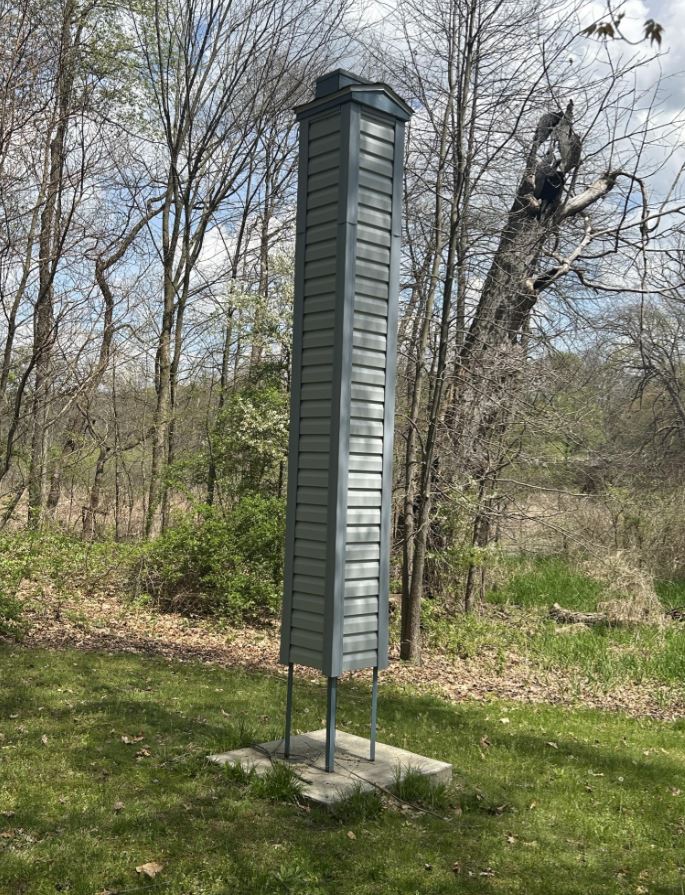
The tower pictured sits quietly in a serene lawn with nearby trees and open grassland. Such surroundings seem fitting. Since Chimney Swifts feed airborne, they need ample airspace for hunting and they fly frequently. They do not need elaborate gardens. What they require are accessible areas of refuge from predators, safety from inclement weather and a willingness from neighbors to patiently tolerate their presence.
In addition to serving as an easily-accessible habitat for Chimney Swifts, a structure such as this also initiates conversations. Passersby notice it. Children ask questions. Neighbors ponder its intended purpose. Upon telling them that it serves as a haven for Chimney Swifts; the narrative unfolds: “You see the old chimneys? Trees used to serve as chimneys.” Afterward visitors learn about old chimneys, hollow trees, migration patterns and the birds that many have heard but seldom observed.
One of the primary values of a structure such as this is that it converts a remote section of your property into a reminder that wildlife continues to exist near us.
Returning Sounds of Summer
A backyard Chimney Swift tower is more than just another birdhouse; it is an extremely modest bridge spanning generations. The tower serves as a tribute to birds that made adaptations based upon human settlement. As structures continue to evolve once more today; we now have the opportunity to make adaptations on behalf of Chimney Swifts.
Using one tower alone allows you to offer shelter in your yard; however, utilizing multiple towers enables entire communities to help restore elements of what has been lost. If you are fortunate enough; as dusk approaches; you may hear (and see) swarms of swifts overhead, with their aerial songs echoing throughout the air and knowing that remnants of the “good old days” remain alive today.