Only Old-School Drivers Will Recognize This!

November 18, 2026

source: Reddit
Finding an old object in the attic can bring back memories of things we once used without giving them much thought. The long, black object in this photograph, with its small red section, appears to be part of an old car emergency warning triangle.
Although its exact model is difficult to identify, it resembles the folded base or storage assembly of a traditional roadside warning triangle. These simple devices were once familiar accessories in the trunks of older cars.
An old car emergency warning triangle might not seem particularly exciting today. However, it reminds us of a time when motorists carried practical equipment to deal with unexpected trouble on the road.
What Was an Old Car Emergency Warning Triangle?
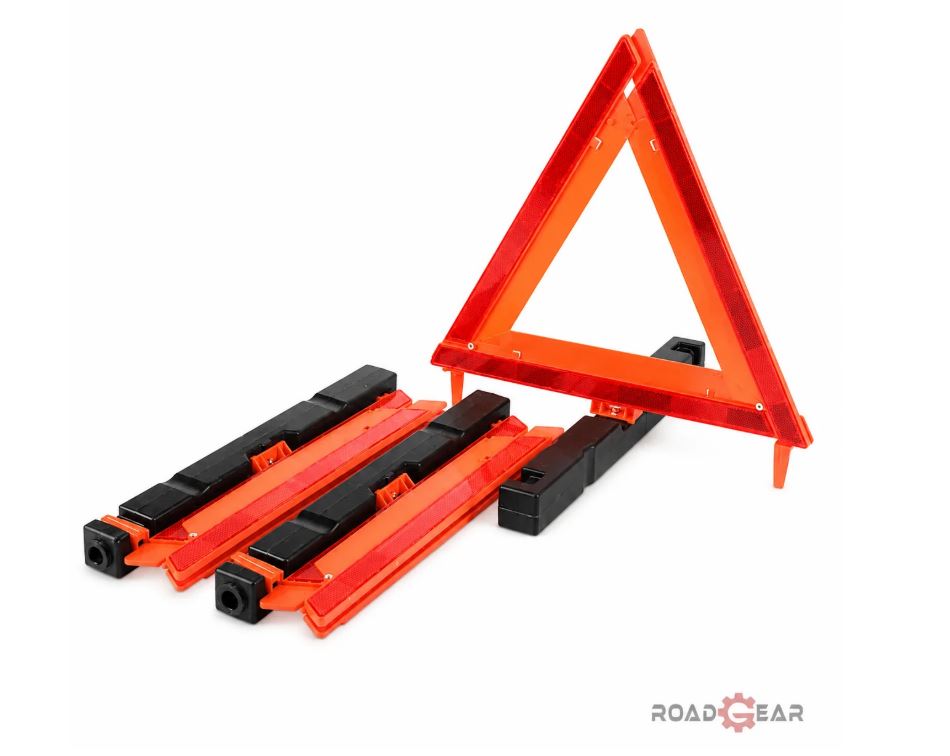
An emergency warning triangle is a portable safety device that alerts approaching drivers to a broken-down vehicle or roadside hazard.
Traditional versions featured a bright red reflective triangle mounted on a folding support. When a car broke down, the driver could unfold the device and place it behind the vehicle to warn other motorists.
Manufacturers designed many versions with compact folding mechanisms. Some came in long plastic cases, while others had metal legs and narrow bases that made storage easier.
The object in the photograph may be one of these older components. Its elongated black body and visible red section suggest a possible connection to a folding roadside warning device, although the complete triangle isn’t visible.
When Did Emergency Warning Triangles Become Common?
Emergency warning triangles became increasingly common during the twentieth century as more cars appeared on European roads.
By the 1960s and 1970s, several European countries already required drivers to carry or use warning triangles during roadside emergencies.
International regulations helped establish common standards. In 1972, United Nations Regulation No. 27 entered into force, introducing technical approval requirements for advance-warning triangles.
These standards covered important features such as reflective materials, visibility, stability, and construction.
Over time, the familiar red triangle became one of the most recognizable symbols of a vehicle in trouble.
A Familiar Item in the Trunk of Older Cars
For drivers in the 1960s, 1970s, and 1980s, a warning triangle was often just another useful item kept in the car.
Many older vehicles carried a spare tire, a jack, a wheel wrench, spare bulbs, and a few basic tools. Somewhere among these items, there might also be a folded warning triangle.
Some cars had dedicated storage compartments, while other drivers simply tucked their roadside equipment beside the spare wheel.
The triangle could remain untouched for years, gathering dust until an unexpected breakdown made it necessary.
Anyone who remembers opening the trunk of an older family car might recall finding unusual tools, faded instruction booklets, or long plastic cases whose purposes weren’t immediately obvious.
A folded emergency triangle could easily have been one of those mysterious accessories.
How the Old Emergency Warning Triangle Worked
The idea behind the warning triangle was simple but effective.
When a vehicle stopped because of a breakdown, the driver could position the triangle at an appropriate distance to warn approaching traffic.
Its red reflective surfaces returned light from passing headlights, making the warning easier to see at night. Many models also featured fluorescent material for improved daytime visibility.
The supporting base helped keep the triangle upright, even when exposed to wind or passing traffic.
Unlike electronic warning devices, traditional triangles required no electricity or batteries. Drivers simply unfolded them, extended the supports, and placed them on the road.
Their straightforward construction made them practical accessories that could remain useful for decades.
How Roadside Safety Has Changed
Roadside safety has changed considerably since the days when drivers regularly carried extensive toolkits.
Modern vehicles feature hazard warning lights, tire-pressure monitoring systems, and other safety technology. Mobile phones also make it easier to contact roadside assistance.
Some countries have introduced newer warning devices. Spain, for example, has adopted connected V16 emergency beacons to replace traditional warning triangles.
Nevertheless, reflective warning triangles remain part of roadside safety equipment in many countries.
Their continued use shows how a simple invention can remain relevant long after its introduction.
Drivers should always follow local safety regulations, particularly on busy highways where leaving a vehicle to position a triangle may be dangerous.
An Interesting Discovery in the Attic
The object in the photograph appears to have spent a considerable amount of time in storage.
It rests on wooden boards beneath the attic insulation. Its black surface looks dusty, while the small red section remains clearly visible.
Without identifying marks or a view of the unfolded mechanism, determining its age or original manufacturer would be difficult.
Perhaps it once belonged to an old family car. Maybe someone removed it from a vehicle before selling or scrapping the car and stored it away for future use.
Whatever its history, it represents the kind of everyday automotive accessory that could easily disappear into garages, sheds, and attics.
A Small Reminder of the Good Old Days of Motoring
The old car emergency warning triangle wasn’t a particularly glamorous invention. It didn’t make cars faster or more comfortable. Its purpose was simply to help keep motorists safe when something went wrong.
Yet it became a familiar part of everyday driving for generations.
For those who remember older cars, a folded warning triangle may bring back memories of family road trips, roadside repairs, and trunks filled with tools and accessories.
Today, finding what appears to be part of one in an attic offers a small connection to that earlier era of motoring.
It may be dusty and incomplete, but it reminds us that even the simplest objects can tell interesting stories about the past.