Mystery That Makes Perfect Sense

July 4, 2026
Source: Reddit
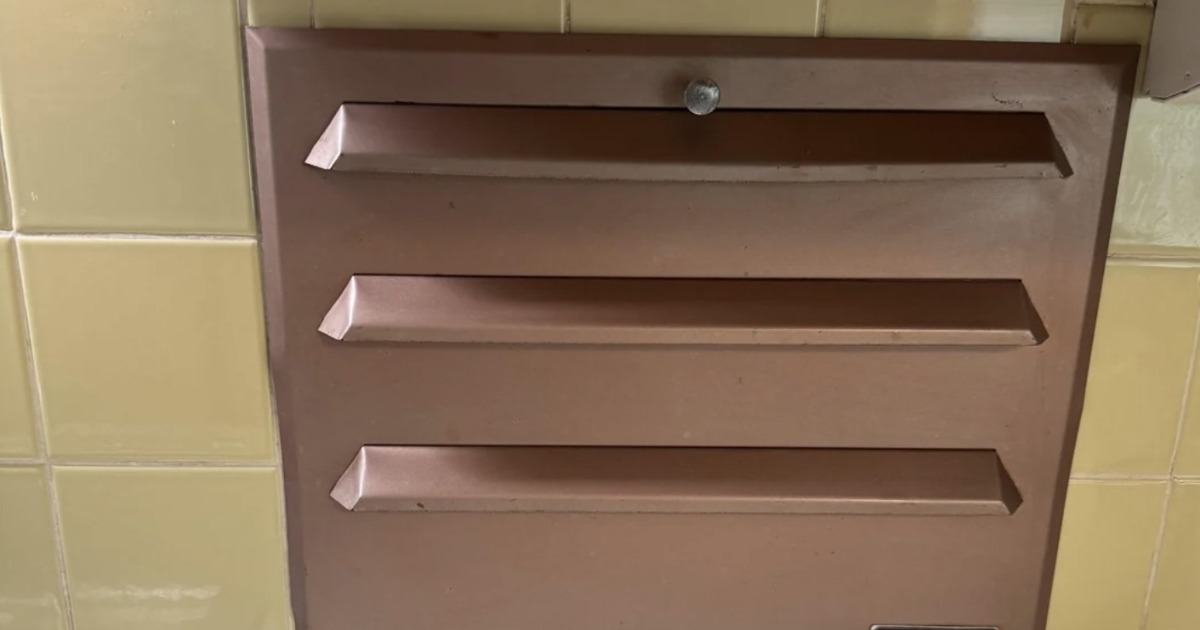
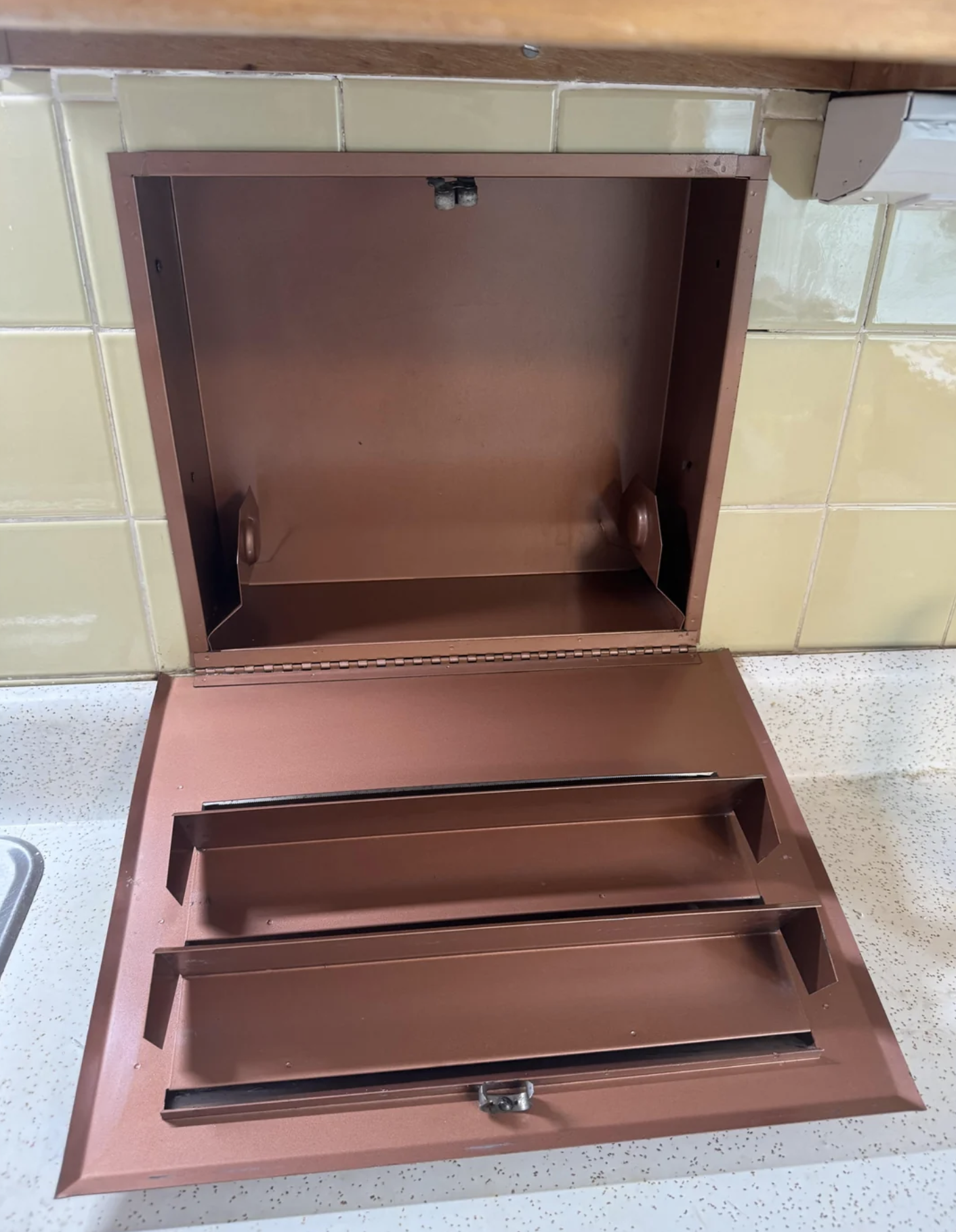
I love a good old-house mystery. You’re renovating, minding your own business, and suddenly you find some odd built-in thing that makes everyone stop and guess. Bread box? Spice rack? Tiny wall safe for emergency cookies? This reddish metal cabinet near the sink looks strange at first. But once you open it, the clues line up. The shelves fold down. The long front slits aren’t vents. They’re dispensing slots. The bottom looks like it held a paper towel roll. That makes this almost certainly a 1950s kitchen wrap dispenser.
Not glamorous. Not fancy. But clever.
A 1950s Kitchen Wrap Dispenser Made for Daily Use
The kitchen was expanded in 1959, which fits perfectly. Mid-century kitchens loved built-ins. Everything had a job. Everything had a place.
This 1950s kitchen wrap dispenser likely held paper towels, wax paper, aluminum foil, and maybe plastic wrap. The upper sections would hold the boxed rolls. The bottom would hold the paper towel roll.
You’d pull the paper, foil, or wrap through the front slits and tear off what you needed. When something ran out, you’d fold the door down and reload it.
Simple. Practical. Very 1959.
Honestly, I respect it. I have a kitchen drawer where foil, parchment, plastic wrap, and storage bags go to fight each other. The foil box jams. The plastic wrap clings to itself. The parchment paper slides under everything like it’s trying to escape.
This built-in solved that mess before it started.
Why the Slits Matter
The slits are the biggest clue.
A bread box doesn’t need three long openings across the front. A spice rack doesn’t need deep horizontal compartments. But a wrap dispenser does.
The rolls or boxes sat inside. The paper fed through the slots. You pulled out what you needed without opening the cabinet each time.
That’s why the “ventilation” idea doesn’t really fit. Those openings had a job.
The Bottom Looks Like a Paper Towel Holder
The lower section looks shaped for a roll, which points strongly to paper towels. And the location next to the sink makes sense.
That’s where you wipe hands, clean spills, wrap leftovers, and pack lunches. Paper towels, wax paper, and foil all belonged close by.
I can picture someone in that kitchen in 1959, pulling wax paper for sandwiches, tearing off foil for leftovers, and grabbing a paper towel without opening a drawer. That was the whole point: keep daily supplies ready but hidden.
Mid-Century Kitchens Loved Clever Built-Ins
Older kitchens often had specific little features like this. Pull-out cutting boards. Built-in ironing boards. Flour bins. Bread drawers. Hidden storage tucked into odd corners.
This 1950s kitchen wrap dispenser belongs to that same era.
Postwar kitchens focused on convenience and efficiency. Designers wanted the kitchen to feel modern, tidy, and easy to use. Some of the old ads were painfully dated, sure. The “happy housewife” stuff has not aged well.
But some of the storage ideas? Still smart.
This piece kept clutter off the counter. It used wall space. It grouped related supplies together. That’s good design, even now.
Wax Paper, Foil, and Real Kitchen Life
Wax paper used to do a lot of work. People wrapped sandwiches in it, lined containers with it, and used it for baked goods. Aluminum foil covered casseroles, wrapped leftovers, and lined pans.
Plastic wrap became more common in home kitchens around the mid-century years, so one of those compartments may have held that too.
The dispenser probably changed with the family. Maybe one slot held wax paper. Another held foil. Later, someone added plastic wrap or freezer paper. Eventually, someone may have shoved sandwich bags in there, because every kitchen organizer eventually becomes a junk drawer if you give it enough time.
That’s not a flaw. That’s family life.
Why This Little Built-In Feels Special
This 1950s kitchen wrap dispenser feels nostalgic because it handled ordinary routines.
Someone used it while packing school lunches, someone pulled foil from it after dinner and someone grabbed a paper towel after spilling coffee. Someone probably cursed at a roll that didn’t tear cleanly.
Kitchen frustration is timeless.
That’s what I like about pieces like this. They aren’t museum objects. They belonged to real chores, real meals, and real people moving through a normal day.
Should You Keep It?
I would.
Of course, renovations come with limits. Sometimes old features don’t fit the new plan, sometimes they’re damaged and sometimes you need the space.
But this one has charm and function.
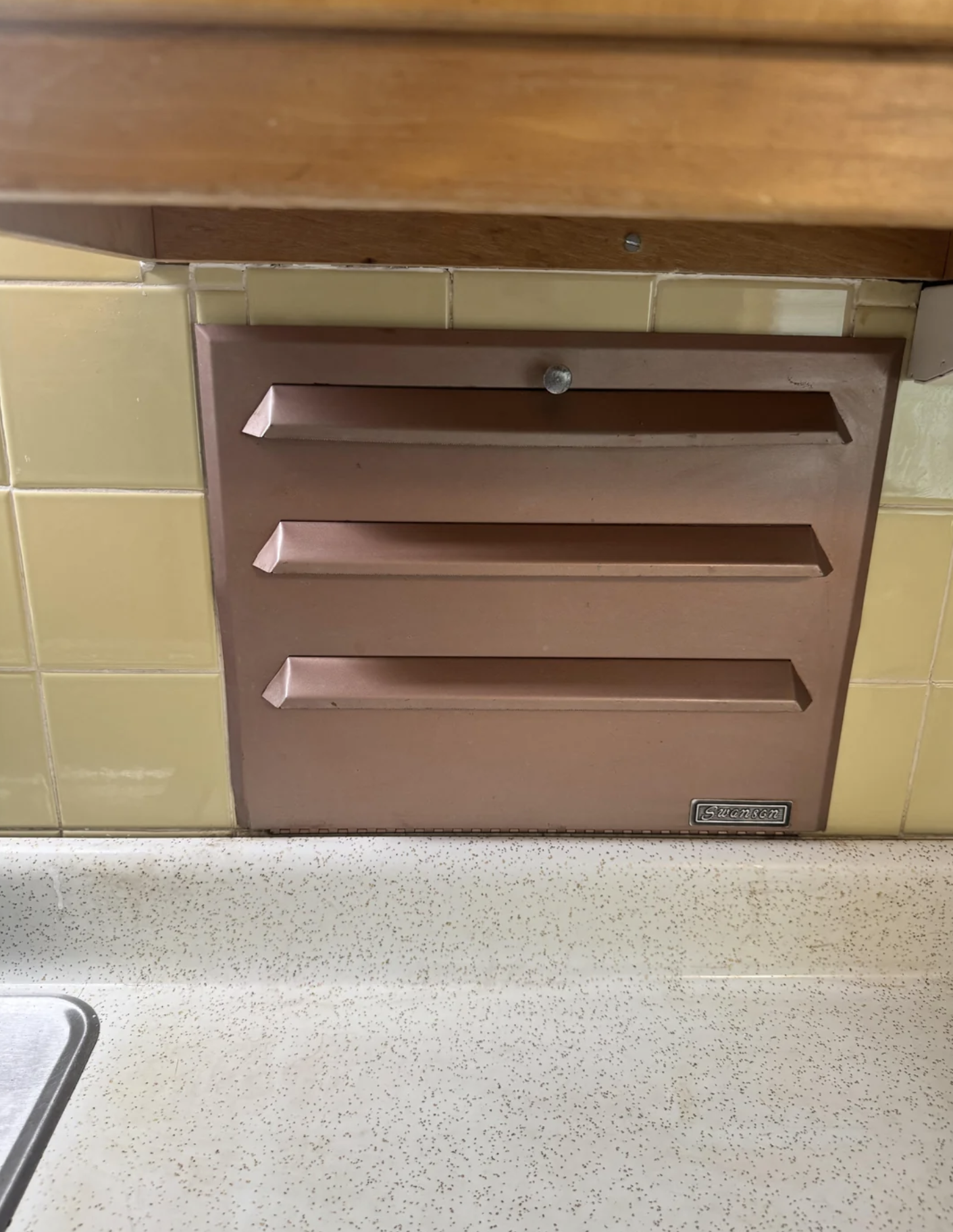
Modern rolls may not fit perfectly because packaging sizes have changed. Still, it could hold foil, wax paper, parchment paper, reusable wraps, kitchen bags, or cleaning cloths. The bottom may still work for paper towels, depending on roll size.
Even if you don’t use it daily, it’s a great conversation piece. People will ask about it. And “built-in 1950s kitchen wrap dispenser” is a much better answer than “random weird metal thing.”
A Little Reddish Time Capsule
No, it probably wasn’t a bread box. It doesn’t really work as a spice rack either. And those slits weren’t just decorative.
It was a 1950s kitchen wrap dispenser, built into the wall for paper towels, wax paper, aluminum foil, and maybe plastic wrap.
A small convenience center. A smart mid-century feature. A practical little time capsule next to the sink.
And honestly, I kind of wish my kitchen had one.