A Strange Little Clue

May 13, 2026
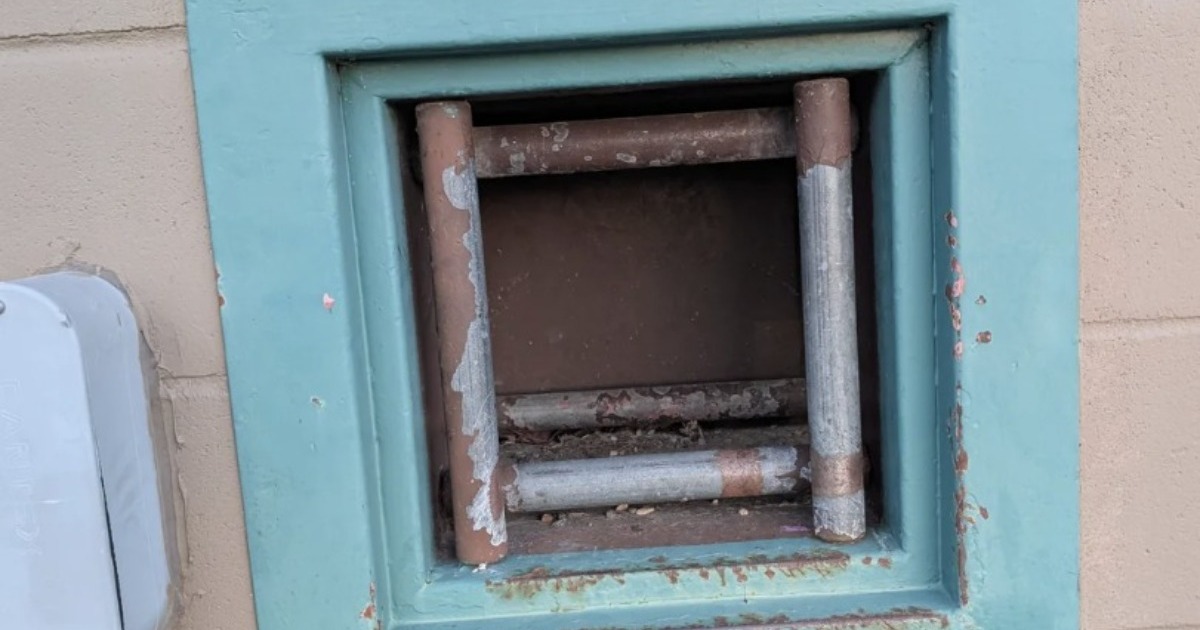
Source: Reddit
I have a weakness for odd little details on old buildings. A sealed door. A random pipe. A metal frame that clearly had a purpose once, even if nobody remembers what it was. Most people walk past those things. I stop and stare like I’ve discovered ancient ruins next to a rec center parking lot.
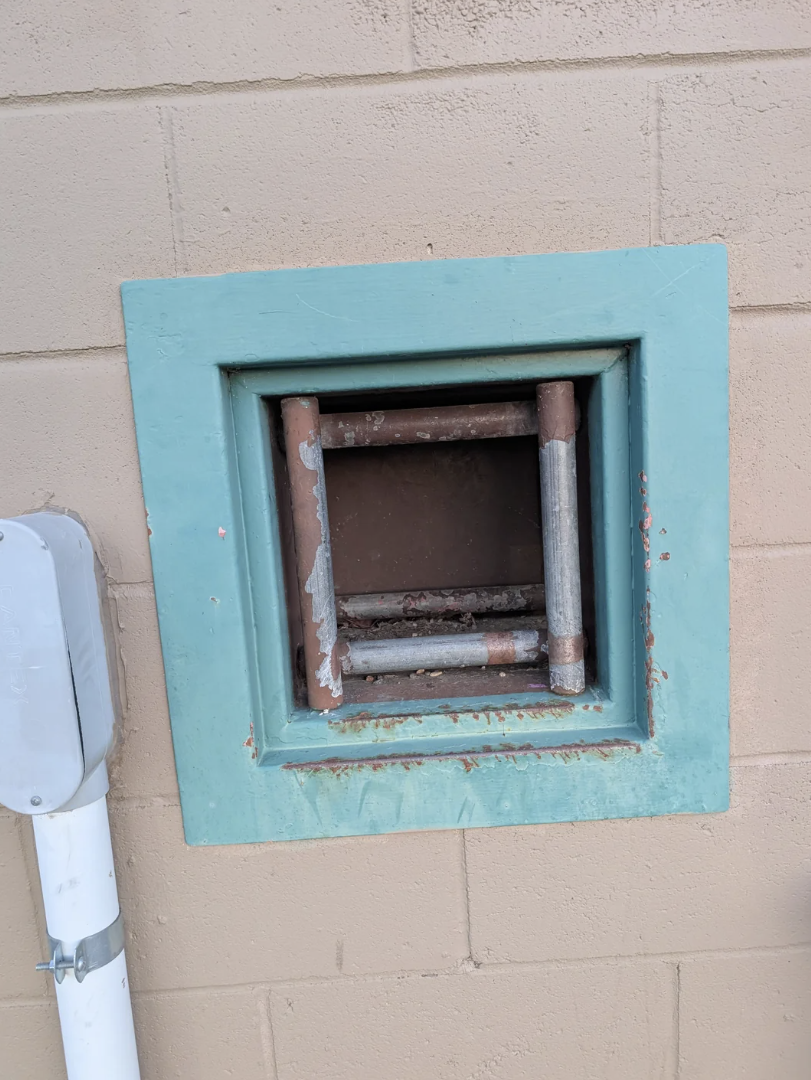
This square opening is one of those details. It sits on the outside of a recreation center. It’s about 12 inches by 12 inches, with four metal rollers inside. They look like pipes, but they spin freely. Nothing runs through them now.
At first, it looks like a vent or some kind of service hatch. But the rollers tell a better story.
This is likely an old swimming pool lane divider pass-through.
Why It Made Sense
Pool lane dividers look simple when they’re floating in the water. Just ropes with plastic floats, right?
Not quite.
Once staff wind them onto large reels, they become bulky and awkward. They don’t bend much. They don’t slide neatly through doorways. A full spool can be too big to move through a normal entrance, especially in older recreation buildings.
So some pools used a wall opening like this.
The lane divider reel stayed in a storage room or nearby area. When staff needed the divider, they pulled it through the roller-lined opening and out toward the pool deck. The rollers helped the rope and floats move smoothly without scraping the wall.
Simple. Practical. Very old-school.
The Rollers Are the Clue
The spinning metal pieces matter.
Fixed pipes wouldn’t need to rotate. Rollers would.
They reduce friction. They keep the plastic floats from catching on rough concrete or metal edges. They also protect the building from damage after years of dragging equipment through the same spot.
I can picture it pretty easily. Someone grabs the lane rope. The floats clack together. The reel squeaks, because old pool equipment always squeaks. Someone on the deck yells, “Keep pulling!” Then the divider slides through the frame and out into the sun.
Not fancy. But useful.
A Little Pool Nostalgia
This kind of object brings back the public pool feeling.
Cinder block walls. Wet concrete. Echoes everywhere. Chlorine in the air. A lifeguard whistle every few minutes. Kids trying very hard to “walk” while clearly speed-walking toward the deep end.
And those lane dividers were always part of the scene.
As a kid, I never wondered where they came from. They just appeared in the pool when swim lessons or lap swim started. But someone had to haul them out, reel them in, untangle them, and store them.
An old swimming pool lane divider pass-through belonged to that behind-the-scenes work.
What If the Pool Is Gone?
If this opening sits beside an active pool, the mystery is probably solved.
But if there’s no pool nearby, I’d start asking questions.
Was there once a pool there? Did the city fill it in? Did the recreation center change over time? Old buildings often keep clues after their original purpose disappears. A drain in the floor. Tile under carpet. A sealed doorway. A strange roller frame on an outside wall.
There’s also a harder piece of history here. Many public pools in the United States were segregated during the Jim Crow era. Some communities later closed or filled in pools rather than integrate them. Of course, not every missing pool has that story. Some closed because of leaks, costs, repairs, or new construction.
Still, it’s worth checking.
Old aerial photos, city records, newspaper archives, parks department files, and longtime residents can all help tell the story.
A Small Object With a Bigger Story
An old swimming pool lane divider pass-through is just a metal square with rollers.
But it can point to swim lessons, summer crowds, lifeguards, wet towels, clattering lane ropes, and maybe even a forgotten pool under grass or pavement.
Sometimes history doesn’t come with a plaque.
Sometimes it’s rusting quietly on the side of a rec center.